
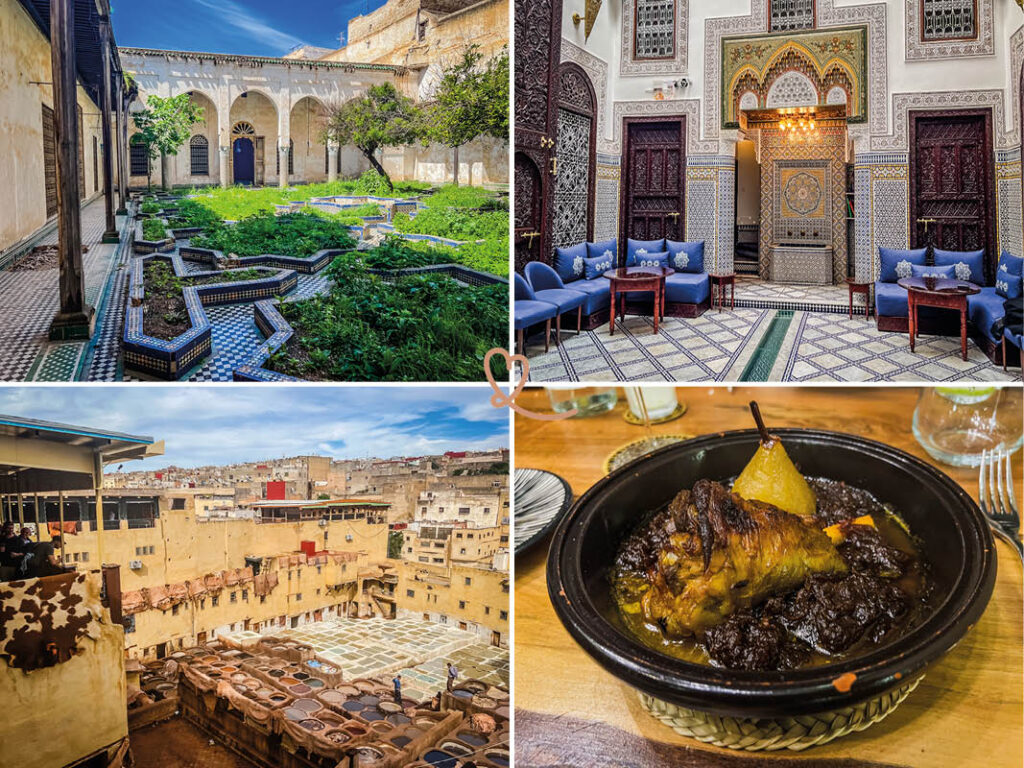
Fes, Morocco’s ancient and spiritual city, is home to the world’s largest medina within its walls. We were captivated by this UNESCO-listed labyrinth, its 137 mosques, and its traditional tanneries, which preserve a unique craft. A week-long stay allows you to explore the imperial city and venture out to neighboring towns nestled between the Rif and Middle Atlas mountains.
Here’s our ideal itinerary for a week in Fez, complete with plenty of photos!
This opinion is completely independent, based on our experiences. We visited the region anonymously, making our own choices and paying our bills in full.
Visiting Fes in 1 Week: Practical Tips
What can you see in Fez in one week? Is that long enough?
A week in Fez gives you plenty of time to explore every nook and cranny of the thousand-year-old medina, while also taking day trips to Meknes, Volubilis, Moulay Idriss, and the Middle Atlas Mountains. It’s the perfect length of stay to balance cultural heritage, local crafts, and the great outdoors.
Maps of must-see attractions
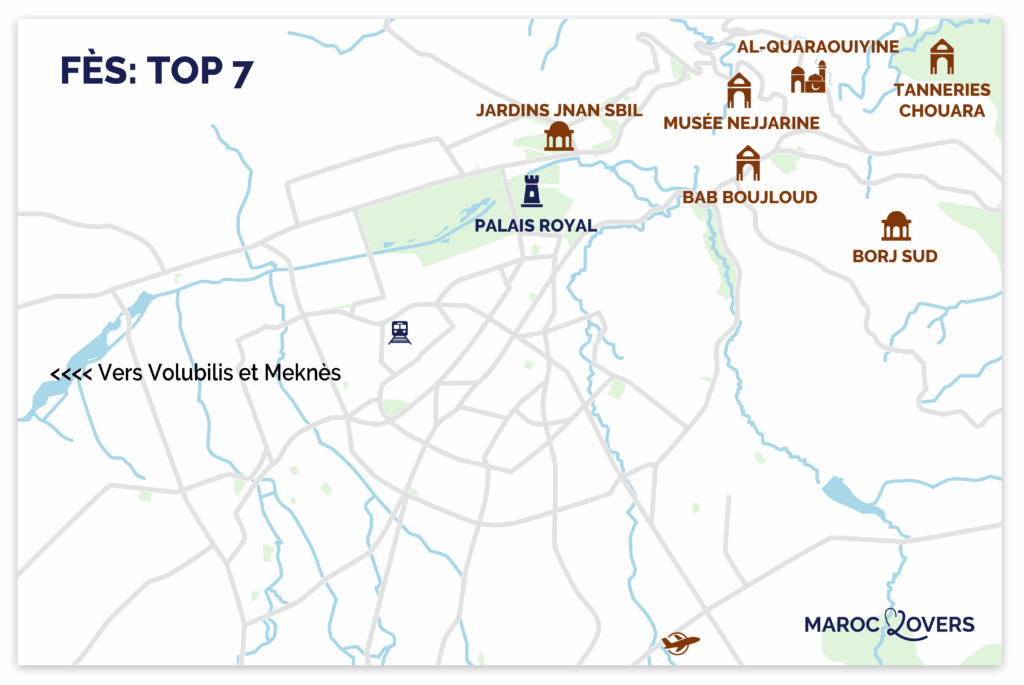
To help you find your way as you read our itinerary below, here is our map of the main tourist attractions in Fez:
Getting around Fez
The medina of Fez is a veritable labyrinth that can only be explored on foot, as no vehicles are allowed inside. Rely on the small red taxis or a private car service to reach the New City and its surroundings; they remain inexpensive and convenient. Renting a car isn’t essential for exploring the medina, but it can be useful for a series of day trips throughout the week: check out the car rental options. Large shared taxis connect Fes to the surrounding villages. We also recommend hiring an official guide for your first visit to the medina to avoid getting lost. You’ll also come across horse-drawn carriages in the city, a mode of transportation we prefer to avoid out of respect for animal welfare.

Where to Stay in Fez
WHERE TO STAY IN FES
Our favorites: neighborhoods and hotels
In Fès El-Bali (old medina)
Hotel Riad Dar Lys – See prices, photos and availability
Hotel Riad Dar Laura – See prices, photos and availability
Fès El-Jdid (near the Royal Palace)
Palais Faraj Suites & Spa Hotel – See prices, photos and availability

Our Ideal Itinerary: 7 Days in Fez
We designed this itinerary to alternate between immersing yourself in the medina and its spiritual heritage and exploring the surrounding areas. Three full days are devoted to the imperial cities, the Rif, and the Middle Atlas, while the rest of the week focuses on the treasures of Fez itself.
Day 1 – A Deep Dive into the Millennium-Old Medina
9 a.m.–12 p.m.: Bab Boujloud and Al-Qarawiyyin University
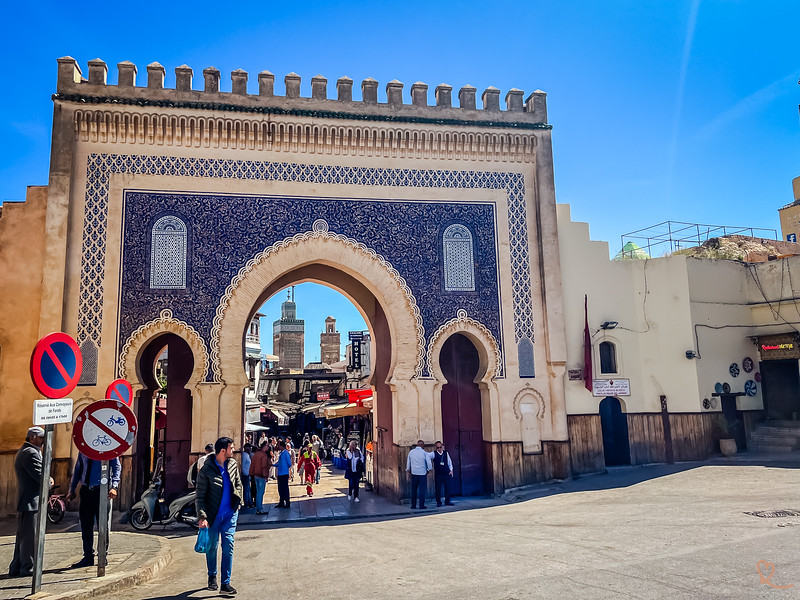
Start your week at the Bab Boujloud Gate, built in 1913 during the French Protectorate. We enjoyed this colorful transition between the modern city and the medieval world, with its blue zellige tiles on the outside and green ones on the inside.

As you walk up Talaa Kebira Street, you’ll pass by the mosque and Al-Qarawiyyin University, founded in the 9th century by Fatima al-Fihri and considered the oldest university still in operation in the world. The interior is reserved for Muslim worshippers, but we could feel the power of its history from certain gates of the medina.

2:00–4:00 p.m.: The Chouara Tannery
The afternoon is devoted to one of the most fascinating sights in the medina: the Chouara Tannery. The process, which lasts three weeks, begins with the removal of hair from the hides in lime baths before they are softened with natural ammonia. We watched the leather being dyed—poppy red, indigo blue, or saffron yellow—from the terraces of the leather goods shops. More than 250 families there pass down this craft from generation to generation. You’ll be given some mint to help mask the smell of ammonia while the guide explains the process. Visit the Chouara Tanneries with a local multilingual guide!

4:30 p.m.–6:00 p.m.: The Attarine Madrasa
End your day at the Attarine Madrasa, built in the 14th century during the Marinid dynasty. Its refined architecture captivated us from the moment we entered: colorful zellige tiles, carved cedar wood, and intricately crafted stucco. You’ll explore the small rooms where students from across the kingdom once lived, as well as a central courtyard featuring a fountain that invites you to relax. Book your tour of the madrasas of Fez today. For dinner, head to the Café-Restaurant Moulay Idriss or Restaurant Le Tarbouche, both renowned for their traditional Moroccan cuisine. They’re among our top recommendations for where to eat in Fez.

Day 2 – Spiritual Heritage and Crafts of the Medina
Morning: The Mausoleum of Moulay Idriss II
We headed to the Mausoleum of Moulay Idriss II, founder of Fez and son of Moulay Idriss I. This sacred monument impressed us with its woodwork and its majestically proportioned doors. From the outside, we admired the large prayer hall in front of the tomb, adorned with fountains and mosaics; the interior is reserved for Muslims. The site bears witness to the spiritual significance of the Idrisid dynasty, which made Fez a leading religious capital. Take the time to observe the architectural details and respect the reverence of the worshippers present.

Noon: The Nejjarine Museum and Dar Al-Magana
Continue on to the Nejjarine Museum, housed in a former 18th-century fondouk. We were fascinated by its collection dedicated to woodworking arts and crafts, ranging from spindles from southern Morocco to customary law tablets inscribed in ink on palm wood. The tea lounge terrace offers one of the most beautiful views of the medina’s rooftops. Please note that photography is not permitted in the exhibition halls.

Not far away, Dar al-Magana intrigues visitors with its row of small openings: this 14th-century water clock once marked the rhythm of daily prayers. Although its mechanism no longer works, it remains a rare testament to Merinid scientific ingenuity.
Afternoon: artisan souks and Fondouk Barka
Finish with a stroll through the artisans’ souks in the medina: dyers working with vibrant colors, merchants selling fragrant spices, and copper craftsmen who still hammer their work by hand. Fez remains one of the great centers of Moroccan craftsmanship, with its workshops for pottery, mosaics, zellige, and weaving.

We enjoyed discovering the Fondouk Barka, a former caravanserai where artisan cooperatives display their creations. These encounters reveal the city’s creative spirit, far from the most touristy shops.

It can be hard to find your way around the medina. You can easily get lost in the maze of narrow streets! We recommendtaking a half-day guided tour of the Fez medina with a local guide—or even a full-day tour.
OUR TIPS FOR RENTING A CAR IN MOROCCO
- Compare prices on our preferred platform: DiscoverCars – one of the best rated sites.
- Not too wide
- A good engine
- For more choice, book early.

Day 3 – Day Trip: Volubilis, Meknes, and Moulay Idriss Zerhoun
In our opinion, this trio of excursions is the best way to explore the area around Fez in a single day. Plan to leave early in the morning—either by car or on an organized tour—to make the most of each stop: see prices, photos and availability.
Morning: Volubilis, the Roman ruins listed as a UNESCO World Heritage Site
Have you heard of the Volubilis archaeological site? The ancient capital of Mauretania Tingitana, founded in the 3rd century BCE, this unique site has been a UNESCO World Heritage Site since 1997. We were impressed by the sheer size of this 42-hectare site and the excellent state of preservation of the mosaics, including the ancient basilica and Emperor Caracalla’s triumphal arch, which is virtually intact. Be sure to bring plenty of sunscreen, as the site is completely exposed with no shade. The mountain road from Fez is narrow: avoid it in rainy weather and opt for a guided tour with a driver instead. Choose a guided tour if you’d rather not drive.

Noon: Meknes, the Imperial City
About an hour’s drive from Fez, Meknes charmed us with its authenticity; it’s less crowded than its neighbor. Its UNESCO-listed medina, founded in the 11th century by the Almoravids, can be explored through the Bab Mansour Gate, completed in 1732, whose white marble columns are well worth a closer look.

We fell in love with the Dar Jamaï Museum, housed in a 19th-century palace featuring colorful zellige tiles and an interactive collection of musical instruments. The city is currently undergoing a renovation project in its medina, so some areas remain inaccessible. In our opinion, it’s one of the most beautiful museums in Morocco. A hidden gem you absolutely must check out if you’re in the area! Note that it’s closed on Tuesdays.

Afternoon: Moulay Idriss Zerhoun, a pilgrimage village
End the day in Moulay Idriss Zerhoun, perched on the hills of Mount Zerhoun and considered one of Morocco’s most important holy sites. We were struck by the serenity of its white-washed streets and by the cylindrical minaret of its mosque, the only round minaret in the country.

The climb to the panoramic terraces—about 200 steps—offers a breathtaking view of the houses clinging to the hillside. Avoid visiting on Fridays, when the site is very crowded with pilgrims. See options for organized tours from Fez.

A LITTLE MORE PATIENCE
All the photos, maps, information and addresses you need to make your stay at Maroc a success will soon be available in a single ebook!
Coming soon!
Day 4 – Panoramic Views, Gardens, and Fassian Cuisine
Morning: The Tombs of the Marinids
Head to the Merinid Tombs for one of the most beautiful panoramic views of Fez and the surrounding Mount Zalagh. This ancient royal necropolis, dedicated to the Merinid dynasty that reigned from 1269 to 1465, intrigued us with its remains of the tombs of former sultans.

The site consists of two parts: the first contains the ruins of a fortress, and the second is located higher up. We strongly recommend that you exercise caution: the site has no safety barriers or supervision, and the winding access road requires careful driving, especially at the end of the day.

Noon: the Jnan Sbil Gardens
Across from the Palais Royal, we loved strolling through the Jnan Sbil Gardens! The flower beds and tall trees transported us into this expansive botanical oasis, far from the hustle and bustle of the narrow streets. Created in the 19th century, they are home to more than 3,000 plants and century-old trees, including bitter orange trees. The ponds and fountains enliven the space with their water features, and many Moroccan artists have drawn inspiration from them. Nicknamed “the lovers’ garden,” these grounds exude a special poetic charm that we enjoyed exploring before lunch. It’s one of our favorite spots in Fez.

Afternoon: the Royal Palace, Dar El Makhzen
Overlooking the gardens, the Royal Palace—known as “Dar el Makhzen”—impresses with its 80 hectares in the Fès Jdid neighborhood. This palatial complex includes the royal palace, a mosque, a madrasa, and a parade ground. We were dazzled by the enormous doors framed by thousands of ceramic tiles, dominated by the blue of Fez and the green of Islam—a masterpiece of Moroccan craftsmanship featuring geometric patterns of remarkable precision. You can admire this spectacular façade from the entrance to Jnan Sbil Park, as the palace is not open to the public.

Evening: Enjoy Fassian cuisine
Did you know that Fez is renowned for its cuisine, considered the most sophisticated in Morocco? Tajines with complex flavors, pastilla with pigeon and almonds, fragrant couscous, and harira soup will delight your taste buds. We were, of course, won over by pastries such as kaab el-ghzal (gazelle horns) and khlii, meat confit in fat. The Fez-Meknes region also produces excellent wines, including the Syrah and Volubilia vintages, which we particularly enjoyed. For a gourmet dinner, head to the Gayza Restaurant at the Riad Relais & Châteaux; for bistronomic cuisine, try the Ishq Restaurant—both are featured in our selection here.

Day 5 – Excursion: Chefchaouen, the Blue Pearl of the Rif
Chefchaouen is one of our favorite day trips from Fes. Perched in the Rif Mountains, this blue city charmed us with its colorful narrow streets and soothing atmosphere. Did you know that painting the walls blue helps keep insects away and keeps the rooms cool? The drive takes about 4 hours: we recommend leaving at dawn since the trip can be long, or opting for an organized tour to make it as easy as possible if you don’t want to drive (see how to get there).
A Day in the Blue City
The medina of Chefchaouen is best explored on foot, starting from Outa El-Hammam Square. The 15th-century Kasbah, a fortress that houses an ethnographic museum, offers a beautiful view of the city from its terrace. Heading northeast from the medina, the Ras El Ma spring and its small waterfalls offer a natural spectacle that we thoroughly enjoyed.

The markets offer Rifian rugs, spices, and natural cosmetics. The old city is not accessible by car; paid parking is available at the entrance. For lunch, we recommend Restaurant El Cielo, nestled in a garden, or Restaurant Morisco on the main square. See options for organized tours departing from Fez.

Day 6 – Excursion: Ifrane and Azrou, the Middle Atlas
For a complete contrast to the atmosphere of the medina, head to the Middle Atlas Mountains and their forests of centuries-old cedar trees. On the way from Fez, the landscapes of the Middle Atlas gradually come into view, making the journey itself a pleasure.
Morning: Ifrane, Morocco’s “Little Switzerland”
Ifrane, built during the French Protectorate, captivates visitors with its slate roofs, chalets, and flower-filled parks—like an Alpine village transplanted to Morocco. About an hour’s drive from Fez, the town features a lake and several pleasant green spaces perfect for a break. For winter sports enthusiasts, the Michlifen ski resort is a 25-minute drive from Ifrane. Note that there can be heavy snowfall in the area during the winter.

Afternoon: Azrou and the Barbary macaque forest
Located 1 hour and 15 minutes from Fez, Azrou is home to a cedar forest where groups of Barbary macaques live; you’ll often come across them along the roadside. You’ll be amazed by the famous Gouraud Cedar, which is eight centuries old, as you come upon a clearing. Be careful around the monkeys, as they’re known to snatch your belongings—such as your bag, phone, or hat—and don’t feed them for their own well-being. Several organized tours departing from Fez include Immouzer Kandar, Ifrane, and Azrou in a single day. Take a day trip to the Middle Atlas and explore the monkey forest!

Day 7 – Last Day: Wellness and Cultural Immersion
Morning: a Moroccan cooking class
To wrap up your week, get an introduction to Moroccan cuisine during a cooking class at a historic riad. These workshops will teach you how to prepare tagines, couscous, and Middle Eastern pastries. You’ll learn the secrets of blending spices and preparing mint tea according to an ancient ritual, sometimes followed by a food tour through the souks to discover local ingredients. You’ll leave with authentic recipes and a little piece of the Moroccan spirit. Book your cooking class today.

Afternoon: a relaxing time at the hammam
In Fez, the hammam is an integral part of local daily life. Whether it’s a traditional, down-to-earth establishment or a more refined one, it offers a unique sensory experience that combines soothing heat with ancient purification rituals. We recommend that you let yourself be carried away by the moment, far from the hectic pace of the workweek. Experience a moment of traditional Moroccan beauty and book your appointment today.

Evening: dinner and a show, featuring music from Andalucia
Fes, the cradle of Arab-Andalusian music since the 11th century, invites you to discover this refined art form during a lively evening. This classical Moroccan musical tradition, the “âla,” features a vast repertoire of Sufi-inspired songs. We were transported by these centuries-old melodies performed by virtuoso musicians, in an atmosphere that reveals the city’s artistic soul. These evenings typically combine traditional cuisine with musical heritage, sometimes complemented by a dance performance, to bring your stay to a beautiful close. Reserve your spot now for this authentic cultural evening.

If your trip focuses more on museum attractions, there are several places worth adding to your itinerary. The El Glaoui Palace, the second-largest palace in the medina, captivated us with its light-filled courtyards and its striking Art Deco room, which features an exhibition of antique objects and works of art.

The Arms Museum, housed in the 16th-century Borj Tower, features one of Africa’s largest collections of weapons and offers a panoramic view of the medina from Fort Borj Sud. Finally, the Dar Chergui House, nestled in the medina, showcases the Fassi way of life for curious visitors who enjoy exploring lesser-known spots.

The Batha Museum, housed in a late 19th-century Hispano-Arabic palace, showcases a beautiful collection of Moroccan crafts in a serene Andalusian garden.
Option 2: with more excursions in the region
Fez is an excellent starting point for exploring further afield, if you have the time or an extra vehicle:
- Rabat, the capital of the Kingdom, is about a 2½-hour drive away: we were charmed by its Kasbah of the Oudayas and the Hassan Tower-Mohammed V Mausoleum complex.

- Casablanca, a 3.5-hour drive away, is home to the Hassan II Mosque and the Habous district.

- Sefrou and Bhalil, 30 minutes south, charm visitors with their medinas and cave dwellings.
- The spa town of Moulay Yacoub, a 30-minute drive away, is the perfect place for a rejuvenating getaway nestled among hills and olive groves.
- Find all our suggestions for day trips from Fes here.
Option 3: Relaxation and Spa Experience
After a few days spent wandering the narrow streets of the medina, a short visit here can also serve as a substitute for one of your day trips. Just a 30-minute drive away, the spa village of Moulay Yacoub has been known for centuries for the healing properties of its hot sulfur springs. It attracts both spa-goers and travelers seeking relaxation, set in a natural setting among hills and olive groves. You can enjoy the traditional baths, which are very popular with locals, or opt for the modern spa center, which offers pools, treatments, and massages in a more comfortable setting. A half-day is enough, and it’s easy to combine with a visit to Fes. Want to relax in the thermal waters? Choose a tour with full service .

Option 4: The World Sacred Music Festival
Every May, Fez hosts one of Morocco’s most iconic cultural events: the Festival of Sacred Music of the World. This festival features exceptional concerts and intercultural encounters that resonate throughout the medina. It promises a unique experience of dialogue between cultures through universal sacred music. If your visit coincides with this period, however, the city will be significantly more crowded with tourists than usual. Learn more on the festival’s official website.
Subscribe to our Newsletter
- Get away from it all with Region Lovers’ beautiful destinations!
- Once a month
- Advertising-free

What You Need to Know for Your Week in Fez
The Weather in Fez
Winter is a great time to experience Fez in a different light, with mild temperatures ranging from 15°C (59°F) to 18°C (64.4°F) during the day and fewer tourists. We enjoyed this season for the long strolls through the medina, even though rainy days are possible. The cool evenings are perfect for enjoying mint tea in traditional riads. If you take a trip to the Middle Atlas Mountains during this time, you may experience snowfall, particularly around the Michlifen ski resort.

The Crowds in Fez
Note a particular feature of the weekly schedule: on Fridays, the Muslim day of prayer, some businesses adjust their hours or close, even though it is not an official holiday. On weekends, some shops close on Saturdays—particularly those owned by the Jewish community—and others close on Sundays. Tourist traffic increases significantly every May during the World Sacred Music Festival: be sure to book your accommodations and tours in advance if your trip coincides with this period.
Adjusting Your Itinerary When It Rains
Rainy days are more common in winter in Fez. If the weather doesn’t allow you to visit the Merinid Tombs or Borj Sud, there are several indoor options available in the medina. The Nejjarine Museum, the Batha Museum, or the El Glaoui Palace are great places to spend several hours out of the rain while discovering Fez’s crafts and heritage. A traditional hammam or a cooking class are also good indoor alternatives for a gloomy day.
PLAN YOUR TRIP TO Morocco
- Best of
Top Destinations
Must-See Places in Morocco
Most Beautiful Riads
Most Beautiful Cities
Most Beautiful Medinas
Morocco’s Most Beautiful Landscapes
Most Beautiful Gardens
Best Museums
Morocco’s Most Beautiful Beaches

- Practical advice
When to go?
How to rent a car in Morocco
Driving tips

- The must-dos
Marrakech
Casablanca
Fez
Meknes
Chefchaouen
Essaouira
Rabat
Tangier
Tetouan
Agadir
The Sahara Desert
