
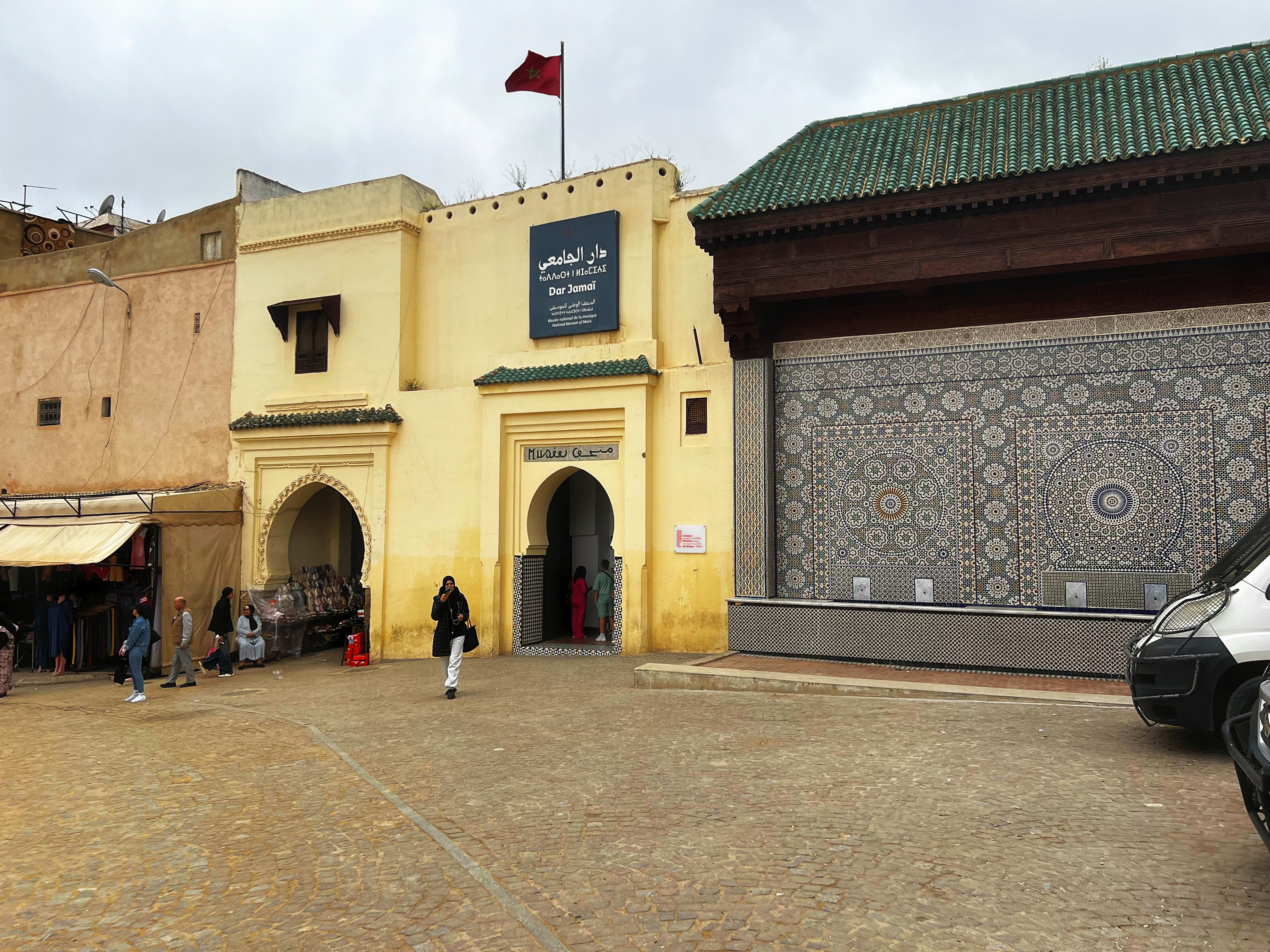
In the heart of the Meknes medina, the Dar Jamaï Museum—also known as the National Museum of Music—is housed in a remarkably well-preserved 19th-century palace. As soon as we entered, we felt as though we had left the hustle and bustle of El Hedim Square behind to step into a sanctuary of art, silence, and music. It is one of the museums in Meknes that left the deepest impression on us, both for the beauty of the setting and the thoughtfulness of its exhibition layout. This unique venue offers an immersive experience of Morocco’s musical heritage through a rich collection of instruments dating from the 19th century to the present day, set in a peaceful environment featuring traditional gardens and patios.
In this article, discover our helpful tips—illustrated with photos —to help you best prepare for your visit and fully enjoy this cultural experience in the heart of Meknes.
This opinion is completely independent, based on our experiences. We visited the region anonymously, making our own choices and paying our bills in full.
Why visit the Dar Jamaï (Eljamîi) Museum?
Is the Dar Jamaï Museum worth a visit? Our take:
Yes, the Dar Jamaï Museum is well worth a visit for its unique setting—a 19th-century palace in the heart of the Meknes medina. There, you’ll discover a collection of musical instruments that showcases the richness of Morocco’s musical heritage. Also known as the National Museum of Music, it offers an atmosphere that tells the story of traditional Moroccan music—an essential cultural aspect of Meknes. We particularly enjoyed the interplay between the instruments on display, the palace’s architecture, and the sounds one can imagine echoing through the rooms. Among other things:
- The set design highlightslocal crafts and the region’s musical history,
- The peaceful atmosphere invites you to experience an authentic cultural immersion,
- The building itself is an architectural testament to 19th-century Morocco,
- The tour offers an accessible experience suitable for all visitors,
- You’ll be able to enjoy a wide variety of instruments from the 19th century to the present day.
It’s one of the best attractions in Meknes.
Why is the Dar Jamaï (Eljamîi) Museum famous?
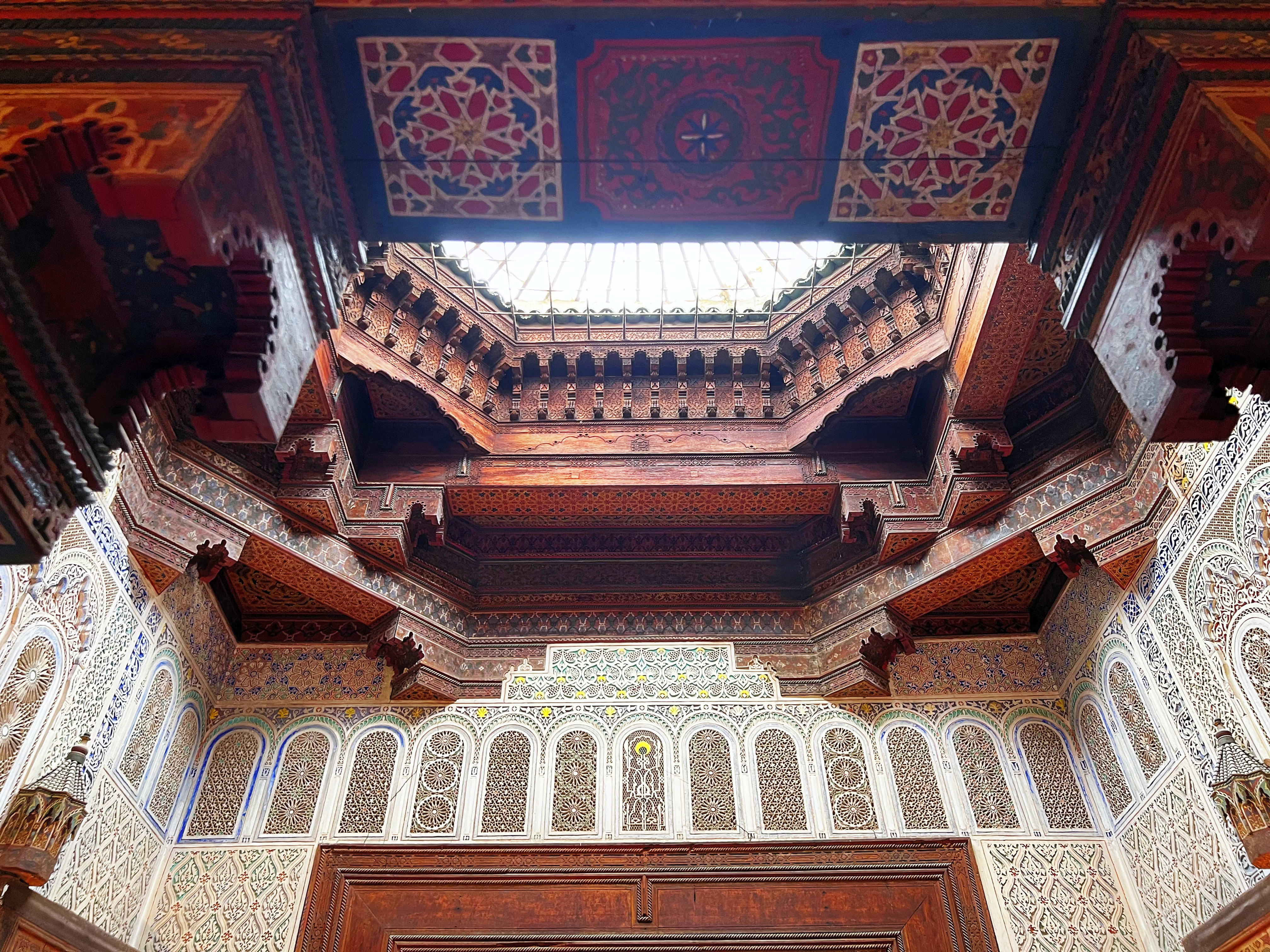
The Dar Jamaï Museum is renowned for its remarkably well-preserved traditional decor, including colorful zellige tiles, carved cedar wood ceilings, and artistic ironwork. Its Andalusian garden creates a peaceful atmosphere in the heart of the Meknes medina, enhancing the authenticity of the site. Since 2014, it has been distinguished by its remarkable collectionof Moroccan musical instruments dating from the 19th century to the present day. It showcases traditional handicrafts, such as Berber rugs and ceramics, which deepen visitors’ understanding of Moroccan musical culture. This diversity makes the museum a leading institution in promoting the nation’s musical heritage.
Housed in a 19th-century palace in the heart of Meknes, the museum also showcases rare artisanal techniques, particularly the craft of making wooden instruments. You’ll discover an exhibition design that incorporates videos and archival materials explaining these skills, thereby highlighting the site’s historical and cultural significance. Want to take advantage of the expertise of a certified local guide to discover all the treasures of this exceptional museum? Reserve your spot today! !
Our favorite moments
We especially liked:
- The immersive atmosphere of the room dedicated to the crafting of wooden instruments, where instructional videos and rare pieces create an experience that is both educational and sensory. The interplay of light and shadow in this room lends an almost lifelike quality to the exploration of traditional craftsmanship. This quiet moment inside the palace contrasts with the hustle and bustle of the medina outside, offering a captivating respite.
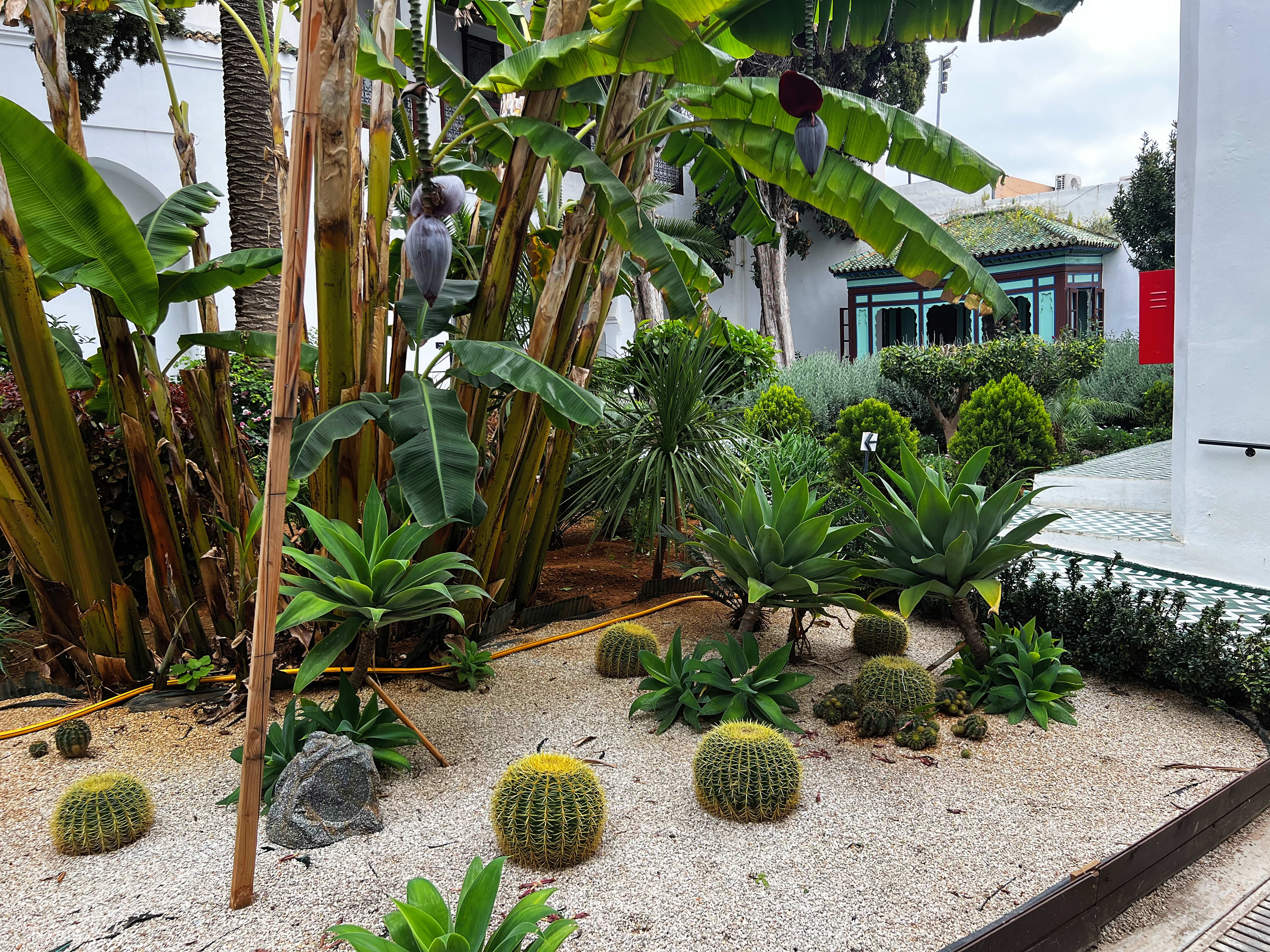
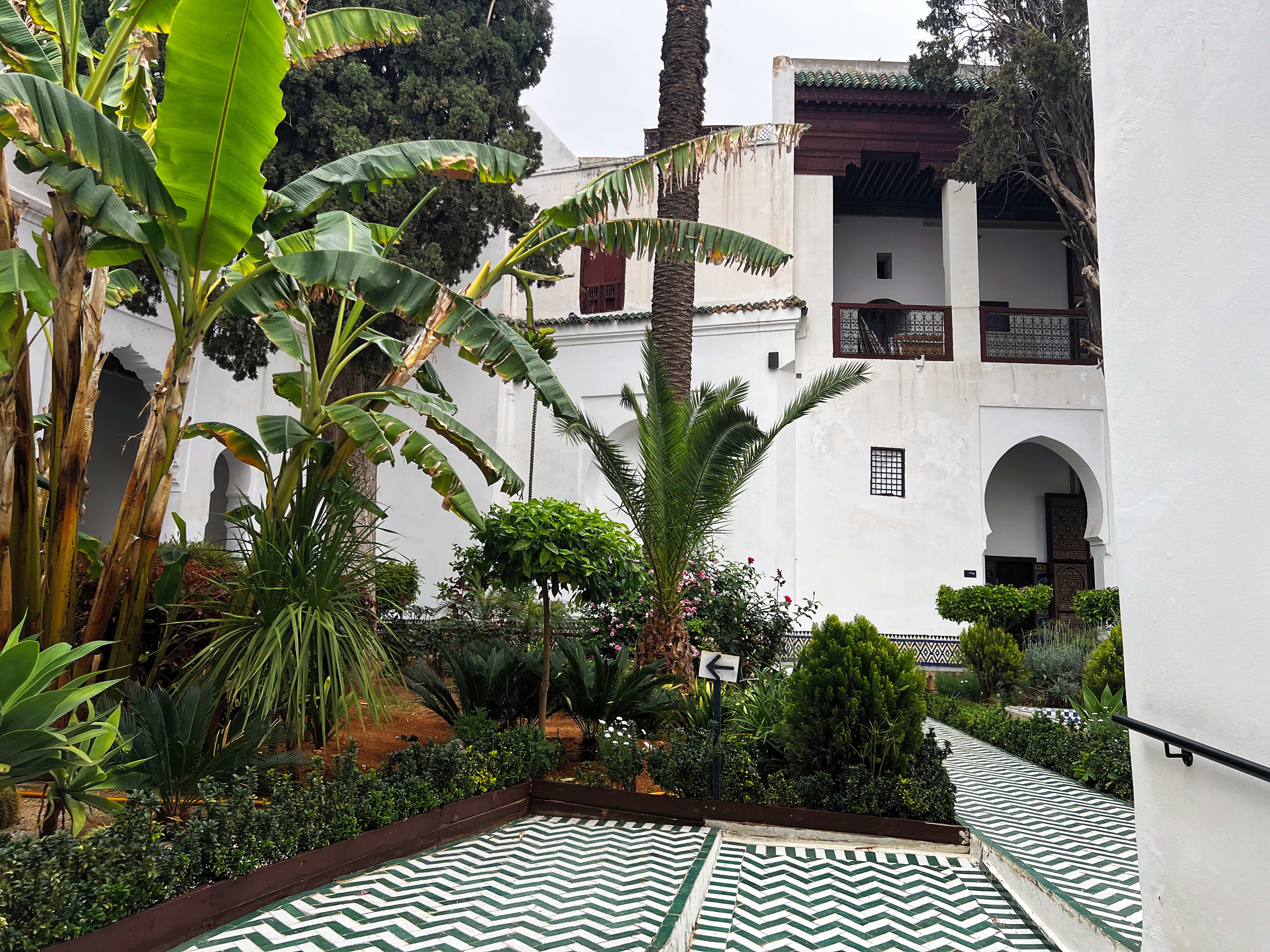
- The museum’s Andalusian garden, where the gentle sway of the palm trees and the scent of roses create a peaceful atmosphere perfect for relaxation. This green oasis invites visitors to take a rejuvenating break in the heart of the bustling medina. After the hustle and bustle of the medina, this green oasis felt almost like a moment suspended in time. You hear less of the city, notice more details, and take the time to look at the palace in a new light.
- Interactive exhibition spaces that offer a unique sensory experience, providing a deeper understanding of the richness and diversity of Moroccan musical traditions. These installations add real depth to the visit: the instruments are no longer just museum pieces; they find their voice again.
History in brief
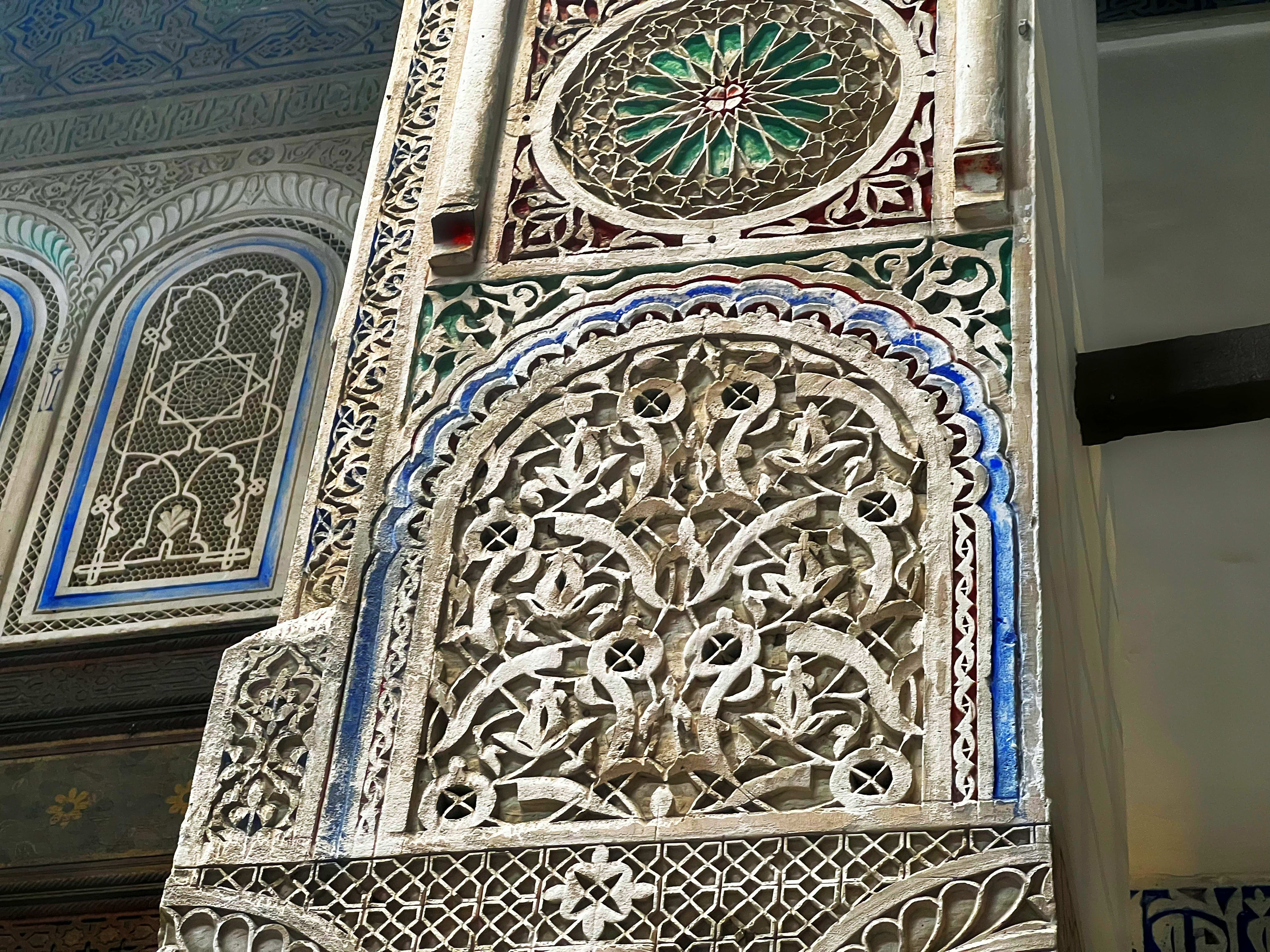
The Dar Jamaï Palace, built in the 19th century, initially served as the residence of an influential family from Meknes. Built in 1882 for Mohamed Ben Larbi Jamaï, Grand Vizier to Sultan Moulay Hassan I, this palatial residence is a prime example of traditional Moroccan architecture: colorful zelliges, finely carved cedar wood ceilings, wrought ironwork, stucco, and fountains adorn the various rooms that open onto a lush patio. Palm trees, roses, camellias, banana trees, and succulents come together to form a true Andalusian garden, delightful in every season.
During the French Protectorate, the building was converted into a military hospital, before becoming the Museum of Indigenous Arts in 1920, reflecting a growing interest in promoting local heritage.
Since 2014, this venue has been dedicated to Morocco’s musical heritage under the name National Museum of Music. There, you’ll discover a rich collection of traditional instruments that illustrate the country’s musical evolution, giving the museum a renewed and unique cultural mission in the heart of the Meknes medina.
Location: Dar Jamaï Museum (Eljamîi), Meknes
Where is the Dar Jamaï (Eljamîi) Museum located?
- Address: Place El Hedim, Meknes, Morocco
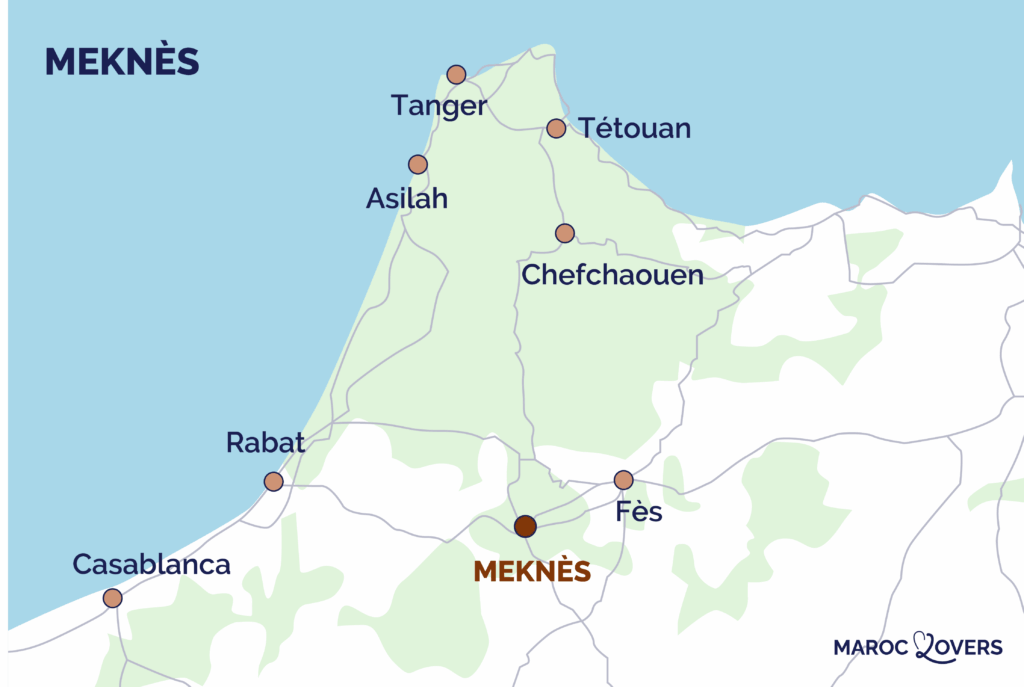
- Directions: Located in the heart of the Meknes medina, right next to El Hedim Square. Within walking distance from the medina or Bab Mansour. About a 10- to 15-minute taxi ride from the train station.
How to get there?
- The Dar Jamaï Museum is ideally located in the heart of the Meknes medina, right next to El Hedim Square. You can easily reach it on foot from the medina or via Bab Mansour, two of the city’s major landmarks.
- If you arrive by train, a taxi will take you to the museum in about 10 to 15 minutes from the train station. This is often the fastest and most convenient way to reach the historic center.
- For a more authentic experience, you might also consider walking through the medina, which will allow you to soak up the authentic atmosphere of the narrow streets on your way to the museum.
Parking
Since the Dar Jamaï Museum is located in the heart of the Meknes medina , parking nearby is limited. You’ll find a few public parking spaces around El Hedim Square , but they’re often full during the day. For your convenience, consider taking a taxi or parking in one of the parking lots located outside the medina, which are within walking distance.
OUR TIPS FOR RENTING A CAR IN MOROCCO
- Compare prices on our preferred platform: DiscoverCars – one of the best rated sites.
- Not too wide
- A good engine
- For more choice, book early.

Useful tips: duration, schedules, eating…
Best time to visit
To get the most out of the Dar Jamaï Museum, it’s best to visit on a weekday, especially in the morning, when there are fewer visitors. This time of day offers a more peaceful setting in which to appreciate the decor and the collection of instruments.
April, May, and October offer pleasant weather in Meknes, with moderate temperatures and little rain. These seasons are ideal for combining your visit to the museum with a leisurely exploration of the medina.
We encourage you to check the local weather forecast before your visit to make the most of your experience, especially if you’d like to enjoy the Andalusian garden at the Dar Jamaï Palace .
Length of visit and main difficulties
Allow about 1 hour and 30 minutes for a full tour of the Dar Jamaï Museum, which will give you time to enjoy the collection of instruments and the palace’s interior decor. Please note that the museum has a few narrow staircases typical of older buildings, which may make it difficult for people with limited mobility to access the upper floors. However, the museum is partially accessible, with accessible restrooms and spaces designed to accommodate all visitors.
Advice on how to visit
Start with the rooms on the ground floor to admire the Hispano-Moorish decor, then head upstairs to explore the collection of musical instruments, and finish with a peaceful break in the Andalusian garden.
Visiting with children
Visiting the Dar Jamaï Museum with children offers a unique way to discover Moroccan culture through sounds, images, and textures. We enjoyed the interactive exhibits—especially the headphones and videos—which make the instruments more tangible and easier to understand. The Andalusian garden also offers a pleasant break during the visit. It’s a quiet, heritage-focused museum, well-suited for curious children who are drawn to music, beautiful settings, and small visual discoveries.
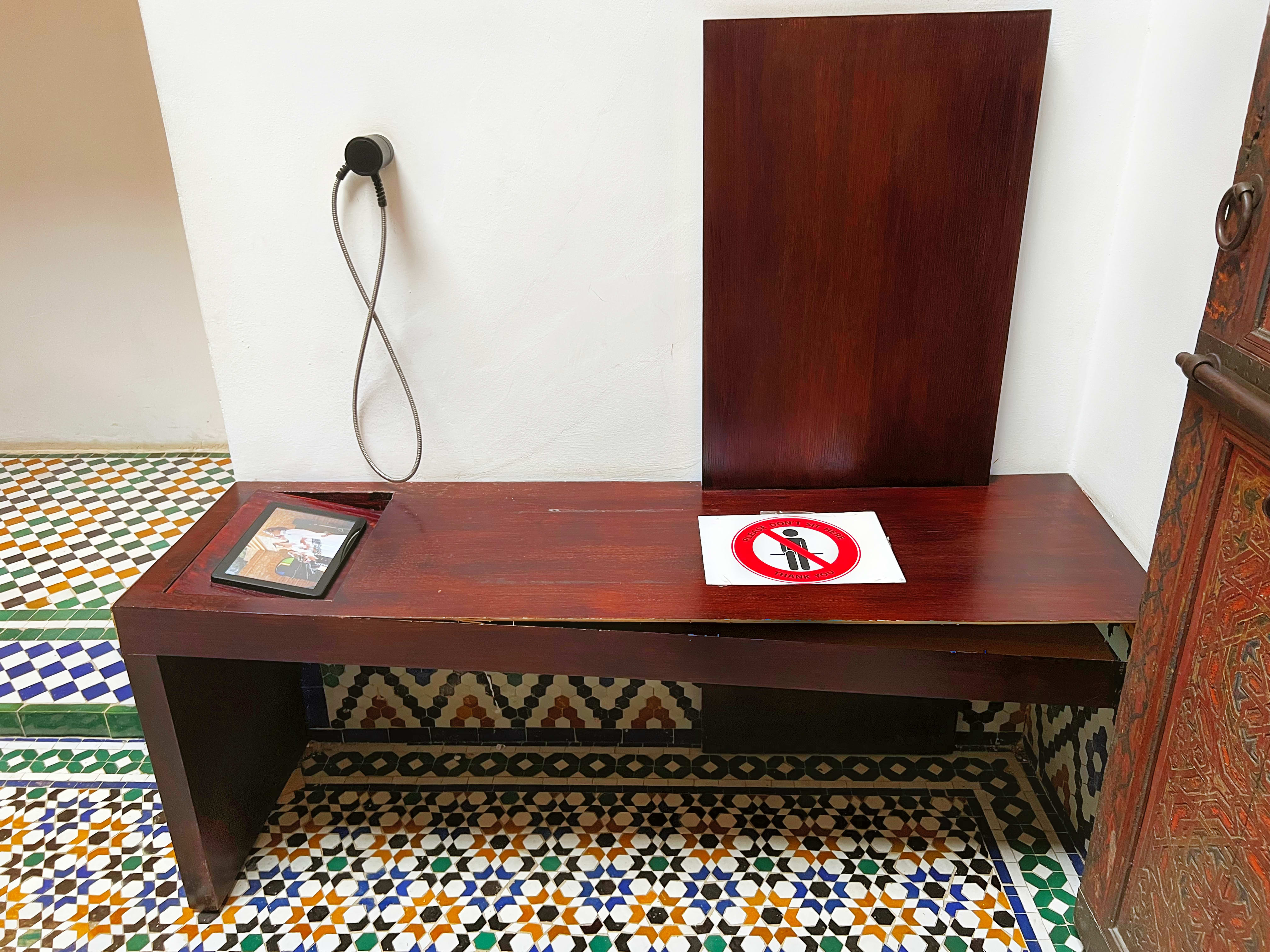
We were also struck by the richness of the colors throughout the tour. They appear in the zellige tiles, the painted ceilings, and the decorative details of the palace, as well as in the traditional outfits displayed according to the musical styles of Morocco’s different regions. For children, it’s a very visual way to explore the country’s cultural diversity: each room reveals patterns, materials, and color combinations that reflect both a regional identity and a musical world.
Schedules and rates
The Dar Jamaï Museum is open from 10:00 a.m. to 5:30 p.m. and is closed on Tuesdays.
The venue is partially accessible, with accessible restrooms and an exhibition layout designed for all visitors. For more information, visit the official website here.
Adult admission: 30 DH; reduced admission of 10 DH for children, students, and Moroccan residents. Include this visit in a guided tour by booking here
Guided tours
- The Dar Jamaï Museum offers guided tours that provide a deeper understanding of its rich collection of traditional and contemporary instruments. These tours offer visitors the opportunity to appreciate the historic setting of the 19th-century palace.
- Tours are generally conducted in French, with English options sometimes available depending on guide availability. They offer an in-depth look at the musical craftsmanship and the building’s Hispano-Moorish decor.
- To take a guided tour, it is recommended that you make a reservation in advance, especially during peak season. These tours enhance the experience by providing detailed explanations and interesting facts about the instruments and their role in Moroccan culture.
Catering
The Dar Jamaï Museum does not have a restaurant on site. Around El-Hedim Square and in the medina, you’ll find several dining options, particularly in riads. As for us, we didn’t really find anything to our liking in Meknes, but we didn’t have time to try out many restaurants. For a more refined experience outside the city, you can also have lunch at Château Roslane Boutique Hotel & Spa, a magnificent venue nestled among the vineyards that offers wine tastings and guided tours of the winery. It’s a great option if you’d like to discover the region’s wines in a more peaceful setting. Another option: head out to Fes, where we’ve found and tried even more great spots.

The Architecture of the Dar Jamaï Museum: A Unique Setting
Architectural Features
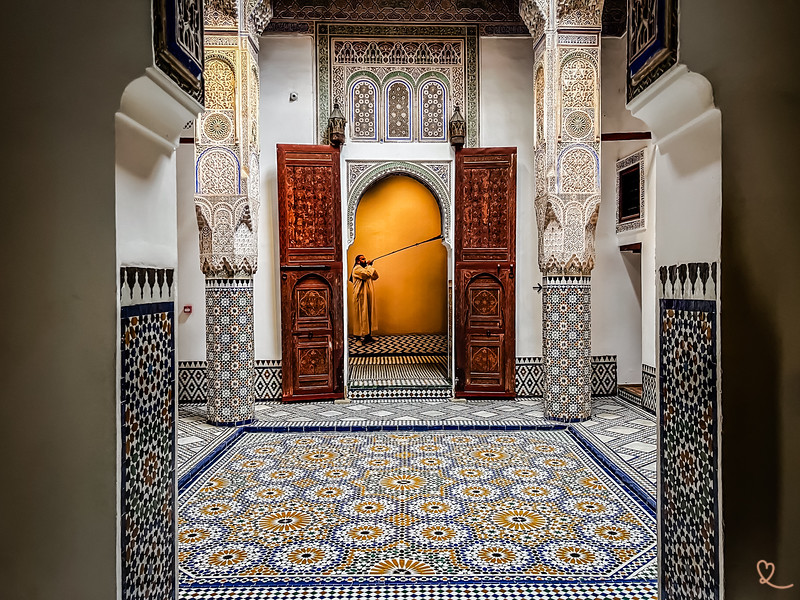
The palace housing the Dar Jamaï Museum, built in 1882, is a remarkable example oftraditional 19th-centuryMoroccan architecture. Its style reflects Hispano-Moorish influences, which are particularly evident in the zellige tiles that adorn the walls and fountains. These glazed tile mosaics, featuring complex geometric patterns, immerse you in local craftsmanship—a key element in understanding the visual identity of the place.
As you walk through the palace, you’ll notice the finely carved and painted cedar wood ceilings, which showcase the craftsmanship of Moroccan artisans. This woodwork creates a warm and refined atmosphere, characteristic of the homes of Meknes’s elite during that era. Here, the woodwork is combined with decorative elements such as chiseled plaster, or stucco, which adorns the walls with finesse and elegance.
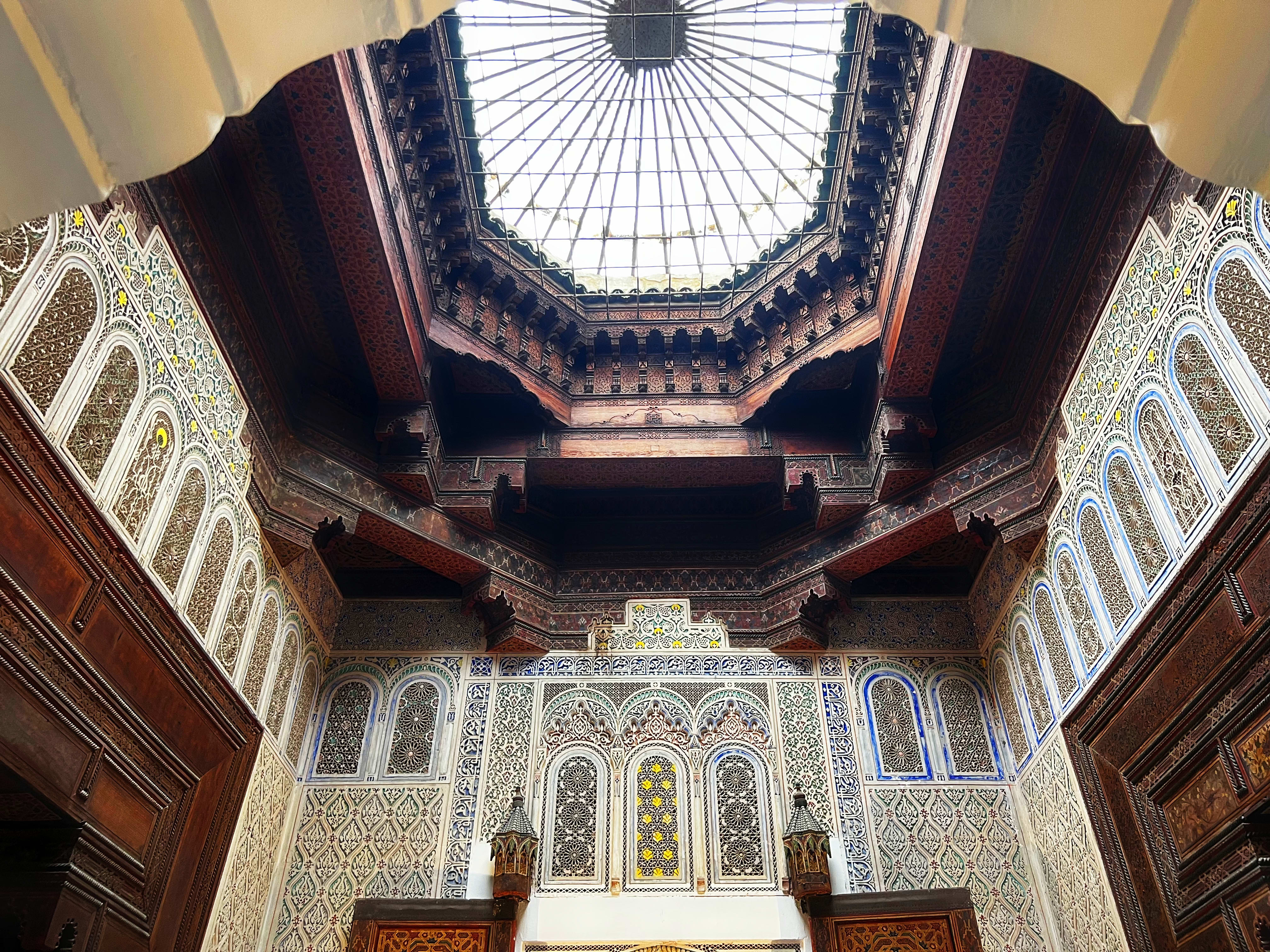
The palace also features intricate wrought-iron details that subtly complement the overall architectural design. As you tour the museum, you’ll appreciate the harmony between fine materials and traditional craftsmanship, which makes this place unique. This rich decor contributes to the authentic atmosphere you’ll experience during your visit, which is directly linked to Meknes’s cultural heritage .
The interior atmosphere
As we stepped through the doors of the Dar Jamaï Museum, we were struck by the delicacy of the space: nothing seems ostentatiously spectacular, yet every detail catches the eye, from the painted woodwork to the geometric patterns of the zellige tiles. You’ll immediately be enveloped by a peaceful atmosphere that invites contemplation. Natural light, filtered through the opening onto a lush patio, gently illuminates the various rooms, enhancing the sense of calm and harmony within the palace.
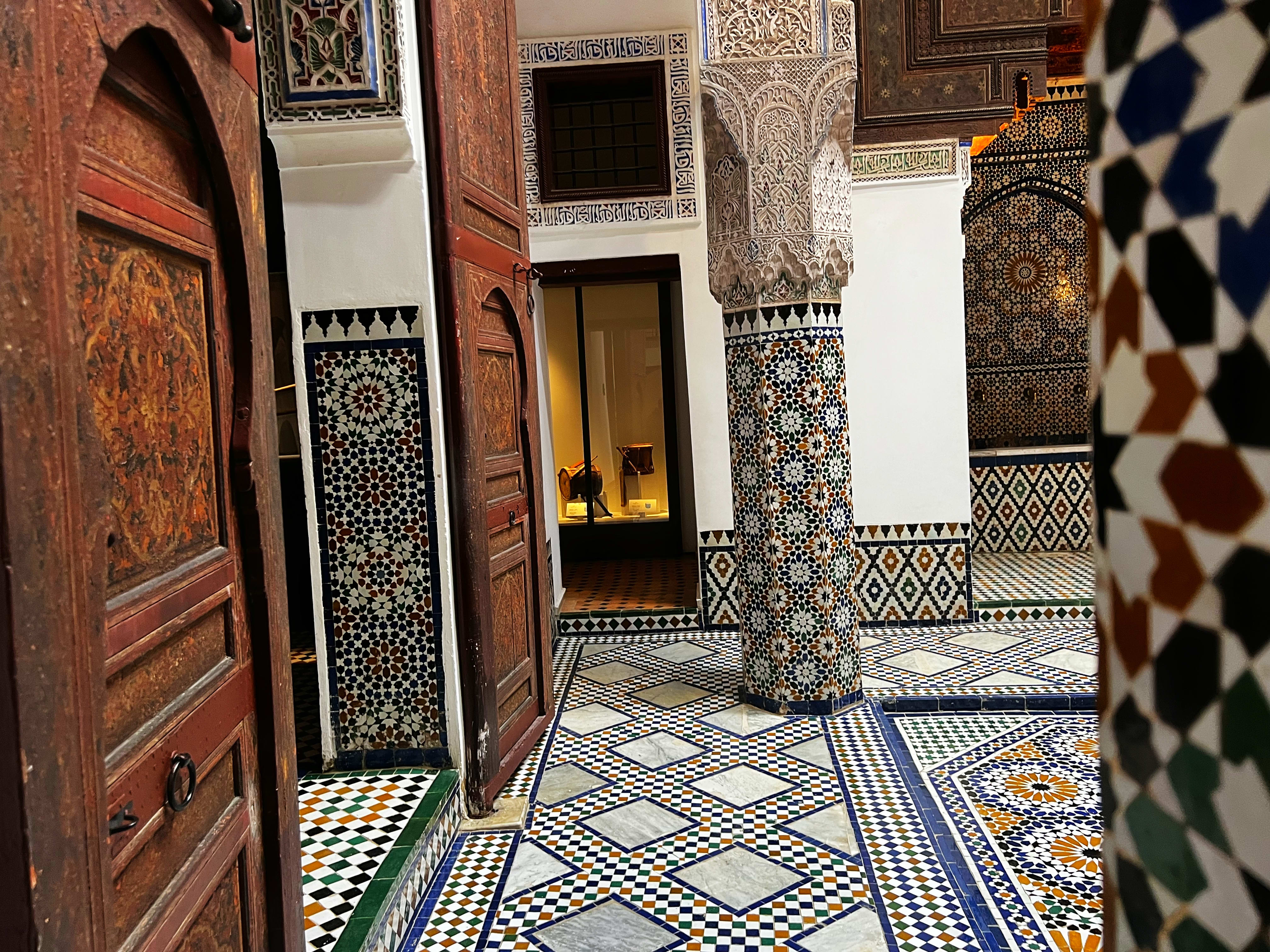
The interior design showcases Moroccan craftsmanship, with colorful zellige tiles adorning the walls and sculpted fountains dotted throughout the spaces. These mosaics of glazed terracotta tiles, featuring intricate geometric patterns, create a visual richness that invites guests on a true sensory journey.
This serene atmosphere encourages visitors to fully immerse themselves in the musical heritage on display, providing the perfect setting to appreciate the collections. We particularly appreciated the harmony between the traditional decor and the natural light, which gives the museum an authentic and welcoming atmosphere.
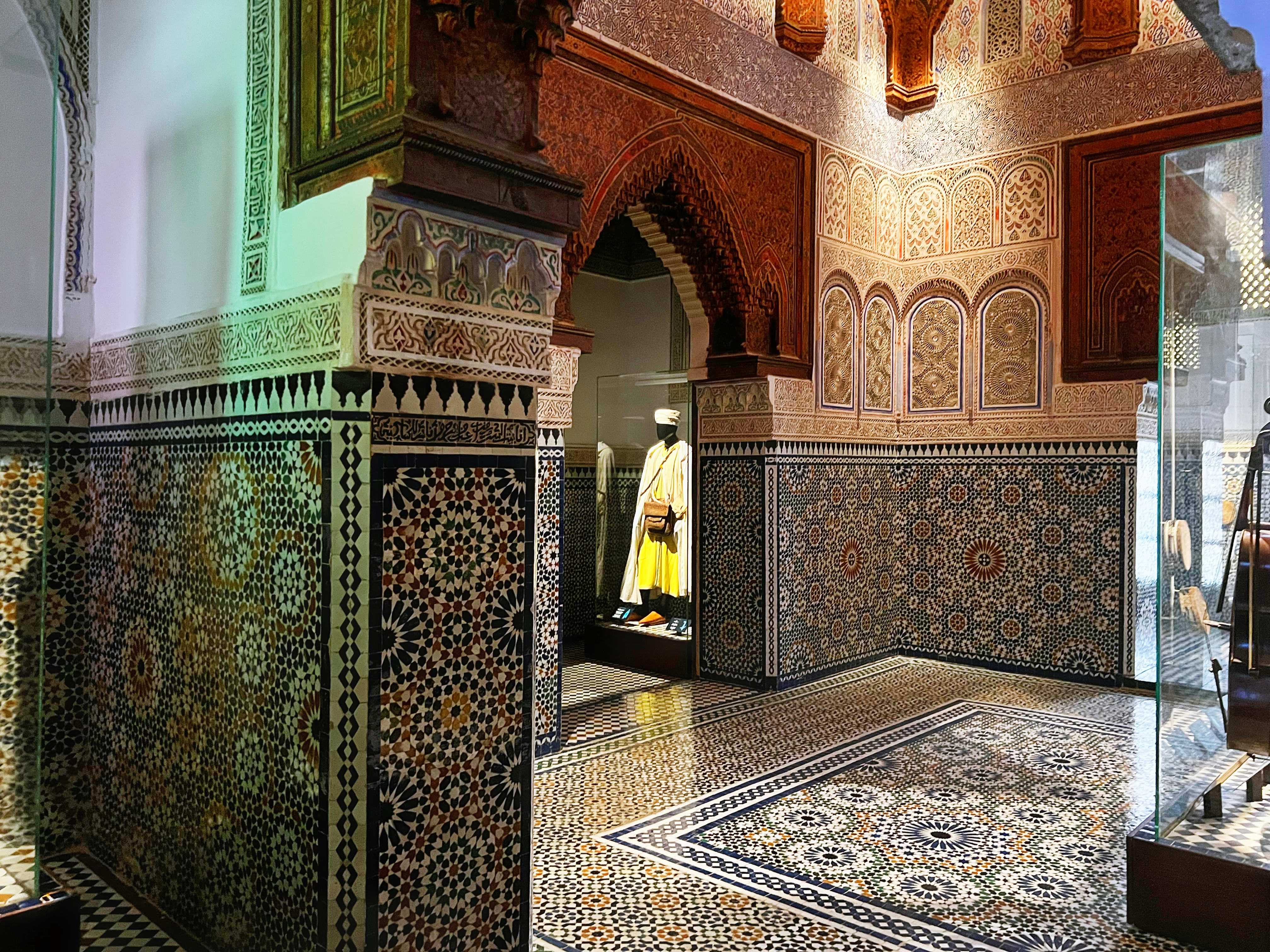
The Andalusian Garden
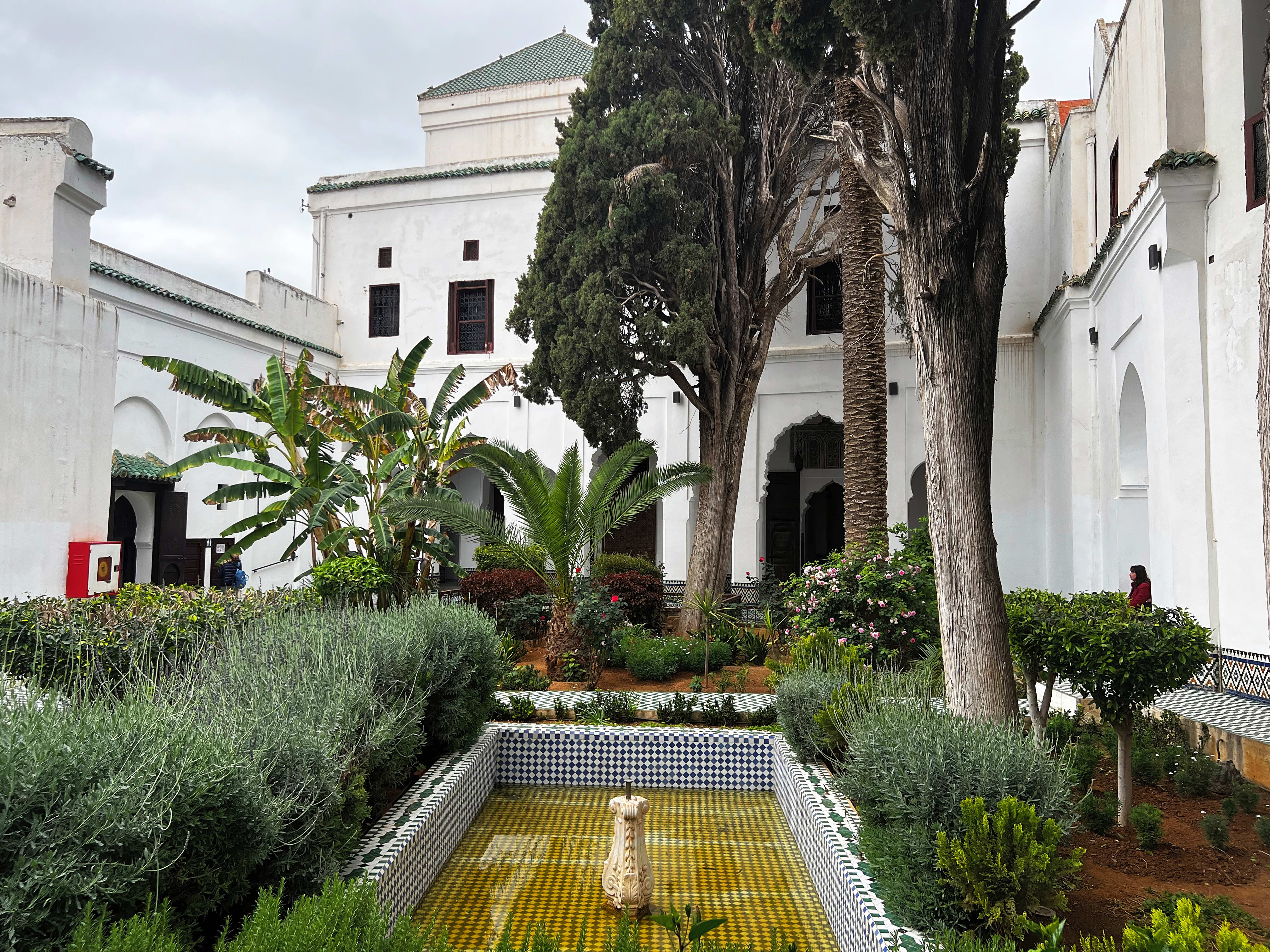
The Andalusian garden at the Dar Jamaï Museum, located within the 19th-century palace, is a key part of the visitor experience. It stands out for its Hispano-Moorish design elements, notably the colorful zellige tiles that adorn the walls and fountains, showcasing the richness of traditional Moroccan craftsmanship. These mosaics of glazed terracotta tiles featuring geometric patterns lend an authentic and refined aesthetic touch.
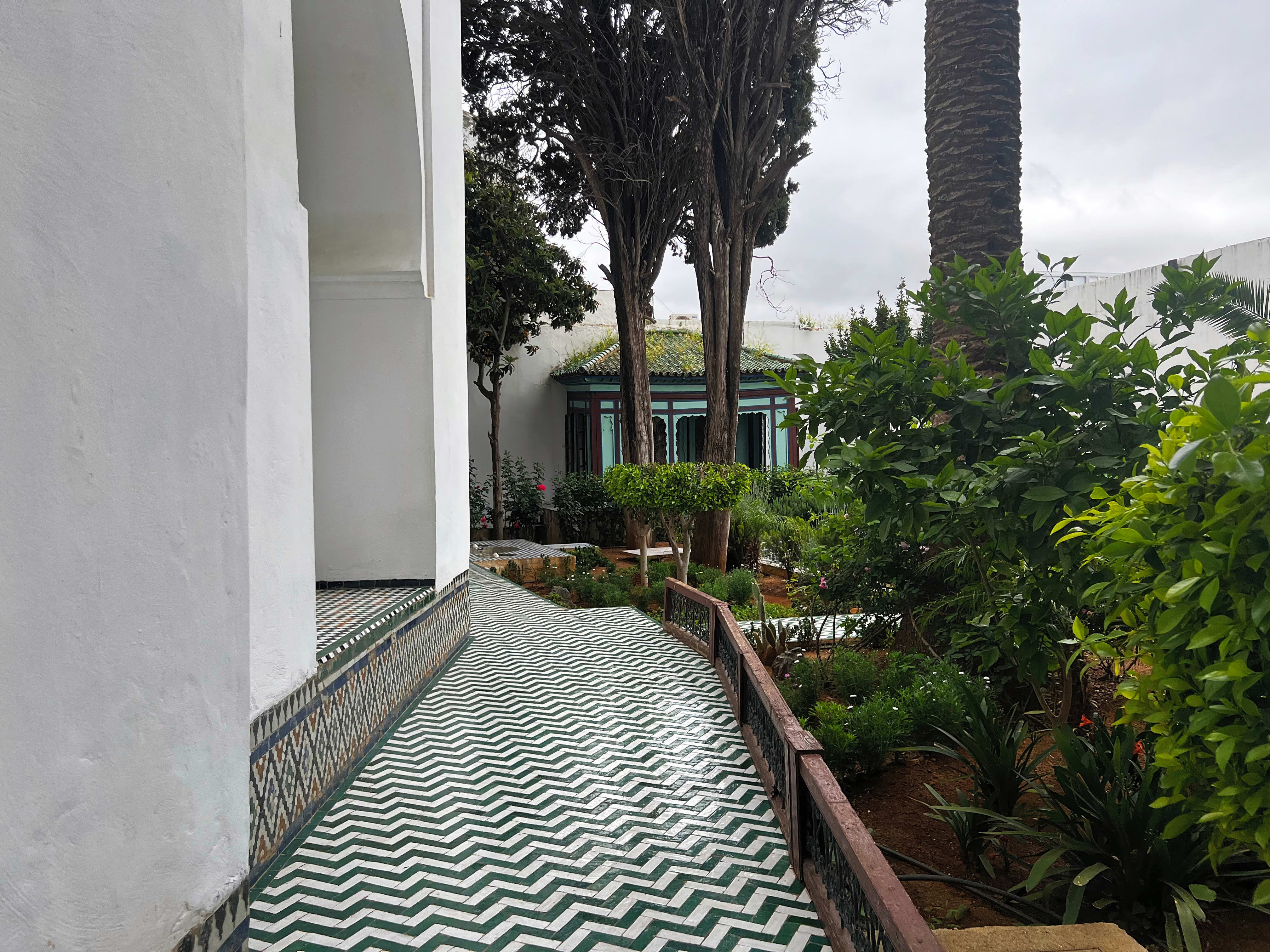
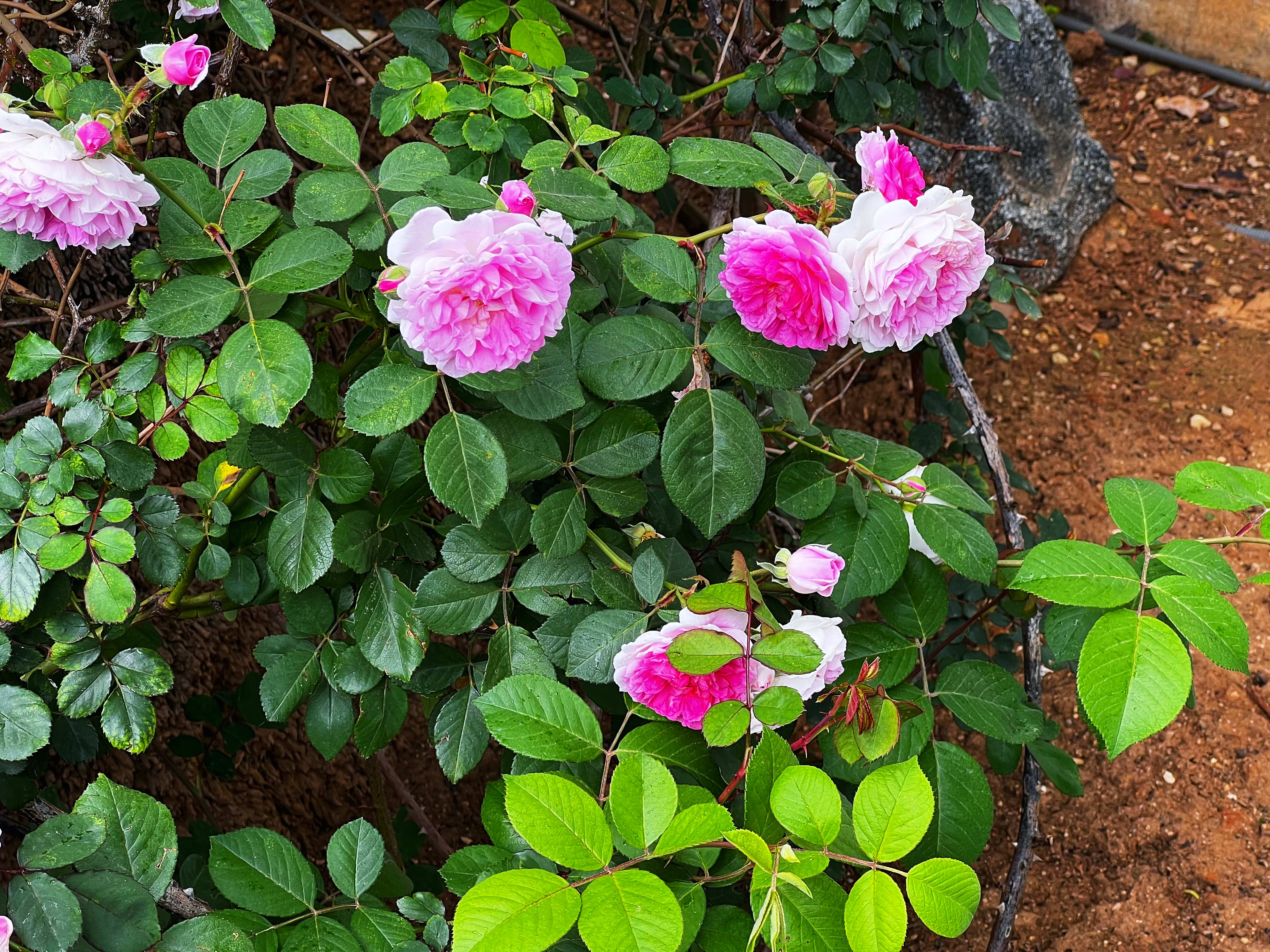
This garden is home to a wide variety of plants, including palm trees, roses, camellias, as well as banana trees and succulents. This diverse vegetation creates a pleasant, shaded space for relaxation, inviting visitors to take a break and contemplate. The fountains add a soothing soundscape, enhancing the feeling of coolness in the heart of the Meknes medina.
We particularly appreciated these quiet spaces, which offer a haven of calm away from the hustle and bustle of nearby El Hedim Square. In our opinion, this is one of the museum’s greatest charms: it’s not just a collection to be viewed, but a home where you can wander, breathe, and pause.
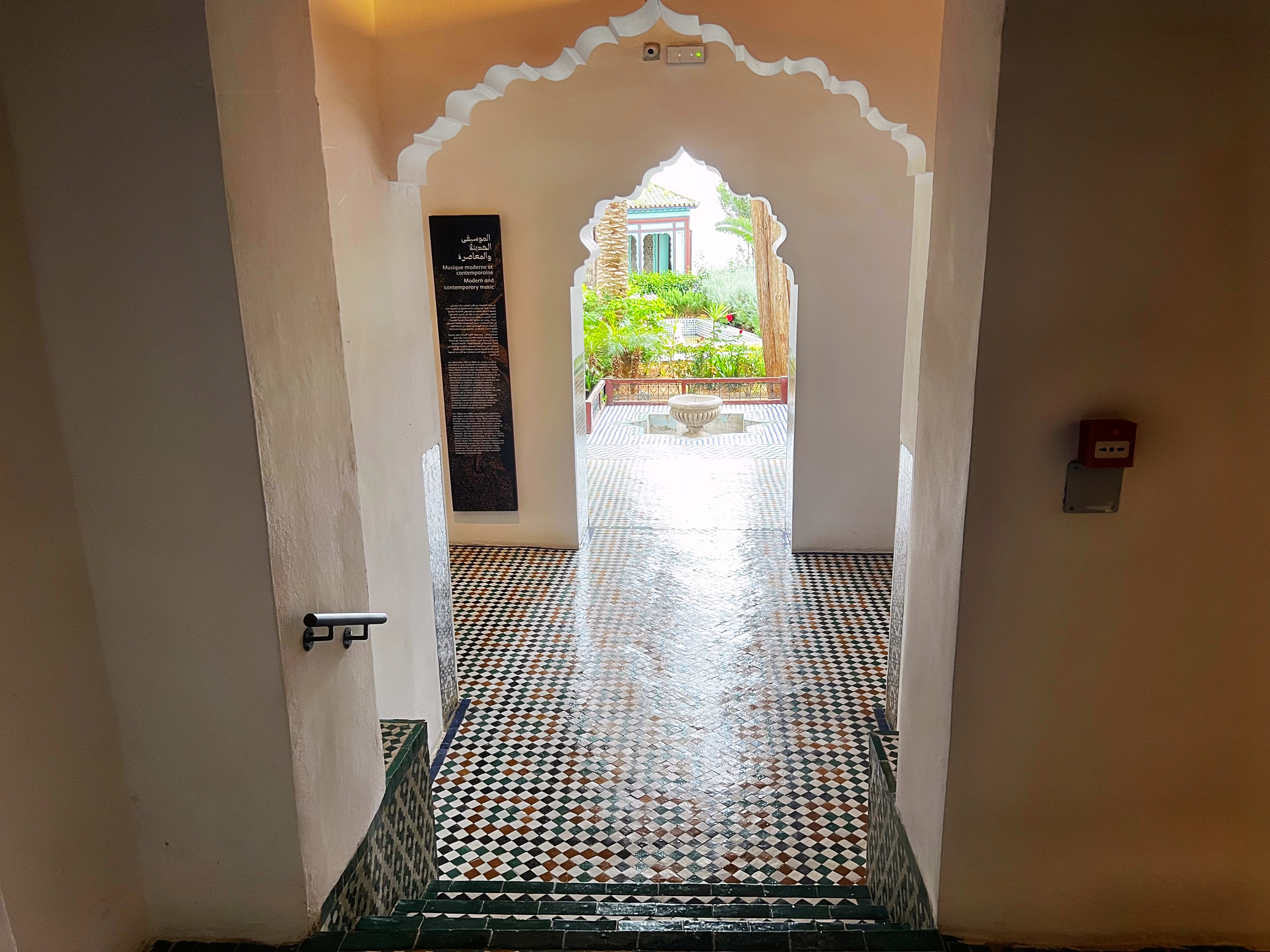
The Andalusian garden rounds out the tour by offering a unique sensory experience, where art, nature, and history blend harmoniously. Take the time to linger there before or after visiting the galleries—this break adds a whole new dimension to the entire tour.
What makes the Dar Jamaï Museum so unique is that the music isn’t experienced in a neutral setting. It interacts with the carved ceilings, the zellige tiles, the patios, and the garden. The palace almost becomes an instrument in its own right, with its spaces, materials, and play of light. Include this visit in a guided tour by booking here!
A Musical Journey Through the Sounds of Morocco
Instrument Collection
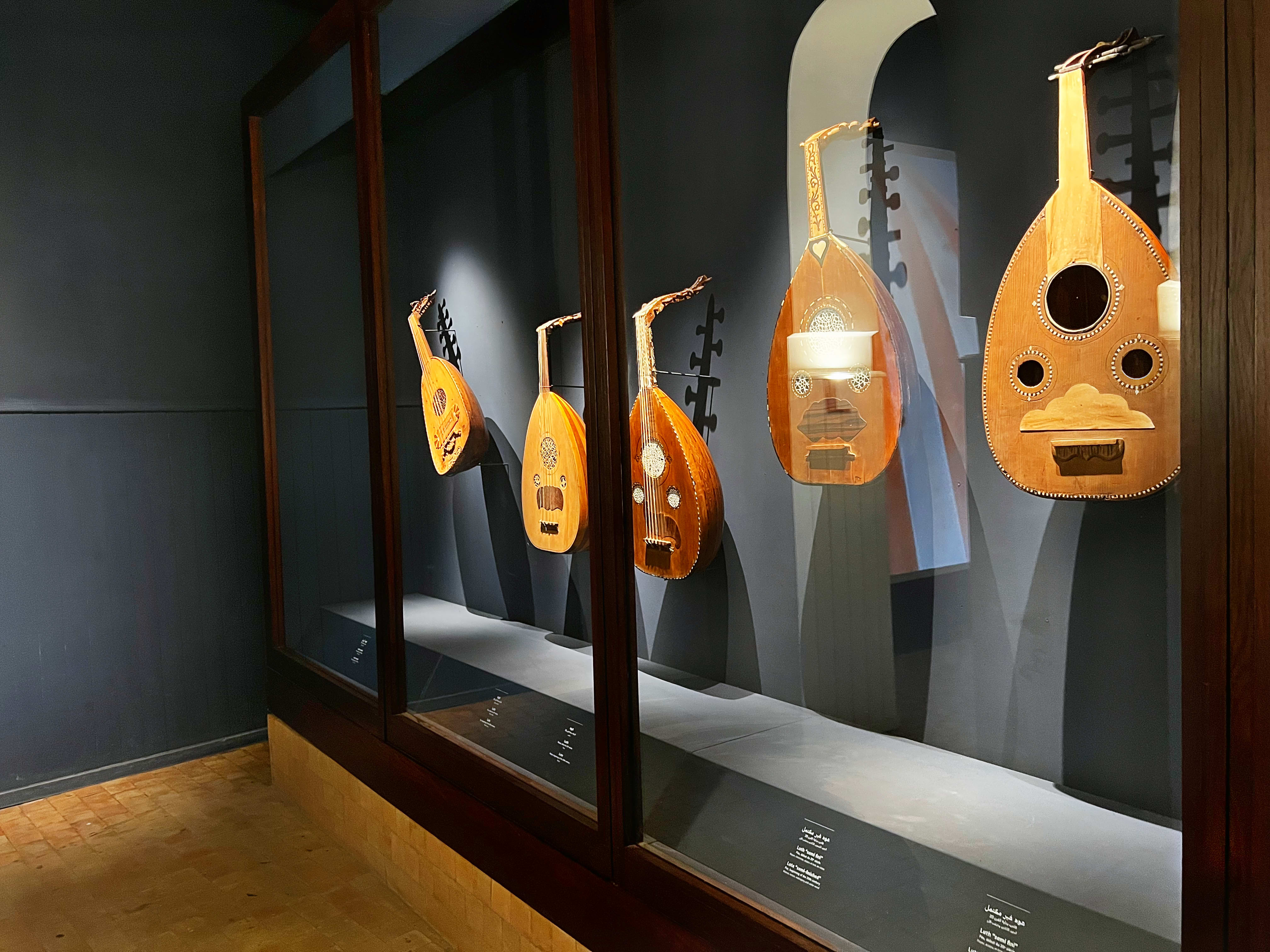
The Dar Jamaï Museum features a remarkable collection of Moroccan musical instruments, spanning a period from the 19th century to the present day. There, you’ll discover a wide variety of objects, including wind, string, and percussion instruments, which illustrate the richness of the country’s musical traditions. We found this exhibition particularly valuable because it tells a living story: that of Morocco’s festivals, rituals, family traditions, and regional identities.

An entire room is dedicated to the crafting of wooden instruments, where several pieces are on display alongside trilingual explanatory panels (French, English, Arabic). There, you’ll learn how traditional craft skills—some of which are endangered—are preserved through these techniques of instrument-making and metalworking.
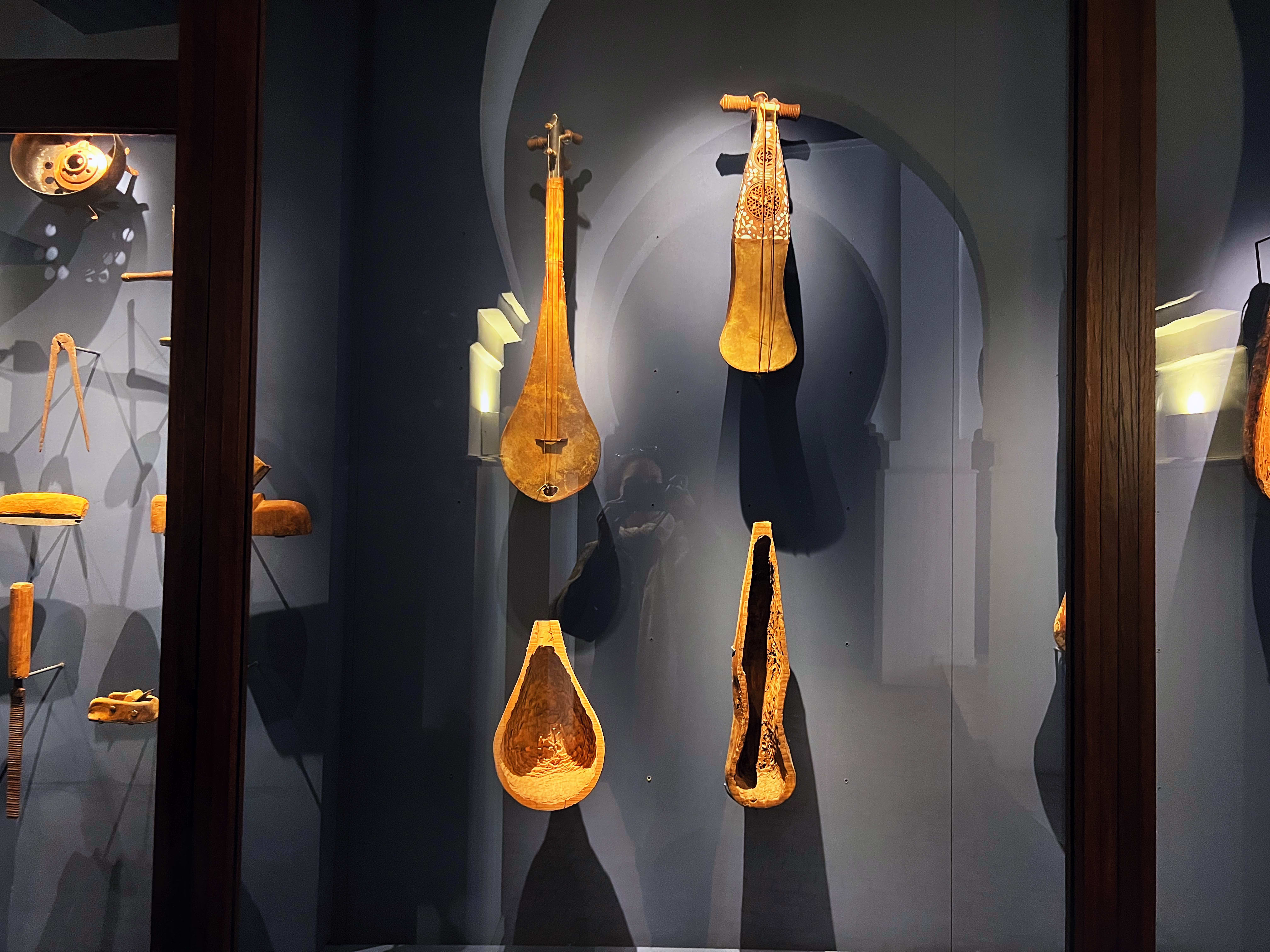
The collection highlights the diversity of Moroccan musical styles, such asAmazigh,Andalusian, Gnawa, and Malhun. This diversity gives the museum a broader scope than a simple display of historical artifacts: it helps visitors better understand just how deeply music is rooted in Moroccan culture.
Interactive Spaces
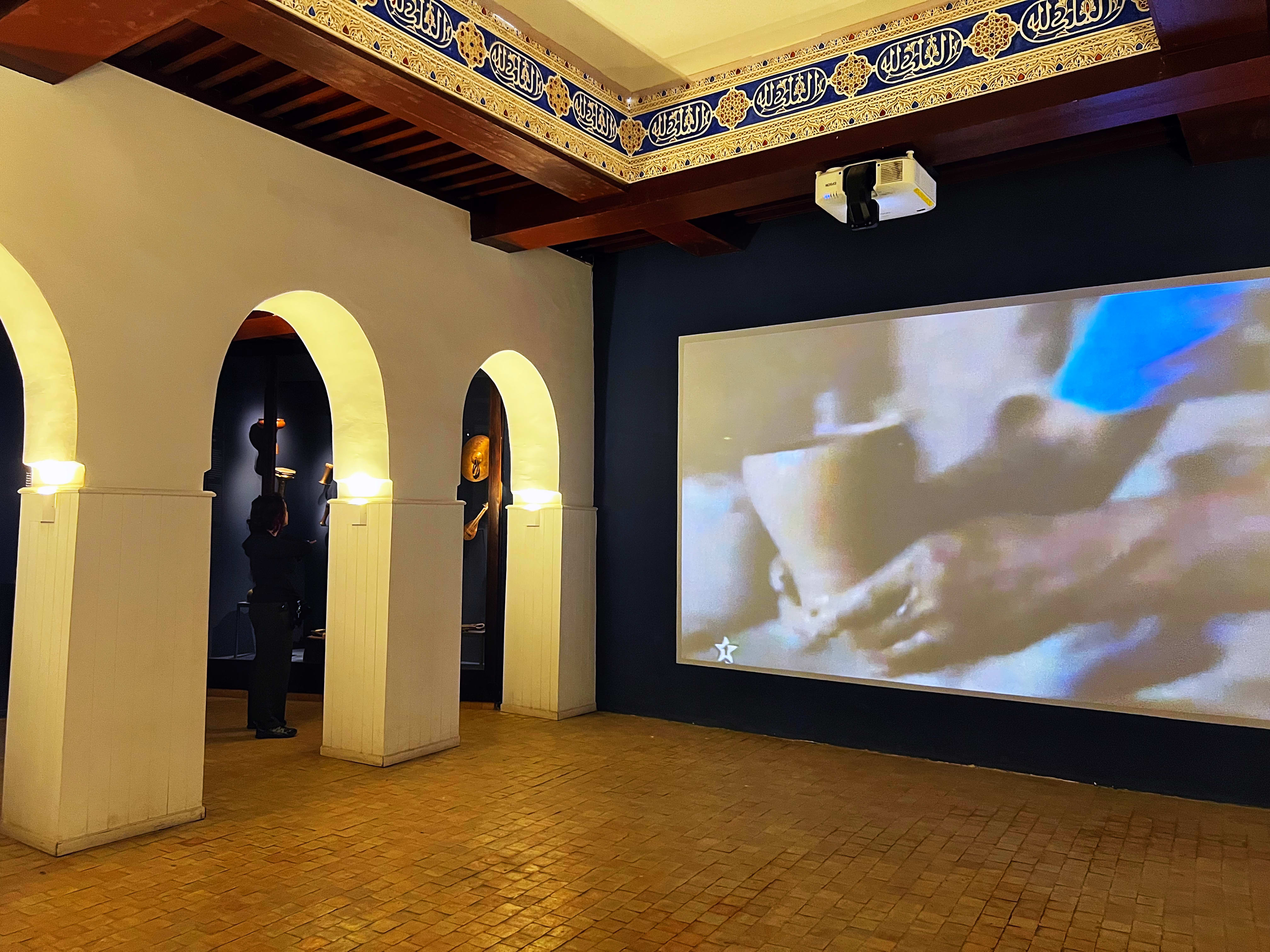
At the Dar Jamaï Museum , one room is specially designed to showcase the traditional craft of making wooden instruments. There you will find detailed informational materials, along with a screening area where archival footage and explanatory videos are shown. These resources illustrate the evolution of Moroccan music as well as the artisanal skills involved in instrument-making—an essential aspect for understanding the region’s rich cultural heritage.
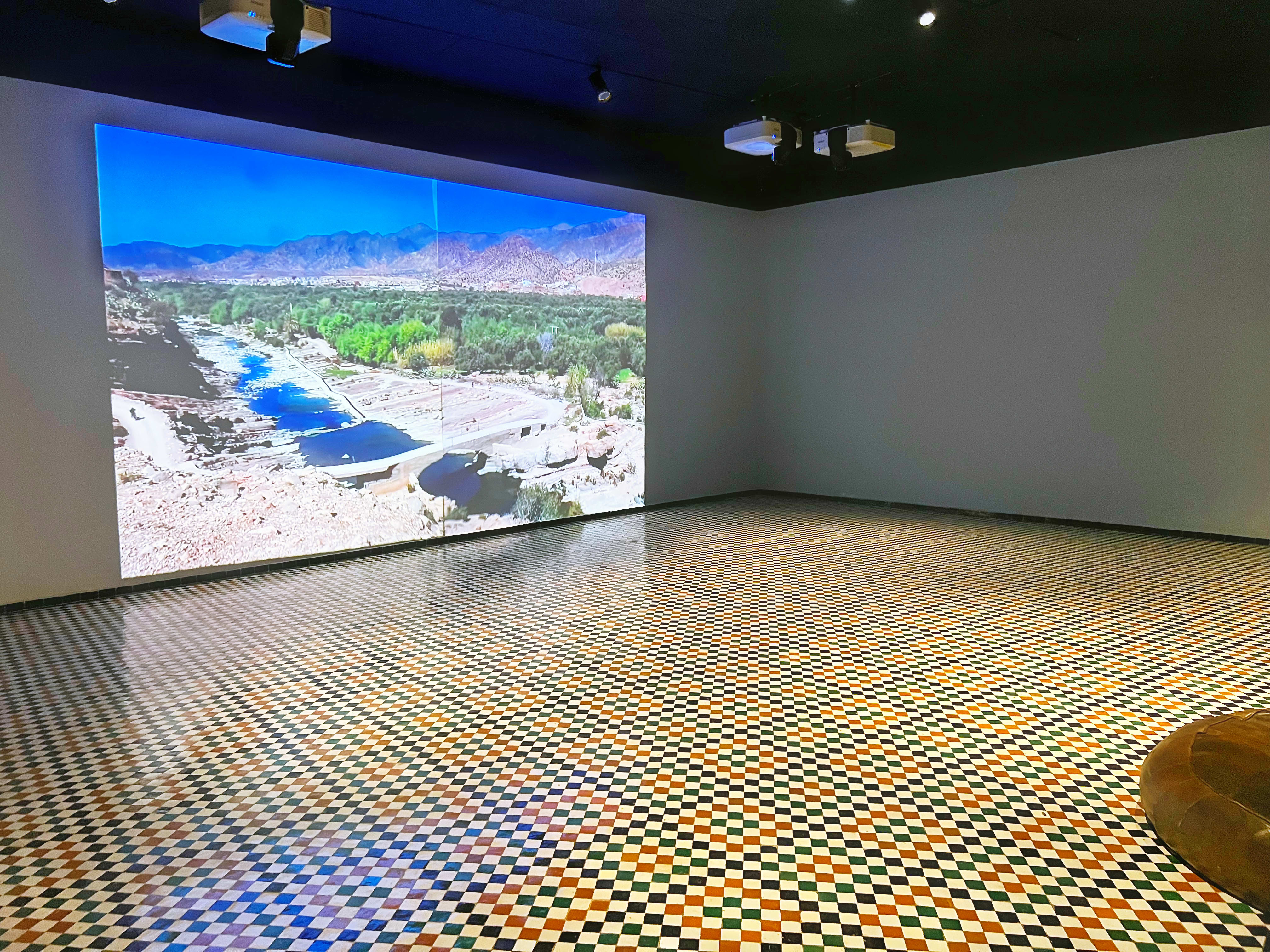
The museum also offers audio recordings accessible via headphones, allowing visitors to hear the authentic sounds of the instruments on display. These interactive features facilitate a deeper immersion in Morocco’s musical heritage, making the visit accessible and engaging for a wide audience, from history buffs to families with children.
In addition, educational workshops are regularly held to introduce visitors to traditional crafts and musical techniques. These hands-on activities foster a deeper understanding of local cultural practices and enrich the visitor experience beyond simply viewing the collections.
Cultural Role
The Dar Jamaï Museum plays a vital role in promoting Moroccan musical traditions. Its collection highlights the richness of the Amazigh, Andalusian, Malhun, Chaabi, Aïta, Reggada, Gnawa, and Guedra styles, thus offering a comprehensive representation of the country’s cultural diversity. This effort helps preserve an intangible cultural heritage that is often little known outside Morocco’s borders.
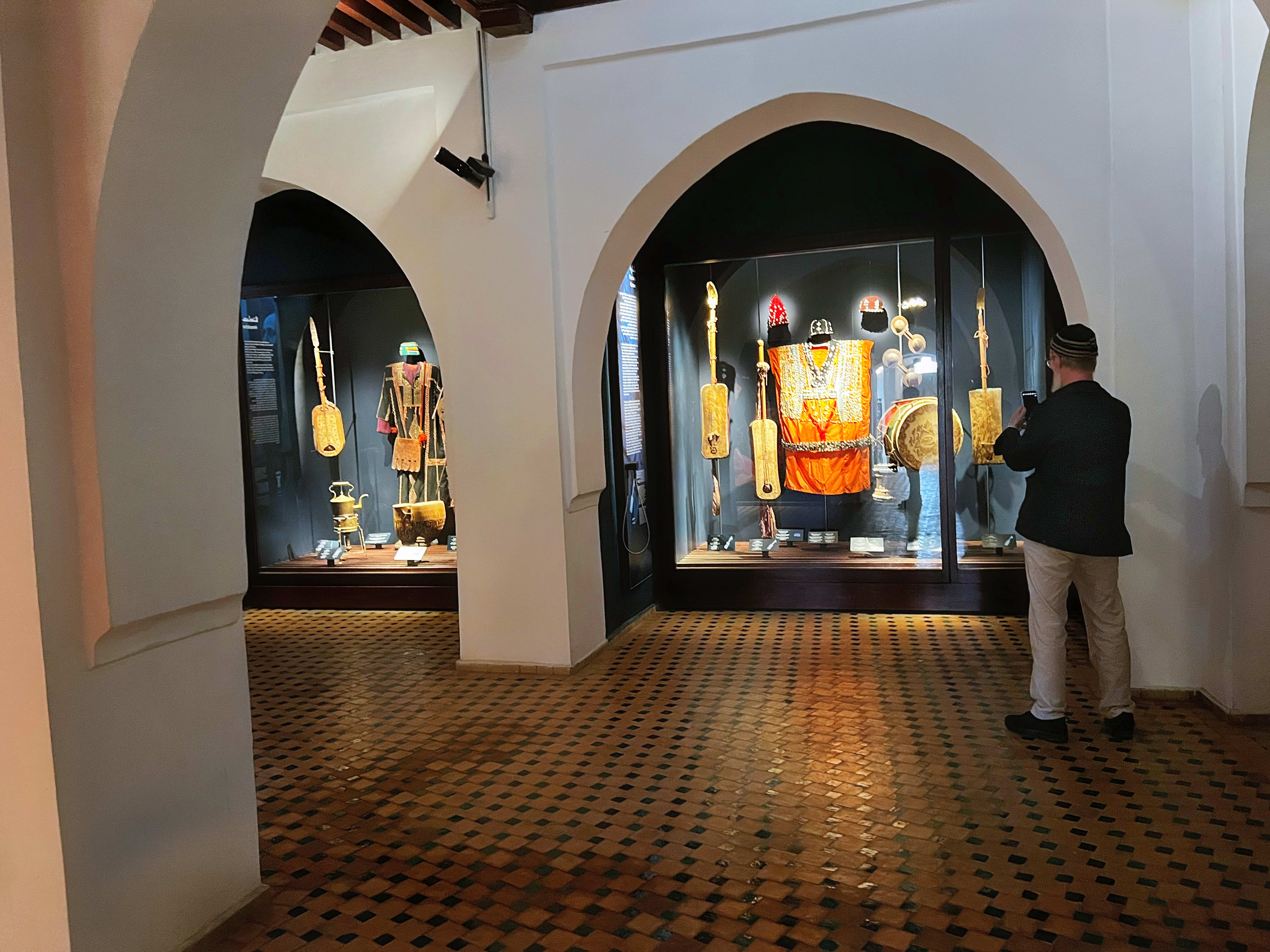
Thanks to its well-designed exhibits, the museum attracts a diverse audience, from history buffs to families with children. Interactive features, such as headphones and explanatory videos, make the content easier to understand and ensure the visit is accessible to everyone. You’ll be able to discover musical instruments and practices in an environment that is both educational
In addition, the museum is committed to cultural outreach by offering content in French, English, and Arabic. This linguistic accessibility helps attract international visitors and school groups, further enhancing the museum’s appeal. You’ll also appreciate the supplementary materials, such as the booklets on Berber dances, which enrich the visitor experience.
We left the Dar Jamaï Museum feeling as though we had discovered one of the most evocative places in Meknes. More than just a music museum, it offers an encounter with the elegance of a palace, the legacy of artisans, and the rich sounds of Morocco.
Subscribe to our Newsletter
- Get away from it all with Region Lovers’ beautiful destinations!
- Once a month
- Advertising-free

Frequently asked questions
Accessibility for People with Limited Mobility
The Dar Jamaï Museum offers partial accessibility for people with limited mobility, with wheelchair-accessible areas on the ground floor. Accessible restrooms also contribute to an inclusive visitor experience. However, some narrow staircases—a characteristic feature of this historic building—limit access to the upper floors, which may prevent some visitors from exploring the entire museum.
As you approach the museum, it’s important to note that the cobblestone and uneven streets of the medina can make access difficult for people with limited mobility. We suggest that you arrange for an escort or take a taxi to El Hedim Square, located right nearby, to minimize these difficulties.
Museum staff are trained to assist visitors with disabilities and ensure that everyone feels welcome. Amenities such as audio guides and sign language interpretation are available to aid understanding and make the visit more accessible to all visitors.
Is a reservation required?
Individual visitors do not need to make a reservation in advance to visit the Dar Jamaï Museum. You can simply go directly to the museum entrance during opening hours, from 10:00 a.m. to 5:30 p.m., except on Tuesdays, when the museum is closed.
To avoid waiting in line, we recommend arriving early in the day or during off-peak hours, especially in the morning. The museum, located in the heart of the medina, has a moderate number of visitors, which makes for a relaxed visit even without a reservation.
If you want to ensure quick access—especially during busy tourist seasons—you can check ticket offers online on specialized platforms. However, this option is optional, and making a reservation is not required to fully enjoy your visit.
PLAN YOUR TRIP TO Morocco
- Best of
Top Destinations
Must-See Places in Morocco
Most Beautiful Riads
Most Beautiful Cities
Most Beautiful Medinas
Morocco’s Most Beautiful Landscapes
Most Beautiful Gardens
Best Museums
Morocco’s Most Beautiful Beaches

- Practical advice
When to go?
How to rent a car in Morocco
Driving tips

- The must-dos
Marrakech
Casablanca
Fez
Meknes
Chefchaouen
Essaouira
Rabat
Tangier
Tetouan
Agadir
The Sahara Desert

