
Are you planning a trip to Rabat? Good choice: Morocco’s capital offers a lively medina, a kasbah overlooking the Atlantic, major historic sites, and a more relaxed pace of life than in the country’s other major cities.
Here are all the details to answer your question: Is Rabat safe?
You’ll also find our practical tips for traveling with peace of mind.
This opinion is completely independent, based on our experiences. We visited the region anonymously, making our own choices and paying our bills in full.
Is Rabat safe? Quick answer
Rabat offers a relatively peaceful environment for a capital city of this size. The main tourist attractions and central neighborhoods are generally easy to explore, provided you take the usual precautions. As the seat of government and home to the Royal Palace, the capital has a visible police presence in the city center and around official sites.
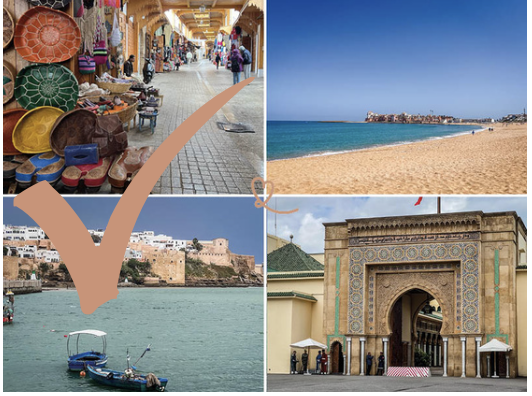
We found its medina to be lively, but much less hectic than that of Marrakech. We also appreciated how easy it was to get around by tram—it was clean and ran on time.
The few risks to be aware of include strong currents at certain beaches, pickpocketing in crowded areas, some solicitation in the medina, and heavy traffic during rush hour.
The sale and consumption of alcohol are regulated. On-premises consumption is limited to licensed establishments. Some businesses are also authorized to sell alcohol for takeout. Please also be aware that importing a drone into Morocco is prohibited without prior authorization. Without this authorization, the drone may be confiscated at customs, and its owner may be subject to a fine.
Risks in the ocean

Rabat overlooks the Atlantic Ocean, and its beaches offer a welcome break between days of cultural sightseeing. The city beaches, such as Oudayas Beach and Salé Beach, are very popular in the summer. It is mainly the currents and swells that require caution, as the Atlantic remains powerful even in good weather. The risk is particularly high near the mouth of the Bouregreg River, where swimming conditions can be challenging.
To enjoy the ocean, we recommend choosing supervised beaches and following the posted guidelines. Further south, the beaches at Bouznika and Skhirat are also popular with swimmers, but they are not free of currents.
In winter, the waves can be quite strong along the coast. Avoid getting too close to the rocks and breakwaters when the sea is rough.
Tips:
Beach patrols are primarily conducted during the summer season and do not cover all beaches or all times of the day. Check the flags and posted instructions on site. Outside of patrol hours, avoid swimming alone.

What to Do in an Emergency? Medical Care
Before discussing other risks, here are the key points to remember in case of an emergency. In Morocco, emergency numbers differ from those used in Europe:
- Police: 19
- Firefighters and ambulances (Civil Protection): 15
- Royal Gendarmerie, responsible for areas outside cities: 177
- 112: When dialing from a cell phone, this number connects you to emergency services
As the capital, Rabat has a well-developed healthcare system. The Ibn Sina University Hospital is one of the country’s leading public hospitals, and several private clinics cater to foreign visitors. French is widely spoken by healthcare staff.
On-call pharmacies are open at night, on Sundays, and on holidays. Their contact information is usually posted in the windows of closed pharmacies. You can also check updated lists online. Finally, we recommend that you travel with travel insurance that covers medical expenses.
Theft and Crimes

As in any major tourist city, pickpocketing can occur in Rabat, particularly in crowded areas: Souika Street and the souks of the medina, the tram during rush hour, and the city beaches in the summer. Visitors should be especially vigilant in crowded areas and when they are distracted.
In crowded alleys, we always keep our valuables in a closed pocket or a bag carried in front of us. When making a purchase or taking a photo, we also make sure not to set our phone or wallet down on a stall, because it’s precisely these moments of inattention that pickpockets take advantage of.
Advice:
- Don’t leave anything in plain sight in the car, even if you’re only stopping for a few minutes
- Divide your cash and credit cards among several pockets or bags
- Keep a copy (paper or digital) of your passport; you can leave the original in the hotel safe, except when visiting the gardens of the Palais Royal and the esplanade.
- At the beach, don’t leave your belongings unattended while you’re swimming
WHERE TO STAY IN Rabat
Our favorites: neighborhoods and hotels
Hassan District –
La Tour Hassan Palace Hotel – see prices, photos and availability
Historic Center of Rabat –
Riad Meftaha Hotel – see prices, photos and availability
Marina Rabat-Salé –
Fairmont La Marina Rabat Salé Hotel – see prices, photos and availability

Traveling Alone in Rabat as a Woman

Rabat is relatively easy to explore when traveling alone, especially in the central and busy neighborhoods. Many Moroccan women walk around the city alone, particularly in the Agdal and Hassan neighborhoods. However, you may encounter comments, people calling out to you, or staring, especially in the medina or in the evening on quiet streets.
We advise you not to engage in conversation with people who approach you for no reason and to keep walking. If a situation becomes uncomfortable, head to a store or a crowded area. In the medina, we also recommend wearing clothing that covers your shoulders and knees, out of respect for local customs rather than as a requirement. The atmosphere there is more relaxed than in Marrakech, and many Moroccan women walk around alone, particularly in the Agdal and Hassan neighborhoods.
As in all major cities, in the evening, stick to the well-lit, bustling streets in the city center, and take a taxi back to your lodging if the route takes you through deserted streets.
As for us, our stay went smoothly, and we didn’t notice any inappropriate behavior.
Fake guides and scams

Solicitations are significantly less frequent in Rabat than in the medinas of Marrakech or Fez. However, it does happen that unofficial “guides” offer to accompany you through the Oudayas Kasbah or the medina, then demand payment at the end of the tour. If you do not wish to be accompanied, politely decline from the start and continue on your way without engaging in conversation. If the person insists, head to a busier street.
In the souks, haggling is part of the tradition: it’s not a scam at all, as long as you have an idea of the prices before buying. So we always compare prices at two or three stalls before making a decision. If we don’t like the price offered, we simply thank the seller and continue our tour.
To explore the city with an official guide, it’s best to book in advance.
Interested in a guided tour? Check prices and availability
Sun Hazards and Climate

Rabat enjoys a fairly mild oceanic climate, but the sun can be intense, especially from June through September. Several outdoor sites, such as the Hassan Tower esplanade or the Chellah, offer little shade. We prefer to visit the Chellah in the morning, when temperatures remain comfortable and the light is ideal for photos.
From November through March, temperatures generally range from 10°C to 18°C. A few showers may occur, but they’re often brief. We’ve also found winter evenings to be quite chilly: a wool sweater and a lightweight raincoat are easy additions to your suitcase.
Advice:
- Apply sunscreen regularly, even on cloudy days
- Wear a hat and sunglasses
- Always carry a bottle of water with you
- In the summer, plan outdoor visits for early morning or late afternoon
OUR TIPS FOR RENTING A CAR IN MOROCCO
- Compare prices on our preferred platform: DiscoverCars – one of the best rated sites.
- Not too wide
- A good engine
- For more choice, book early.

Is it dangerous to drive in Rabat?

Driving in Rabat is relatively easy on the major boulevards, but you need to stay alert. Traffic can be heavy during rush hour, and the behavior of drivers, motorcyclists, and pedestrians can sometimes be unpredictable. Parking in the city center is also limited. Be careful at crosswalks, especially near roundabouts and major thoroughfares.
Cars are not allowed in the medina or the Kasbah of the Oudayas; we recommend that you leave your car at the hotel when visiting these areas. On the street, attendants in vests often watch over the parking spots, and we leave them a few dirhams when we leave, as is customary.
The list of paid parking lots is available on the city’s official website here.
Getting Around Safely in Rabat

Public transportation in Rabat is reliable and offers a safe alternative to driving:
- The tram: Its two lines serve the main neighborhoods and tourist attractions. We found it convenient, clean, and affordable. Just keep an eye on your belongings when the cars are crowded.
- Small blue taxis: They operate only within the city and are an affordable option for short distances. Make sure the driver turns on the meter right when you get in.
- City buses: There are manyof them, but they’re often crowded during rush hour.
- Traditional boats: They shuttle back and forth across the Bouregreg River between Rabat and Salé—a short and peaceful crossing.
To travel to other cities,ONCF trains—including the Al-Boraq high-speed line—and air-conditioned buses operated by CTM are safe and comfortable options. Large white taxis also provide intercity service.
Find all the details in our article on how to get to Rabat.

A LITTLE MORE PATIENCE
All the photos, maps, information and addresses you need to make your stay at Maroc a success will soon be available in a single ebook!
Coming soon!
Is the water safe to drink in Rabat?

Tap water is treated in Rabat’s water distribution system. However, its taste may come as a surprise to visitors. If you have a sensitive stomach, you may want to stick to bottled water during your stay.
Cultural Norms to Be Aware Of

Knowing a few local customs helps prevent misunderstandings and makes it easier to interact with people there:
- Five times a day, the call to prayer echoes from the minarets of mosques, starting at dawn (these calls may be audible in some accommodations—especially if you are sensitive to noise—in places near mosques, particularly early in the morning)
- On Fridays, the day of the main prayer, some businesses adjust their hours or close in the early afternoon, even though it is not an official holiday
- Active mosques are closed to non-Muslims, but the Mohammed V Mausoleum is open to visitors, provided they wear clothing that covers their shoulders and knees
- A form of identification is required to access the Palais Royal esplanade (passport for foreign nationals); please note that the interior of the palace is not open to the public.
- Ask for people’s permission before taking their picture, and avoid photographing police officers, military personnel, and government buildings
- During Ramadan, some restaurants are closed during the day: eating, drinking, or smoking in public is still tolerated for visitors, but discretion is appreciated
Subscribe to our Newsletter
- Get away from it all with Region Lovers’ beautiful destinations!
- Once a month
- Advertising-free

Safety in Rabat’s Neighborhoods
Is the medina of Rabat safe?
Yes, the medina is safe to visit during the day, and its narrow streets remain lively until evening around Souika Street. However, the crowds do attract a few pickpockets: keep your bag closed and in front of you. After the shops close, some alleys become deserted, so it’s best to head back to the main streets. The most convenient entrance is through the Bab El Had Gate.
Is the Kasbah of the Oudayas safe?
The Kasbah is entirely pedestrian-only and is a peaceful place that’s very popular with both visitors and Moroccan families. People may spontaneously offer their services as guides at the entrance to Bab Oudaia. If you’d like to visit the kasbah on your own, you can simply decline. Also, be careful on the cobblestone, sloping alleys, which can be slippery after it rains.
See our article on the Kasbah of the Oudayas.
Is the Hassan neighborhood safe?
The Hassan neighborhood, home to the Hassan Tower and the Mohammed V Mausoleum, is home to several official buildings and sites. The atmosphere there is generally calm, and the wide avenues are easy to explore on foot.
See our article on the Hassan Tower and the Mohammed V Mausoleum.
Is the Agdal neighborhood safe?
Both residential and commercial, Agdal is home to numerous cafés, shops, and restaurants, particularly along Fal Ould Oumeir Avenue. It is one of the most pleasant neighborhoods to spend time in, even in the evening. It is home to one of the city’s main train stations as well as the Botanical Garden, a peaceful green space right in the heart of the city.
See our article on the Botanical Garden.
Is Salé safe?

A sister city to Rabat on the opposite bank of the Bouregreg River, Salé is more down-to-earth and less accustomed to visitors. The marina, which is modern and bustling in the late afternoon, is a pleasant place to stroll. In the medina, people are generally welcoming, but keep your valuables out of sight and avoid secluded alleys after dark.
See our article on the Oulja Pottery Complex.
PLAN YOUR TRIP TO Morocco
- Best of
Top Destinations
Must-See Places in Morocco
Most Beautiful Riads
Most Beautiful Cities
Most Beautiful Medinas
Morocco’s Most Beautiful Landscapes
Most Beautiful Gardens
Best Museums
Morocco’s Most Beautiful Beaches

- Practical advice
When to go?
How to rent a car in Morocco
Driving tips

- The must-dos
Marrakech
Casablanca
Fez
Meknes
Chefchaouen
Essaouira
Rabat
Tangier
Tetouan
Agadir
The Sahara Desert


SHE MADE THE TRIP Myriam
