• Skip to primary navigation
  • Skip to main content
  • Skip to primary sidebar
  • Skip to footer
Maroc Lovers

Maroc Lovers

  • BEST-OF
    • Most beautiful landscapes
    • Best riads
  • TOWNS
    • Casablanca
    • Chefchaouen
    • Fez
    • Marrakech
    • Meknes
    • Rabat
    • Tangier
    • Tetouan
  • ABOUT
  • English
    • Français
    • Dansk
    • Nederlands
    • Deutsch
    • Italiano
    • Português
    • Español
    • Svenska

Best-of Morocco

10 most beautiful medinas in Morocco (with our photos)

By Claire, Region Lovers | January 10, 2026 | no intrusive ads, no sponsored content, just some affiliate links - if you use them, we get a small commission (read more)

Morocco’s medinas offer an immersion in the country’s history and daily life. These ancient districts, surrounded by ramparts, reveal a remarkable architectural heritage and a unique atmosphere.

We’ve selected ten of Morocco’s most beautiful medinas that are well worth a visit: we tell you why, and share practical tips for exploring them.
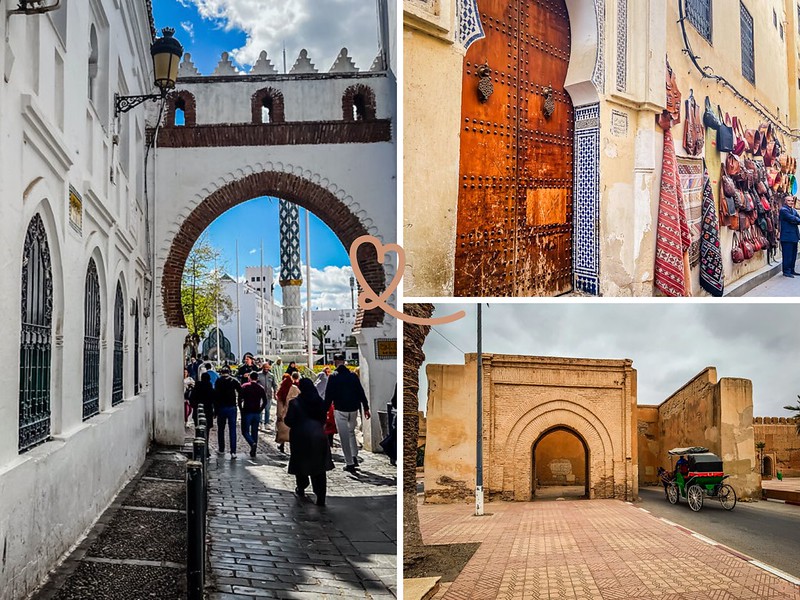
Morocco's most beautiful medinas

This opinion is completely independent, based on our experiences. We visited the region anonymously, making our own choices and paying our bills in full.

The medinas: historic centers

The medina refers to the historic center of a city in the Arab-Muslim world.

In Morocco, these fortified districts are home to souks, mosques, public fountains and traditional houses organized around narrow streets. Each medina has its own identity, shaped by its history and geography. These are fascinating places to explore!

These areas remain places where people and craftsmen perpetuate ancestral know-how. Urban density and vernacular architecture create a microclimate that protects against summer heat.

1. Medina of Tetouan, UNESCO world heritage site

Tetouan Medina - Exploring the medina

Why we love it

Did you know that the medina of Tetouan is unique in Morocco? We were fascinated to explore it. Spread out on the slopes of the Djébel Dersa mountain, it occupies a special place in the country’s history: as early as the VIIIᵉ century, its location made it a strategic passage between the kingdom and Andalucia. Destroyed and then completely rebuilt after the Spanish Reconquest, it owes its current appearance to the Andalucia refugees who recreated a veritable art of living here.

Another distinctive feature is its unmistakable green-and-white visual identity. Nicknamed “the white dove” for its immaculate walls, Tetouan also features touches of green on doors, windows and minarets. Although green appears in various architectural traditions throughout the Arab-Muslim world, its use in Tetouan is above all the result of a local evolution: the city gradually adopted it, particularly under the Spanish protectorate, until it became a distinctive element of its visual identity. If you’ve ever explored other Moroccan medinas, you’ll notice that this chromatic duo doesn’t exist anywhere else with such consistency.

Its organization, combined with lively craftsmanship and architectural simplicity, creates a peaceful, authentic atmosphere.

Exploring the medina is one of the highlights of your visit to Tetouan.

Bab Rouah gate
Bab Rouah gate

Practical advice

  • Length of visit: 2 hours to half a day, depending on your pace and interests
  • Visit in the morning or late afternoon for soft light and calm.
  • Access: you can only enter on foot through several gates, the most convenient of which are Bab el-Okla (museum side), Bab Tut (direct access to the main arteries) and Bab Rouah for a first reference.
  • Parking: Feddan and Hammadi pay underground parking lots within a 15-minute walk
  • Narrow and sometimes steep streets, as the town is very hilly; uneven cobblestones can be slippery in wet weather;
  • Use a baby carrier rather than a stroller because of the slopes and stairs; wear good shoes with non-slip soles.
  • Opt for a guided tour if you want to understand Andalucia’s influences and urban organization, with Moroccan pastry tasting to boot!
WHERE TO STAY IN Morocco

Our independent picks for the accommodation of your dreams:

  • Where to stay in Morocco (coming soon)
  • The most beautiful riads in Morocco

Select by city:

  • Best hotels in Marrakech
  • Best hotels in Casablanca
  • Best hotels in Rabat
  • Best hotels in Tangier
  • Best hotels in Fez
  • Best hotels in Tetouan
  • Best hotels in Meknes (coming soon)
Riad in Morocco

2. Chefchaouen: the blue medina

Chefchaouen - Blue alleys of the medina

Why we love it

To stroll through this medina is to enter a blue-and-white world you won’t see anywhere else. Every alleyway, colorful doorway and flower-filled staircase was transformed into a postcard setting during our visit.

Did you know that painting walls blue keeps insects away and protects homes from the heat of the mountains?

Here, we discovered murals by numerous artists that adorn the streets. Look up to see every nook and cranny, sometimes a little cul-de-sac hides artistic wonders or flowery arrangements.

Exploring the medina is one of the highlights of your visit to Chefchaouen.

blue decorations in the streets

Practical advice

  • Tour duration: 2h to 3h
  • Bring good shoes with non-slip soles
  • Cobbled and sometimes steep streets, many staircases
  • Best light for photographers: early morning or late afternoon
  • Stroll around during the day to better discern the nuances of color and frescoes.
  • You can visit it on an excursion from Fez or Tangier – see options

3. Marrakech medina: the labyrinth!

Marrakech Medina - Strolling in the Marrakech Medina

Why we love it

Marrakech’s Medina, a UNESCO World Heritage site, is the historic heart of the city. We wandered through its narrow streets lined with traditional riads and colorful boutiques, where Arabo-Andalusian architecture reveals all its splendor. The ochre walls are home to architectural treasures such as carved fountains, finely crafted cedar wood doors and courtyards adorned with zellij.

You’ll be transported to a world where craftsmen perpetuate age-old skills, from tanners to coppersmiths, to weavers who create magnificent fabrics on their traditional looms.

Exploring the medina is one of the highlights of your visit to Marrakech.

Marrakech Medina - Traditional streets

Practical advice

  • Length of visit: 3 to 4 hours for an in-depth exploration
  • Opening hours: accessible 24 hours a day, but stores generally open from 9am to 8pm.
  • Difficulties and PRM access: narrow, cobbled streets, difficult access for people with reduced mobility.
  • Rates: free access
  • Access: several entrances from Place Jemaa el-Fna, Bab Doukkala, Bab Agnaou
  • Book your guided tour of the Medina now!

Morocco plane

It’s time to book!
Compare everything: companies, prices, schedules and availability.

4. Medina of Fez, a thousand-year-old labyrinth and the oldest in the world

Fez medina
View of the Medina of Fez from the South Borj Tower

Why we love it

Fès el-Bali, Morocco’s largest medina, took us back in time. It is considered the oldest medina in the world. Built in a basin near the Sebou River by Moulay Idriss II, who ruled Morocco in the 9th century, it takes its name from “fès”, which means “pickaxe” in Arabic.

We were impressed by this labyrinth of 14,000 listed buildings, where 137 mosques rub shoulders with 23 public hammams. The two main arteries, Talaa Kbira and Talaa Sghira (“big and little rise” in Arabic), will guide you through thisUNESCO world heritage site.

As you wander through the narrow streets, you’ll discover such marvels as the 13-window hydraulic clock facing the Médersa Bouanania, the interconnecting terraces and the historic fondouks. This thousand-year-old city is also home to Al-Quaraouiyine University, the world’s leading university and a testament to the intellectual importance of Fez.

Exploring the medina is one of the highlights of your visit to Fez.

Medina of Fez - Traditional architecture

Practical advice

  • Length of visit: minimum 2 hours to a full day, depending on your interests and the activities you choose.
  • Opening hours: accessible 24 hours a day, we recommend a daytime visit to better appreciate all its treasures.
  • Difficulties and PRM access: not recommended for claustrophobic people, uneven cobbled floor, narrow and sometimes uphill streets, limited PRM access, secure area with surveillance cameras, wear good shoes with non-slip soles.
  • Rates: free access to the medina
  • Access: several gateways, Bab Boujloud being the best known
  • Parking: outdoor parking lot opposite Bab Chorfa, parking lot behind Bab Boujloud, Ain Zleten parking lot overlooking rue Talaa Kbira
  • Dining: numerous options in the medina or in the immediate vicinity, we recommend Restaurant Ishq (bistronomic), Café-restaurant Moulay Idriss (traditional Moroccan), Restaurant Gayza Riad Fès Relais et Châteaux (gastronomic).
  • Take a half-day guided tour of the Medina of Fez with a local guide!

5. Asilah: the white medina and its colorful gates

Asilah - Medina and colorful doors

Why we love it

Arriving in the city, we were immediately captivated by the beauty of the Asilah medina. You’ll stroll through alleys with white walls, punctuated by blue, green or yellow doors that create a surprising contrast. Every turn reveals a postcard setting, where the atmosphere invites you to take a leisurely stroll. We particularly appreciated the cleanliness of the premises and the harmony of colors that transform every street corner into a work of art.

At the western end of the ramparts, we made our way to the Caraquia viewpoint, one of the most striking panoramas of our stay. This belvedere overlooks the Atlantic Ocean, the perfect place to contemplate the infinite seascape in front of you. You can listen to the soothing sound of the waves breaking on the rocks while admiring the sunset or the horizon. In the medina, it’s the only vantage point offering a view of both the city walls and the vastness of the ocean.

Find out more about Asilah.

Asilah - Caraquia viewpoint

Practical advice

  • Free access all day
  • Medina closed to traffic (except residents)
  • Relatively flat, accessible to all, some cobblestones
  • A few steps up to the stone promenade
  • Slope with ramp installed close to steps for PRM access
  • Vigilance on the promenade as there are no safety barriers and the area can be windy.
  • Day trips from Tangier: see options
OUR TIPS FOR RENTING A CAR IN Maroc
  • Compare prices on our preferred platform: DiscoverCars – one of the best rated sites.
  • Adapt your choice of vehicle to your itinerary!
  • For more choice, book early.
lead to Maroc
See available cars >>

Read our tips (coming soon)

6. Meknes medina

Meknes medina

Why we love it

To immerse yourself in local craftsmanship by wandering among colorful pottery, traditional fabrics and spice stalls in Meknes is to discover a more intimate atmosphere than in the neighboring medinas. The medina of the imperial city is aUNESCO World Heritage Site. Founded in the 11th century by the Almoravids as a military settlement, Meknes became the capital under the reign of Moulay Ismaïl, founder of the Alaouite dynasty.

We enjoyed this Hispano-Moorish-style city surrounded by high walls pierced by more than 20 gates, 9 of them monumental. Here, we saw the meeting of Arabo-Andalusian and European styles in 17th-century Maghreb. Sheltered by high defensive walls pierced by nine monumental gates, you’ll discover twenty-five mosques, ten hammams, palaces, vast granaries, remnants of fondouks and private dwellings.

Indeed, Meknes is distinguished by the gigantic appearance of its ramparts, which reach 15 meters in height. It’s a medina on a human scale, where we enjoyed getting lost, stopping, observing and listening to the heartbeat of the city.

Exploring the medina is one of the highlights of your visit to Meknes.

Meknes medina - alleys

Practical advice

  • Duration: 1 hour to several hours for leisurely exploration
  • Free access 24 hours a day, 7 days a week. We recommend a daytime visit to better appreciate all its treasures with complete peace of mind.
  • Difficulties and PRM access: not recommended for claustrophobic people, uneven cobbled ground, narrow streets but fairly flat ground (few undulations), partial PRM access (some stairs), wear good shoes with non-slip soles.
  • Parking: several paying parking lots at the main gates with security guards (bring change in dhs), Bab Khemis parking lot near the Jewish cemetery or Zine-El-Abidine parking lot 5 minutes’ walk from the mausoleum, then visit on foot.

5. Essaouira: the windy medina

medina gate in Essaouira

Why we love it

Essaouira is a maritime medina with a distinctive character. Built in the 18th century by French architect Théodore Cornut for the Alawite sultan Sidi Mohammed ben Abdallah, it blends European and Moroccan influences.

The checkerboard layout, unusual for a medina, facilitates orientation. The ramparts overlook the Atlantic Ocean, offering spectacular views. We enjoyed the mild climate, although the wind blows constantly (hence the nickname “City of the Trade Winds”). The medina attracts artists and craftsmen, especially those who make markers from the local wood, thuya. The fishing port enlivens the seafront, where fishermen bring in sardines and fresh fish every morning.

Essaouira’s relaxed atmosphere contrasts with the hustle and bustle of other Moroccan medinas. The locals welcome visitors without undue commercial pressure. We appreciate the bohemian atmosphere.

medicinal plant store

Practical advice

  • 1 to 2 hours are enough to explore the compact, organized medina.
  • Bring windproof clothing, as gusts are frequent all year round.
  • The ramparts (Skala de la Ville and Skala du Port) offer the best views, especially at sunset.
  • The port is worth a visit in the morning between 9 and 11 am, when the fishermen disembark.
  • The marquetry workshops welcome visitors to watch cedar being worked.
  • Essaouira is 2h30 from Marrakech by bus or car.
  • Day trips from Marrakech are also available. see options
A LITTLE MORE PATIENCE

All the photos, maps, information and addresses you need to make your stay at Maroc a success will soon be available in a single ebook!

Coming soon!
Box Ebook Corsica FR

7. Rabat medina

Rabat - Medina

Why visit?

Rabat’s medina offers an authentic experience far removed from the mass tourism found in other Moroccan cities. We particularly appreciated its lively but less frenetic atmosphere than that of Marrakech.

Take a stroll through the maze of narrow streets, and admire the traditional architecture with its ornate doors, whitewashed walls and Merinid fountains.
We loved the explosion of color in the artisans’ stalls, with their carpets, pottery, jewelry and traditional clothing. Don’t resist!

Exploring the medina is one of the highlights of your visit to Rabat.

Rabat - Souk in the medina

Practical advice

  • Length of visit: allow half a day for leisurely exploration
  • Opening hours: stores are generally open from 9 a.m. to 7 p.m., some close during Friday prayers.
  • Difficulties and PRM access: narrow and sometimes cluttered streets, not suitable for people with reduced mobility.
  • Prices: free access but please allow a budget for purchases
  • Access: entrance through the Bab El Had gate
  • Parking: not possible inside, we recommend you leave your car at the hotel for the medina tour.
  • Eating out: numerous options, from cafés to traditional restaurants
  • Tip: don’t hesitate to negotiate prices in the souks, as this is a local tradition.
  • Visit the official website for more info here

9. Taroudant

Ramparts of Taroudant

Why we love it

Taroudant embodies the authentic Morocco of the south, far from the usual tourist circuits. Nicknamed “little Marrakech”, we were charmed by its ochre ramparts stretching for 6km. Its position at the foot of the Atlas and Anti-Atlas mountains creates a spectacular mountain setting.
We enjoyed the tranquil atmosphere of the medina, where the locals go about their daily business undisturbed by the crowds.

See all Taroudant attractions (coming soon).

medina of Taradouant - souk

Practical advice

  • Allow 1 to 2 hours to explore
  • Flat
  • Southern Morocco, Souss Valley
  • From Agadir: 85km (1h by car)

10. Tangier Medina

medina of Tangier

Why we love it

Tangier occupies a strategic position facing the Strait of Gibraltar, at the crossroads between Africa and Europe. Its medina bears the traces of multiple influences: Phoenician, Roman, Arab, Portuguese and Spanish. The city’s cosmopolitan character is reflected in its architecture and atmosphere. We felt this uniqueness during our visits: Tangier is unlike any other Moroccan city.

And neither does its medina. Petit Socco, the former market square, is the historic heart of the town. The Kasbah dominates the medina and port, housing the Kasbah Museum and gardens with sea views. Steep alleyways lead to legendary cafés, home to 20th-century writers and artists.

Exploring the medina is one of the highlights of your visit to Tangier.

architecture medina Tangier

Practical advice

  • Allow half a day for the medina and kasbah.
  • The main entrance is via the Grand Socco (Place du 9 avril 1947), which marks the transition between the new town and the medina.
  • The Kasbah Museum is open from 10am to 6pm (10 dirhams).
  • The Petit Socco cafés offer tea breaks in authentic surroundings. The American Legation, the first American diplomatic building abroad (1821), can be visited (free, donations appreciated).
  • The medina can be windy, so pack accordingly.
  • Tourist demand is there, but less intense than in Marrakech.
Subscribe to our Newsletter
  • Get away from it all with Region Lovers’ beautiful destinations!
  • Once a month
  • Advertising-free

RGPD(Required)
This field is hidden when viewing the form

Safety: Who to watch out for in the medinas?

In the medinas, certain situations call for vigilance without giving in to paranoia. False guides are the most frequent solicitation. These people approach you offering to show you the way or a craftsman, then demand payment. A polite but firm refusal is usually enough. If someone insists on accompanying you despite your refusal, repeat “no thanks” without engaging in conversation.

Pickpockets operate in densely populated tourist areas, particularly in Marrakech and Fez. We advise you to carry your bag in front of you in crowded souks, and avoid showing off valuables, phones or cameras. A closed inside pocket secures your passport and money.

Some retailers charge excessive prices for tourists. Ask about average prices before buying expensive items such as carpets or jewelry.

Beware of insistent invitations to visit workshops or cooperatives. Some guides earn commissions on your purchases, which explains their insistence. You are never obliged to buy after a visit, even if social pressure can be strong.

Keep an eye out for vehicles (motorcycles, carts, loaded donkeys) in the narrow lanes. The cry “balak” means “watch out” in Arabic and indicates that you should pull over.

pottery in a medina

Frequently asked questions about medinas

How to negotiate in the medinas

Negotiation is an integral part of the shopping experience in Moroccan medinas. In traditional souks, there’s no such thing as a posted price; every transaction becomes a social interaction.

Find out about prices before you start negotiating. Take a look at several stores and ask for prices without intending to buy immediately. This scouting phase will give you an idea of the real price.

Only enter into negotiations if you are serious about buying. The retailer invests time in showing you his products, demonstrating different parts and explaining techniques.

The initial price quoted is usually between double and triple the final acceptable price. In very touristy areas (Jemaa el-Fna in Marrakech), first prices can be four to five times the actual rate. Offer around 40-50% of the advertised price as a starting point for negotiation.

Adopt a relaxed, smiling attitude. Negotiation is not a confrontation but a friendly exchange. The seller will appreciate it if you take the time to examine the merchandise and ask questions about the manufacturing process. This human interaction is more than just a business transaction.

Can we visit the medinas with children?

The medinas can be visited with children, with a few adaptations. The narrow streets and lack of sidewalks require constant vigilance. We recommend holding young children by the hand, as vehicles (motorcycles, carts, donkeys) circulate without restriction. Strollers are impractical on uneven cobblestones and in narrow passages. A physiological baby carrier offers greater comfort and mobility.

The hustle and bustle of the souks quickly tires children. It’s best to visit in the morning, when crowds are moderate and temperatures mild.

Medina of Tetouan

Are the medinas accessible to people with reduced mobility?

Accessibility of the medinas for people with reduced mobility remains limited. The cobbled streets, often on slopes, have irregular surfaces. Narrow passages and frequent steps make wheelchair access difficult. None of Morocco’s medinas meet European accessibility standards.

Nevertheless, some areas remain more walkable. In Marrakech, the main arteries leading to Jemaa el-Fna are relatively flat and wide. In Essaouira, the checkerboard layout makes it easier to find your way around, and some of the main streets are drivable.

Do I need a guide to visit the medinas?

The need for a guide depends on the medina you are visiting and your experience. In Fez, we strongly recommend a guide for a first visit. The maze of 9,000 alleyways makes orientation very difficult, and even GPS applications struggle to work under the covered passageways.

In Marrakech, a guidebook is useful but not essential. The main monuments are signposted, and the medina, though complex, is more accessible than Fez.

The medium-sized medinas (Meknes, Tetouan, Essaouira) are easy to discover on your own. Their small size limits the risk of getting lost for long periods. However, a guide is still useful for historical anecdotes and access to traditional workshops.

What are the opening hours in the medinas?

The medinas never close completely, as they are inhabited neighborhoods. However, commercial activity follows precise rhythms. Souks generally open between 9 and 10 am. The hustle and bustle continues until 1pm, when many shops close for lunch, between 1pm and 3:30pm or 4pm. The afternoon continues until 7 or 8pm, depending on the season and the city.

Friday, the day of prayer, sees a noticeable slowdown between 12pm and 3pm. Some shops remain closed all day. This day is less suitable for shopping, but offers a quieter atmosphere in which to stroll.

strolling through a medina

Can we take photos in the medinas?

Photography in the medinas requires discernment and respect. Alleys, architecture, colorful doors and souk stalls can be photographed freely. These shots immortalize the atmosphere without invading privacy. We encourage you to capture these charming elements of the medinas.

Photographing people requires their permission. Always ask permission before taking a photo of someone, with a hand gesture pointing to the camera and a questioning look, or verbally if you speak French or Arabic. Some people willingly accept, others refuse out of religious conviction or simple preference. Always respect refusals without insisting.

Artisans in their workshops generally appreciate being photographed at work, as it enhances the value of their skills. Nevertheless, ask permission, especially if you’re not planning to buy anything. Some artisans may ask for a small tip (10 to 20 dirhams) in exchange for posing, which is fair enough considering the time involved.

PLAN YOUR TRIP TO Morocco

  • Best of

The most beautiful landscapes in Morocco
What to do in Morocco (coming soon)
The most beautiful riads
The most beautiful cities
The most beautiful medinas (coming soon)
The most beautiful gardens (coming soon)
The best museums (coming soon)
The most beautiful beaches in Morocco (coming soon)

Dades Valley

  • Practical advice


When to go? (coming soon)
How to rent a car in Morocco (coming soon)
Driving tips (coming soon)

Itineraries (coming soon)

Where to stay in Morocco (coming soon)

Atlas Mountains

  • The must-dos

Marrakech
Casablanca
Fès
Meknès
Chefchaouen
Sahara Desert (coming soon)

Casablanca mosque
SHE MADE THE TRIP Myriam
SHE WROTE THE ARTICLE Claire

Is Morocco worth visiting? Our 10 reasons (+ photos)

By Claire, Region Lovers | December 17, 2025 | no intrusive ads, no sponsored content, just some affiliate links - if you use them, we get a small commission (read more)

Are you planning a trip to Morocco and wondering whether it’s really worth the detour?
Morocco is a multi-faceted country offering a unique travel experience. From bustling medinas to the Atlas mountains, the Sahara desert and the Atlantic coast, Morocco has seduced us and will seduce you with its diversity.

Here we share our top reasons for recommending this destination, as well as a few things you should know before you go.

Why going to Morocco is worth it reasons

This opinion is completely independent, based on our experiences. We visited the region anonymously, making our own choices and paying our bills in full.

Is Morocco worth a visit?

Yes, absolutely.
Morocco is a fascinating destination that combines rich culture, diverse landscapes and authenticity. You’ll discover imperial cities steeped in history, spectacular natural landscapes, delicious cuisine and remarkable hospitality. The country also offers excellent value for money compared to other Mediterranean destinations.

Reason 1 – For architectural and historical diversity

Morocco boasts an exceptional architectural heritage that bears witness to several dynasties and cultural influences. We were impressed by the wealth of styles to be found throughout the country.

Medina of Tetouan

Almoravid, Almohad and Merinid architecture

The Berber dynasties that reigned from the 11th to the 15th century left a legacy of remarkable buildings. The Koutoubia mosque in Marrakech, built under the Almohad dynasty in the 12th century, dominates the city with its 77-m-high minaret. In Fez, the Bou Inania medersa illustrates the refinement of 14th-century Merinid architecture, adorned with sculpted stucco, zellige mosaics and finely worked cedar wood.

Ksar, palaces and kasbahs

Morocco is home to many palaces that reflect the art of living of the former royal courts. We particularly enjoyed the Palais de la Bahia in Marrakech, built at the end of the 19th century and featuring interior gardens, patios adorned with fountains and painted wooden ceilings. The kasbahs or ksars in the south of the country, such as the UNESCO World Heritage site at Aït-ben-Haddou, bear witness to the defensive adobe architecture typical of the pre-Saharan regions.

Ksar of Aït-ben-Haddou

Medinas and souks

Morocco’s medinas are well-preserved urban ensembles where you can stroll through narrow streets lined with traditional houses. The medina of Fez, founded in the 9th century, is one of the oldest in the Arab world. Marrakech’s medina immerses you in a lively atmosphere where craftsmen and merchants perpetuate ancestral know-how. We enjoyed the bustle of the souks, organized by trade: coppersmiths, tanners, grocers and weavers.

See our article on Morocco’s most beautiful medinas (coming soon).

WHERE TO STAY IN Morocco

Our independent picks for the accommodation of your dreams:

  • Where to stay in Morocco (coming soon)
  • The most beautiful riads in Morocco

Select by city:

  • Best hotels in Marrakech
  • Best hotels in Casablanca
  • Best hotels in Rabat
  • Best hotels in Tangier
  • Best hotels in Fez
  • Best hotels in Tetouan
  • Best hotels in Meknes (coming soon)
Riad in Morocco

Reason 2 – For the variety of natural landscapes

Morocco offers a surprisingly diverse mosaic of landscapes. A few hours’ drive takes you from the sea to the mountains, then on to the desert valleys.

Sahara Desert

The Sahara desert

Southern Morocco opens onto the Sahara desert, where the Chebbi and Chegaga ergs stretch out. These sand dunes, which can exceed 150m in height, offer a spectacle that changes with the light of day. We recommend spending a night in the desert to observe the starry sky, far from any light pollution. The oases of the Drâa Valley, lined with palm groves, form a verdant transition between the mountains and the desert.

The Atlantic and Mediterranean coasts

Morocco has some 3,500km of coastline. On the Atlantic coast, you’ll find long sandy beaches ideal for surfing, notably at Essaouira and Taghazout. The Mediterranean coast to the north has a different character, dotted with rocky coves and small fishing ports. The cliffs of Cape Spartel near Tangier will surprise you. They offer a view of the Strait of Gibraltar, where the Atlantic Ocean meets the Mediterranean Sea.

Dades Canyon

Mountains, canyons and valleys

The Atlas mountain range crosses the country from east to west, culminating in Jebel Toubkal at an altitude of 4167m. In this mountainous region, you can hike through alpine landscapes, cross verdant valleys dotted with Berber villages and observe a wide variety of wildlife. In winter, the peaks are covered in snow, and some resorts even offer skiing. We were seduced by the Todra and Dadès gorges, whose rock faces reach 300m in height in places.

Reason 3 – For the authenticity of imperial cities

Morocco’s four imperial cities – Fez, Marrakech, Meknes and Rabat – were each capitals at different periods in history. Their monuments bear witness to their political and cultural importance.
See our selection of Morocco’s most beautiful cities.

In Fez

Fez, intellectual capital

Fès is home to the Al Quaraouiyine University, founded in 859 and considered one of the oldest universities still in operation in the world. The medina of Fès el-Bali is a labyrinth of more than 9,000 alleyways, where traditional trades are perpetuated. We were particularly impressed by the Chouara tanneries, where leather is still processed using ancestral methods in colorful basins. The city’s studious, spiritual atmosphere contrasts with the hustle and bustle of Marrakech.
See more photos of Fez.

Marrakech, the red city

Marrakech owes its nickname to the ochre color of its adobe buildings. Jemaa el-Fna square is the beating heart of the city, where storytellers, musicians, snake charmers and hawkers gather at dusk. Marrakech’s gardens offer havens of freshness: the Majorelle garden created by French painter Jacques Majorelle in the 1920s, or the Menara gardens, which stretch over 100 hectares facing the Atlas Mountains.
See more photos of Marrakech.

Rabat

Meknes and Rabat

Meknes was the capital under the reign of the Alawite sultan Moulay Ismaïl in the 17th century. The city boasts monumental ramparts punctuated by imposing gates such as Bab Mansour, considered one of the most beautiful in the Maghreb. Nearby are the Roman ruins of Volubilis, testimony to the Roman presence in North Africa between the 1st and 3rd centuries. Rabat, the kingdom’s current capital, combines modernity and historical heritage. The Hassan Tower, an unfinished 12th-century minaret, and the Mausoleum of Mohammed V illustrate Hispano-Moorish architecture.
See photos of Meknes.
See more photos of Rabat.

OUR TIPS FOR RENTING A CAR IN Maroc
  • Compare prices on our preferred platform: DiscoverCars – one of the best rated sites.
  • Adapt your choice of vehicle to your itinerary!
  • For more choice, book early.
lead to Maroc
See available cars >>

Read our tips (coming soon)

Reason 4 – Moroccan hospitality

Hospitality is a fundamental value of Moroccan culture. The concept of hospitality, called “diyafa” in Arabic, implies treating the guest with generosity and respect.

Traditional Riads

Riads are traditional houses built around an interior patio. Many have been transformed into guest houses that combine the charm of ancient architecture with modern comforts. The patio, often adorned with a fountain and plants, offers a welcome cool-down space after a day’s sightseeing. The owners are happy to offer personalized advice on discovering their city.

See our selection of the most beautiful riads in Morocco.

Homestay

Many Moroccan families offer bed and breakfast accommodation in medinas and villages. This formula allows you to discover daily Moroccan life from the inside and share meals prepared according to family recipes. You’ll be touched by the warmth of these exchanges, which offer an authentic perspective on the local way of life.

Reason 5 – For the richness of its gastronomy

Moroccan cuisine draws on a culinary heritage that blends Berber, Arab, Andalucia and even French influences. It is characterized by the use of varied spices and specific cooking techniques.

Gourmet tagine

Signature dishes

Tajine, a dish simmered in a conical earthenware vessel, comes in many variations: chicken with olives and lemon confit, lamb with prunes and almonds, seasonal vegetables. Couscous, traditionally served on Fridays, consists of steamed semolina accompanied by vegetables and meat or fish.

Pastries and tea

Moroccan patisserie is all about almonds, honey and orange blossom. Gazelle horns, crescent-shaped cakes filled with almond paste, are among the best known. Mint tea accompanies every moment of the day. Its preparation follows a precise ritual.
At Region Lovers, we’re all big fans of gazelle horns!

Moroccan couscous

Markets and local produce

The souks are full of fresh produce and spices. You’ll find saffron from Taliouine, argan oil from the southwest, olives prepared in a variety of ways and dried fruit. Weekly markets in each region allow you to discover local specialties and observe traditional trade.

A LITTLE MORE PATIENCE

All the photos, maps, information and addresses you need to make your stay at Maroc a success will soon be available in a single ebook!

Coming soon!

Box Ebook Corsica FR

Reason 6 – For outdoor activities

The diversity of the Moroccan landscape makes it ideal for a wide range of outdoor activities all year round.

Hiking in Morocco

Hiking and trekking

The Atlas Mountains offer hiking opportunities for all levels. Climbing Jebel Toubkal, the highest peak in North Africa, takes two days and presents no major technical difficulties. The valleys of the central Atlas allow multi-day treks through Berber villages, where you can stay with local people.

Water sports

The Atlantic coast boasts ideal conditions for surfing and kitesurfing. Essaouira and Dakhla are renowned for their steady winds, which blow for much of the year. Beginners can take lessons at several certified schools. For those who prefer calmer activities, paddleboarding and kayaking are also available in the protected bays.

Camel riding in the Moroccan desert

Desert excursions

The Merzouga dunes are ideal for camel rides, especially at sunrise or sunset when the sand colors change. 4WD tours allow you to explore more remote areas and visit isolated villages. We enjoyed sleeping in a traditional Berber camp, an experience that combines basic comfort with immersion in the desert.

Reason 7 – For traditional craftsmanship

Morocco’s craftsmanship has been handed down from generation to generation. Each region has its own specialties that reflect the local cultural identity.

Pottery

Leather working

The tanneries of Fez produce leather using ancestral methods. Hides are treated in lime baths, then dyed with natural dyes such as saffron for yellow, poppy for red or indigo for blue. Craftsmen then make bags, babouches, poufs and bindings.

Ceramics and pottery

Safi and Fès are the two main centers of ceramic production. Potters create tajines, dishes, vases and zellige tiles that adorn fountains and the walls of riads. Geometric and floral motifs follow precise rules inherited from Hispano-Moorish art. In Safi, you can observe the various stages of production in the workshops lining Potters’ Hill.

Weaving in Morocco

Carpets and weaving

Each Berber tribe has its own style of carpet, recognizable by its patterns and colors. Carpets from the Middle Atlas use bright colors and abstract motifs, while those from the High Atlas feature more sober tones. Berber women weave these carpets on horizontal looms, a process that can take several months for the most elaborate pieces. Weaving is also a form of cultural expression in which every symbol has a meaning.

Reason 8 – For rich and varied museums

Morocco is home to a number of museums that provide a deeper understanding of its history and culture. From large art museums to small ethnographic studies, there’s something for everyone.
See our selection of the best museums in Morocco (coming soon).

Mohammed VI Museum

Historical museums

Morocco has several museums that trace the country’s history through the various dynasties. In Rabat, the Musée d’Histoire et des Civilisations presents archaeological objections ranging from prehistory to the Islamic era, including remarkable Roman bronzes from Volubilis. The Dar Batha Museum in Fez occupies a former Hispano-Moorish palace built in the late 19th century, and boasts an exceptional collection of ceramics, wood carvings and illuminated manuscripts.

Art museums

The Mohammed VI Museum of Modern and Contemporary Art in Rabat offers a panorama of Moroccan and African art from the 20th century to the present day. Temporary exhibitions also feature international artists.
But you’ll also find the Yves Saint Laurent Museum, which traces the career of the French couturier, the Musical Instruments Museum and the Marrakech Museum, housed in a palace.

Dar El Oddi, house museum of Tetouan memories

Ethnographic museums

Ethnographic museums dot the various regions, shedding light on local lifestyles. The Berber Museum at the Jardin Majorelle in Marrakech exhibits jewelry, textiles and everyday objects from Morocco’s various Berber tribes. In smaller towns, private museums and associations present collections of traditional objects, farming tools and musical instruments that bear witness to regional know-how.

Reason 9 – For the color

Morocco offers a color palette that enchants photographers and aesthetic enthusiasts alike.
This richness of color is an integral part of Morocco’s visual identity, and a powerful sensory experience.

Colors in cities

Chefchaouen, nestled in the Rif mountains, is distinguished by its narrow streets and facades painted entirely in blue. This tradition dates back to 15th-century Jewish refugees, who used the color to symbolize heaven and the divine. We were fascinated by the different shades of blue, from turquoise to indigo, depending on the district.

But it’s not the only colorful city. Tétouan is known for its green, others for its ochre…

Blue City of Chefchauen

Colors in landscapes

Beyond the cities, Moroccan landscapes are deeply marked by color. The verdant valleys of the Atlas Mountains emerge like oases from the arid ochre landscapes. The contrast between the intense green of the palm groves, the blue of the sky and the reddish-brown tones of the mountains creates striking pictures.

Dades Valley

Colors in clothes, meals, decorations…

The souks are also bursting with color: spice pyramids in warm hues, brightly patterned carpets, yellow, red or green babouches, glazed pottery. We recommend a visit to the tanneries of Fez, where the dyeing basins form a mosaic of bright colors visible from the surrounding terraces.

Reason 10 – Accessibility and value for money

Morocco offers a number of practical advantages that make it easy to organize a trip.

From Europe, Morocco is only 2h30 to 3h30 by air. Several airlines serve the main Moroccan cities from many European capitals.

Morocco offers excellent value for money compared with other tourist destinations. Accommodation offers a wide range of rates: you’ll find hostels for 15 euros a night, as well as charming riads for 150 euros.

The country has invested in its tourism infrastructure over the last few decades. A network of freeways links the main cities, making it easy to get around. Comfortable trains serve the Casablanca-Marrakech, Casablanca-Fez and Casablanca-Tangier routes.

Some disadvantages of a trip to Morocco

Like any destination, Morocco has a number of features you should be aware of before you leave, to help you prepare for your stay.

Souk

Commercial demands in tourist areas

In the medinas and other busy areas, you’ll regularly be approached by salespeople, pseudo-guides and service providers. This is part of the local business culture, where negotiation and exchange are common practice. A polite but firm refusal is generally sufficient. We advise you to move away from the main tourist routes to discover quieter neighborhoods where interactions are less commercially oriented.

Infrastructure varies by region and driving style

The level of comfort and equipment differs significantly between major cities and rural areas.
Mountain roads are narrow and winding, which means longer journey times.
And driving is quite an experience. It’s up to you if you think you can handle it.

These constraints are part of the experience and help us to better understand local living conditions.

Summer heat

From June to August, temperatures regularly exceed 40°C in the south of the country and in inland cities such as Marrakech and Fez. This heat can make mid-day visits a real challenge.
Of course, the mountains and the Atlantic and Mediterranean coasts benefit from milder temperatures thanks to the sea breeze.

Night Souk

Closures during Ramadan

Morocco is a Muslim country where the call to prayer rings out five times a day from the mosques. During the month-long Ramadan, whose date varies according to the lunar calendar, many restaurants close during the day and don’t reopen until sunset. Opening times may also change during this period.

PLAN YOUR TRIP TO Morocco

  • Best of

The most beautiful landscapes in Morocco
What to do in Morocco (coming soon)
The most beautiful riads
The most beautiful cities
The most beautiful medinas (coming soon)
The most beautiful gardens (coming soon)
The best museums (coming soon)
The most beautiful beaches in Morocco (coming soon)

Dades Valley

  • Practical advice


When to go? (coming soon)
How to rent a car in Morocco (coming soon)
Driving tips (coming soon)

Itineraries (coming soon)

Where to stay in Morocco (coming soon)

Atlas Mountains

  • The must-dos

Marrakech
Casablanca
Fès
Meknès
Chefchaouen
Sahara Desert (coming soon)

Casablanca mosque

12 best riads in Morocco (reviews + photos)

By Claire, Region Lovers | December 14, 2025 | no intrusive ads, no sponsored content, just some affiliate links - if you use them, we get a small commission (read more)

Imagine stepping through a discreet doorway into a busy medina alleyway, and suddenly discovering a secret universe: an interior garden with a singing fountain, walls adorned with hypnotically patterned zellige, light dancing through sculpted moucharabiehs. The very soul of the Moroccan riad is revealed to you.

Here’s our selection of the kingdom’s most beautiful riads, havens of peace where authenticity meets refinement. (Of course, there are plenty of beautiful riads in Morocco. We haven’t tried them all yet! But here are our favorites so far).

best riads Morocco most beautiful

This opinion is completely independent, based on our experiences. We visited the region anonymously, making our own choices and paying our bills in full.

Riads in Morocco

Much more than just accommodation, a riad embodies the essence of Moroccan art de vivre. These ancient patrician residences, renovated with passion, offer an experience of total immersion in the local culture. Far from the hustle and bustle of the souks, you’ll find yourself in a sanctuary of tranquility, where time seems suspended, and every architectural detail tells an age-old story.

From the intimate riad of Marrakech, nestled in the maze of the red medina, to the sumptuous palaces of Fez, echoing the golden age of Moroccan dynasties, each establishment offers a unique interpretation of this legendary tradition of hospitality.

1. Riad Kbour & Chou (Marrakech)

Riad Kbour & Chou - Why sleep there?

Why stay there?

In the heart of the medina, we discovered Riad Kbour & Chou, a small haven of peace with an intimate, refined atmosphere. Housed in a completely renovated traditional house, this riad with just a few rooms combines Moroccan authenticity (inner courtyard, patio-garden), meticulous design and a personalized welcome.

You’ll find a calm setting just a stone’s throw from the hustle and bustle of the souks, perfect for a couple’s getaway or a quiet interlude in the old town. A freshly-prepared breakfast, a discreet garden and a warm atmosphere are just some of the advantages of staying at this charming address in Marrakech.

Riad Kbour & Chou - Swimming pool and beach

Terrace and patio

  • Cool off in the patio pool
  • Roof terrace solarium
  • Shaded relaxation areas and traditional fountain on the patio

Practical information

  • Location: Medina of Marrakech
  • Price range: 4-star equivalent
  • Restaurant: Bar/Restaurant offering Moroccan home cooking
  • Family rooms: yes
  • Facilities: air conditioning, terrace, spa with massages and treatments, free WiFi, airport shuttle, room service
  • Parking: no
  • See photos, prices and availability – and book!

2. Riad Al Moussika (Marrakech)

Riyad Al Moussika - Why sleep there?

Why stay there?

A former residence of the Pasha of Marrakech, Riad Al Moussika is one of those places where history and Moroccan refinement meet. We loved its majestic atmosphere: spacious rooms, colorful zelliges, carved wood and a patio with a turquoise pool.

The establishment has fewer than 10 rooms, guaranteeing an intimate and elegant experience. You’ll be ideally located, just 2 steps from Jemaa el-Fna Square, while enjoying the calm of a preserved riad. The restaurant, which offers an original combination of Italian and Moroccan cuisine, is renowned in the medina.

Riyad Al Moussika - Swimming pool and beach

Pool and spa

  • Year-round swimming pool on the main patio
  • Panoramic terrace overlooking the Medina
  • Outdoor lounge
  • Traditional hammam and spa with treatments

Practical information

  • LocationMarrakech medina
  • Price range: 4-star equivalent
  • Restaurant: yes
  • Family rooms: yes
  • Facilities: swimming pool, spa with massages and treatments, free WiFi, airport shuttle, room service
  • Parking: yes, with valet parking at an additional cost
  • See photos, prices and availability – and book!

3. Hotel Riad Dar Lys (Fez)

Hotel Riad Dar Lys - room

Why stay there?

Nestled in the heart of the medina, the Hotel Riad Dar Lys is, in our opinion, the best establishment in Fez. Our experience was unforgettable on every level! This architectural gem brilliantly combines tradition and modernity in an exceptionally refined setting. We marveled at the sublime, typically Moroccan, carved wooden ceilings that adorn every space in the riad.

A warm welcome with traditional mint tea and freshly squeezed orange juice immediately immerses you in the hospitable Moroccan atmosphere. Our room, decorated with an acute sense of detail, seduced us with its modern furnishings, which harmoniously blend with woodwork wardrobes, hand-embroidered pillowcases and art paintings.

Don’t forget to relax in your luxurious bathroom in tadelakt, the ancestral Berber lime-based material for which Morocco is famous! And take a trip to the roof terrace for the view and the pool!

Hotel Riad Dar Lys - rooftop swimming pool

Pool and spa

  • Refreshing pool on the roof terrace
  • Panoramic view of the medina from the terrace
  • Deckchairs and towels available
  • Traditional Moroccan spa offering authentic treatments
  • Traditional Hammam

Practical information

  • Location: Fès El-Bali (medina), access on foot via ruelle Derb Bennani
  • Price range: 5 stars
  • Restaurant: yes, gourmet restaurant offering traditional Moroccan and international cuisine
  • Family rooms: yes
  • Facilities: elevator, swimming pool, spa…
  • Parking: possible but difficult on the street just before entering the medina (pay parking) via the Derb Bennani lane
  • See photos, prices and availability – and book!
OUR TIPS FOR RENTING A CAR IN Maroc
  • Compare prices on our preferred platform: DiscoverCars – one of the best rated sites.
  • Adapt your choice of vehicle to your itinerary!
  • For more choice, book early.
lead to Maroc
See available cars >>

Read our tips (coming soon)

4. Hotel Riad Relais et Châteaux Fès (Fez)

Hôtel Riad Relais et Châteaux Fès - interior lounge

Why stay there?

Set in the ancient medina, this luxury establishment perfectly embodies the subtle marriage between Arabo-Andalusian splendor and Moroccan art de vivre. We were won over by this majestic palace, an authentic example of Hispano-Moorish architecture with its 4 harmoniously composed patios.

Take time to observe the sculpted doors, zelliges on the walls, stucco arches and marble basins that create an elegant setting. The refined ambience is enhanced by the ceiling moldings and illuminated fountain on the Andalusian patio, where musicians play the oud, a traditional stringed instrument. We also dined at the gourmet Restaurant Gayza, renowned for its authentic Moroccan cuisine sublimated by chef Lalla Abida.

Hôtel Riad Relais et Châteaux Fès - Gayza gourmet restaurant in the traditional patio with fountain
Gayza gourmet restaurant in the riad’s traditional patio with fountain

Pool and spa

  • Heated outdoor pool for adults only
  • Deckchairs, parasols and towels available
  • Traditional hammams
  • Massage service
  • Terrace with panoramic view of the old medina and surrounding mountains

Practical information

  • Location: Fès El-Bali (old medina), accessible via the alley Derb Zerbtana
  • Price range: 5 stars
  • Restaurant: yes, Gayza gourmet restaurant
  • Family rooms: yes
  • Facilities: smoking rooms, trendy lounge-bar, airport shuttle, elevator, gym
  • Parking: no dedicated parking
  • See photos, prices and availability – and book!

5. Riad Alia (Marrakech)

Riad Alia - Why sleep there?

Why stay there?

At Riad Alia, we discovered an address combining traditional charm and gentle modernity. Nestled in the heart of the Medina, this riad captivates with its clean lines and decor combining Moroccan materials and contemporary design. The central patio, with its small swimming pool, invites you to relax after a day spent in the souks.

You’ll also appreciate the rooftop terrace, perfect for sunbathing. The attentive welcome, impeccable cleanliness and calm of the place make it a great option if you’re looking for an authentic, comfortable experience.

Riad Alia - Swimming pool and beach

Pool and spa

  • Small, shallow pool on the patio (ideal for children)
  • Terrace with deckchairs
  • Shaded relaxation area on the patio

Practical information

  • LocationMellah in Marrakech
  • Price range: 4-star equivalent
  • Restaurant: yes
  • Family rooms: no
  • Facilities: spa with massages and treatments, free WiFi, airport shuttle, room service
  • Parking: no
  • See photos, prices and availability – and book!

6. Hotel Riad Dar Laura (Fez)

Hotel Riad Dar Laura - roof terrace

Why stay there?

Would you like to stay in an old riad that has been completely updated with a remarkable eye for detail? Then head for the Hôtel Riad Dar Laura, where we were charmed by the elegant decor, which combines traditional and modern elements with finesse. The spacious rooms are adorned with refined moldings, even on the bathroom faucets. The black-and-white embroidery on the bedspreads and pillowcases in our room is a beautiful echo of this! Traditional Moroccan furnishings, wrought-wood shutters and wrought-iron… A perfect way to immerse yourself in the authentic atmosphere of Fez!

Mohamed, the friendly owner, personally saw to our comfort. Your traditional breakfast will be served in the light-filled central patio, where you’ll find fountains and a number of handmade caftans, the traditional garments worn by women on special occasions. Keep your eyes peeled for the detailed moldings on the columns and arches, as well as the beautiful ceilings crafted by local artisans. We didn’t know where to look anymore, so many beautiful things surrounded us!

Hotel Riad Dar Laura - traditional room

Pool and spa

  • No swimming pool
  • No spa

Practical information

  • Location: Fès El-Bali (old medina), the entrance to the riad is at the beginning of the Derb Zerbtana alley.
  • Price range: 3 stars
  • Restaurant: no, only breakfast served in the central patio
  • Family rooms: yes
  • Facilities: Wi-Fi connection, Moroccan lounge, elevator with timetable (available until 10pm)
  • Parking: no dedicated parking
  • See photos, prices and availability – and book!

7. Riad Jonan & Spa (Marrakech)

Riad Jonan & Spa - Why stay there?

Why stay there?

Located in the Kasbah district, Riad Jonan & Spa is a great place to discover Marrakech in an intimate atmosphere. We liked the mix of traditional elements – tadelakt, wrought-iron lanterns, shaded patio – and modern touches that give the place a soft, restful ambience.

You’ll appreciate the terrace, ideal for a drink at the end of the day, as well as the small spa offering hammam and massages. Close to the Royal Palace and the Saadian Tombs, this riad offers excellent value for money if you’re looking for a peaceful stay combining comfort and authenticity.

Riad Jonan & Spa - Swimming pool and beach

Pool and spa

  • Indoor pool
  • Hammam
  • Spa treatments can be booked
  • Shady garden

Practical information

  • LocationKasbah of Marrakech
  • Price range: 4-star equivalent
  • Restaurant: yes
  • Family rooms: no
  • Facilities: swimming pool, spa with massages and treatments, free WiFi, airport shuttle, room service
  • Parking: no
  • See photos, prices and availability – and book!

8. Riad Dar Darma (Marrakech)

Riad Dar Darma - Why sleep there?

Why stay there?

Refined, theatrical and sumptuously decorated, Riad Dar Darma is an exceptional address for art and design lovers. We were impressed by its hushed atmosphere: carved wooden ceilings, heavy drapes, antique furniture and deep hues create an almost cinematic setting.

The spacious, elegant suites combine comfort and practicality. You’ll also enjoy a traditional hammam and a sunny terrace. Located close to the Marrakech Museum and the Secret Garden, Riad Dar Darma is an immersive experience if you’re looking for a unique, luxurious stay.

Riad Dar Darma - Swimming pool and beach

Pool and spa

  • Rooftop outdoor pool with towels and sun loungers
  • Spa with hammam and treatments

Practical information

  • LocationMarrakech medina
  • Price range: 4-star equivalent
  • Restaurant: yes
  • Family rooms: yes
  • Facilities: swimming pool, spa with massages and treatments, free WiFi, airport shuttle, room service
  • Parking: no
  • See photos, prices and availability – and book!

9. Hotel Riad Dar Saba – Saba’s House (Tangier)

Hotel Riad Dar Saba - Saba's House - Why sleep there?

Why stay there?

Now we’re heading for the legendary Kasbah of Tangier, where this exceptional riad has charmed us with its unique artistic concept. Each room pays tribute to a famous artist who has left his or her mark on this international city, inviting you to experience a highly immersive cultural moment.

In our room, the spotlight was on Catalan architect Antoni Gaudí, a veritable work of art reminiscent of the Parc Güell, with its colorful mosaics and organic shapes. We loved the style, which subtly blends modern art and Moroccan traditions in an intimate, refined setting, right from the moment you enter the lobby!

The latter features a library of antique books and a piano bar, as well as a charming central fountain and colorful furnishings. Like us, you’ll enjoy a hearty breakfast based on local produce, served on the panoramic terrace overlooking the rooftops of the medina, the mountains and the sea. An authentic, artistic and original setting in the heart of a typical Tangier neighborhood!

Hotel Riad Dar Saba - Saba's House - Swimming pool and spa

Pool and spa

  • Traditional Hammam in the basement
  • No swimming pool on site
  • Tangier municipal beach 10 minutes by car or 30 minutes on foot

Practical information

  • Location: Kasbah of Tangier
  • Price range: 5 stars
  • Restaurant: no
  • Family rooms: no
  • Facilities: elevator, library, piano bar, panoramic terrace, traditional hammam and massage service
  • Parking: no, paid cab access to riad entrance
  • See photos, prices and availability – and book!

10. Riad Al-Qurtubi Hotel (Tangier)

Hotel Riad Al-Qurtubi - Why stay there?

Why stay there?

This romantic boutique hotel won us over with its privileged location at the gateway to the Kasbah, in the peaceful Marshan district to the west of the medina. Formerly part of the prestigious Palais Menebhi built in 1908, this riad preserves traditional Moorish architecture with its sculpted columns and woodwork ceilings.

We were captivated by the richness of Moroccan craftsmanship everywhere we looked: colorful mosaics, authentic tadelakt, carved wooden furniture and traditional embroidered textiles in both public areas and bedrooms. We didn’t know where to look, so many beautiful period objects and handicrafts were all around us! The main attraction is undoubtedly the roof terrace, with its fabulous views over Spain and the Mediterranean coast.

We highly recommend this riad if you’re looking for authenticity in a preserved historic setting, close to the Phoenician Tombs archaeological site and the main sites of the medina.

Hotel Riad Al-Qurtubi - Swimming pool and spa

Pool and spa

  • No on-site pool or spa
  • Tangier municipal beach 20 minutes away by car

Practical information

  • Location: Marshan, west of Tangier’s medina, at the gateway to the Kasbah
  • Price range: 4 stars
  • Restaurant: yes, Moroccan and Ivorian specialities served in the first floor restaurant or on the terrace
  • Family rooms: no
  • Facilities: tea room, library, no elevator, no PRM access
  • Parking: small outdoor public parking lot near the hospital
  • Children’s facilities: no
  • See photos, prices and availability – and book!

11. Hotel Riad El Reducto (Tétouan)

Mosaics

Why stay there?

Ready for an authentic Arab-Andalusian experience? Let’s head for the medina of Tétouan, where we were charmed by this exceptional riad, just 200m from the Royal Palace. The Hotel Riad El Reducto, a former 17th-century Arab palace renovated in 1948 to become the residence of the Grand Vizier of Tetouan, boasts an elegant blend of Moroccan and Spanish decor, with its perfectly preserved Sevillian tiles.

If you’re looking for intimate accommodations, note that the establishment offers just 5 rooms, each with its own distinctive decor featuring Moroccan craftsmanship with zellige mosaics, copper lamps and traditional woven sofas. This authentic place, which has been the setting for many films, including the series “El Tiempo entre Costuras”, is one of the best places to spend a unique stay in Tetouan, in our opinion.

Hotel Riad El Reducto - Why stay there?

Swimming pool and beach

  • No swimming pool or direct beach access
  • Nearest beach: Martil 20min by car

Practical information

  • Location: Tetouan medina, near the royal palace
  • Price range: 3 stars
  • Restaurant: traditional Tetouan cuisine, Spanish and Moroccan dishes, Moroccan wines
  • Family rooms: yes
  • Amenities: argan oil massages at extra charge
  • Parking: no, nearest covered public pay parking lot a 10-minute walk away (Sidi Talha)
  • See photos, prices and availability – and book!

12. Hotel Riad Meftaha (Rabat)

Hotel Riad Meftaha - room

Why stay there?

Sleeping in a traditional riad is an immersive experience not to be missed in Morocco. We really enjoyed our stay at the Hôtel Riad Meftaha: its décor features Moroccan craftsmanship and zellige mosaics. Take time to admire the henna-decorated leather sconces and engraved copper details!

You’ll particularly appreciate the central patio, where the sound of birdsong in the morning creates a peaceful, authentic atmosphere. It’s also in this charming area of the riad that we enjoyed a typically Moroccan breakfast featuring, among other things, msemen pancakes with honey, mint tea and dried fruit.

We warmly recommend this establishment for its value for money and attentive service. It’s a haven of peace close to the medina and the Kasbah des Oudayas. Note that the riad is located close to a mosque and in a lively neighborhood. Remember to bring earplugs if you’re sensitive to noise at night.

Hotel Riad Meftaha - view from the bathroom

Swimming pool and beach

  • No swimming pool on site
  • Rabat beach 20 minutes on foot and 5 minutes by car

Practical information

  • Location: Rabat – Hassan, near medina and Kasbah des Oudayas
  • Price range: 3 stars
  • Restaurant: yes
  • Family rooms: yes
  • Facilities: Moroccan lounge in patio common room, rooftop terrace
  • PRM-accessible rooms: no, but some ground-floor rooms are available (please ask when booking).
  • Parking: public pay street parking, car access possible
  • See photos, prices and availability – and book!
PLAN YOUR TRIP TO Morocco

  • Best of

The most beautiful landscapes in Morocco
What to do in Morocco (coming soon)
The most beautiful riads
The most beautiful cities
The most beautiful medinas (coming soon)
The most beautiful gardens (coming soon)
The best museums (coming soon)
The most beautiful beaches in Morocco (coming soon)

Dades Valley

  • Practical advice


When to go? (coming soon)
How to rent a car in Morocco (coming soon)
Driving tips (coming soon)

Itineraries (coming soon)

Where to stay in Morocco (coming soon)

Atlas Mountains

  • The must-dos

Marrakech
Casablanca
Fès
Meknès
Chefchaouen
Sahara Desert (coming soon)

Casablanca mosque
SHE MADE THE TRIP Myriam
SHE WROTE THE ARTICLE Claire

30 most beautiful landscapes in Morocco (photos)

By Claire, Region Lovers | December 13, 2025 | no intrusive ads, no sponsored content, just some affiliate links - if you use them, we get a small commission (read more)

Morocco offers a diversity of landscapes that fascinates travelers from all over the world: deserts with golden dunes, majestic mountains, spectacular gorges, historic cities, verdant valleys and wild coastlines.
Here is our selection of the most beautiful landscapes in Morocco to discover during your trip.
These photos of the most beautiful places in Morocco will give you a glimpse of the natural and cultural wealth of this fascinating country.

most beautiful landscapes Morocco photos places

This opinion is completely independent, based on our experiences. We visited the region anonymously, making our own choices and paying our bills in full.

1. Merzouga dunes (Erg Chebbi)

Dunes of Merzouga Erg Chebbi

The Erg Chebbi dunes near Merzouga are one of Morocco’s most emblematic sites. These sand mountains can reach heights of 150 m and stretch some 22 km from north to south.

We marveled at the golden and orange hues that change with the light of day. The most memorable experience is undoubtedly sunrise, when the dunes are decked out in flamboyant colors. We recommend spending a night in a bivouac to take full advantage of this natural spectacle and observe the stars in a sky of rare purity.

But you’ll need to plan a long trip (it’s not a day trip from one of the big cities).

2. The Ksar of Aït-ben-Haddou

Ksar of Aït-ben-Haddou

A UNESCO World Heritage Site, the Ksar of Aït-ben-Haddou is a fortified town of striking beauty. Its red ochre adobe buildings stand majestically on a hill, creating a unique silhouette that has seduced many a film-maker. We particularly enjoyed the view from the top of the ksar, where you can admire the whole valley and the Atlas Mountains in the background.

It’s best to visit early in the morning or late in the afternoon to avoid the heat and benefit from ideal light for your photos.

It has been the setting for films such as Gladiator and Game of Thrones.

OUR TIPS FOR RENTING A CAR IN Maroc
  • Compare prices on our preferred platform: DiscoverCars – one of the best rated sites.
  • Adapt your choice of vehicle to your itinerary!
  • For more choice, book early.
lead to Maroc
See available cars >>

Read our tips (coming soon)

3. Moulay Idriss Zerhoun, spiritual village

Moulay Idriss Zerhoun - Spiritual village

Clinging to the hills, this Islamic holy site in Morocco is renowned for its mausoleum, white streets and panoramic views. An excursion just a 45-minute drive from Meknes that combines history, culture and spirituality, in a village where traditional architecture blends with an atmosphere of contemplation and serenity. To find out more

4. The Dades Valley

Dades Valley

The Dades valley forms a green ribbon in the heart of a desert landscape. This lush oasis contrasts magnificently with the arid mountains that surround it. We were captivated by the succession of Berber villages with ochre and red houses nestling along the river, surrounded by terraced fields and orchards. Traditional kasbahs dot the landscape, testifying to the region’s ancestral architecture. The road through the valley offers exceptional panoramas at every turn.

5. Dades gorges

Dades Gorges

At the end of the valley, the Dades gorges offer an impressive geological spectacle, where the river has carved its way through the red rocks. The road that crosses them winds between vertiginous cliffs and rock formations sculpted by erosion.

For hikers, there are a number of trails that allow you to explore the gorge in a more intimate way.

6. The blue city of Chefchaouen

Blue City of Chefchaouen

Chefchaouen’s fascinating blue-painted alleyways create a unique atmosphere. Nestled in the Rif mountains, this small town offers a peaceful setting in which to stroll. We spent hours getting lost in the medina, admiring the different shades of blue adorning the walls, doors and staircases. Every street corner is a visual surprise and a perfect backdrop for photographers. The origin of this blue color is still debated, some attributing it to Jewish tradition, others to practical reasons such as protection against mosquitoes.

See more photos.

7. The Drâa Valley

Drâa Valley

Stretching over 200km between Ouarzazate and Zagora, the Drâa Valley is the longest river valley in Morocco. It forms a lush oasis bordered by palm groves that contrast magnificently with the surrounding desert.

We were captivated by the succession of fortified villages along the way and the lush gardens planted with date palms, olive and almond trees. The valley also reveals many traditional ksour, testimony to the region’s rich architectural heritage. Take the time to stop off in the villages to discover the local crafts and taste the delicious dates.

8. Ouzoud waterfalls

Ouzoud waterfalls

Located in the Middle Atlas mountains, the Ouzoud waterfalls are among the highest in North Africa. The water falls 110m in three successive stages, creating a breathtaking natural spectacle. We enjoyed the descent to the bottom of the cascades, where you can get up close to the falls and feel the power of the water. The site is also home to a colony of magot monkeys, who roam freely in the surrounding trees. To get the most out of the site, we recommend arriving early in the morning, when the light breaks through the spray to form rainbows.

9. Essaouira harbour at sunset

Essaouira harbor at sunset

Essaouira’s port reveals all its magic at sunset. Blue fishing boats sway gently in the harbor as the last rays illuminate the ramparts and medina. We loved watching the activity of the returning fishermen at the end of the day, as they unload their catch under the gaze of the seagulls. The atmosphere becomes particularly authentic and lively. The 18th-century Portuguese fortifications frame this maritime scene perfectly. To immortalize this moment, take a seat along the ramparts or on the beach to capture the golden reflections on the ocean.

10. The High Atlas Mountains

High Atlas Mountains

The High Atlas forms the backbone of Morocco, culminating in Jebel Toubkal at 4167m, the highest peak in North Africa. This mountain range offers a varied landscape of snow-capped peaks, verdant valleys and hilltop Berber villages. We were impressed by the change of scenery as we gained altitude, from palm groves to cedar forests to alpine landscapes. Numerous hiking trails allow you to explore these mountains and discover the hospitality of the local population. In winter, the peaks are covered in snow, creating a striking contrast that reminds us that Morocco is not just a desert country.

11. The caves of Hercules

Hercules Caves

Located 14km from Tangier, the Hercules caves fascinate visitors with their natural opening, which resembles the inverted shape of the African continent. Legend has it that Hercules rested in these caves between his twelve labours. We were impressed by this natural cavity carved out by the ocean over thousands of years. The opening to the sea offers a unique setting for watching the waves breaking against the rocks. At low tide, you can access the beach below. The archaeological site also bears witness to prehistoric human occupation of these caves.

12. Hassan II Mosque

Hassan II Mosque and its esplanade

A true architectural feat, the Hassan II Mosque in Casablanca impressed us with its monumentality and meticulous craftsmanship. A masterpiece built between 1987 and 1993, it boasts the tallest minaret in the world at 210 metres.

We were equally fascinated by the richness of the local materials used: from Agadir marble and Atlas cedar to traditional “tadelakt” (Berber know-how for creating ancestral Moroccan plaster). You’ll be dazzled by refined details such as the Venetian chandeliers in the prayer room, the 1100-ton retractable roof and the sublime zellige motifs. Some 10,000 Moroccan craftsmen contributed to the design of this splendid place.

Book your ticket now!

WHERE TO STAY IN Casablanca

Our favorites: neighborhoods and hotels

Corniche / Aïn Diab

Four Seasons Hotel – See prices, photos and availability

Gauthier / Sidi Belyout

Hôtel Le DOGE Relais & Châteaux – See prices, photos and availability

Four Seasons Casablanca Hotel

See our complete selection of the best hotels in Casablanca

See all available accommodation >>

13. Paradise Valley

Paradise Valley Vallée du Paradis

Located around 30 minutes from Agadir, Paradise Valley lives up to its name. This hidden oasis lies at the bottom of a canyon where crystal-clear water has carved out natural pools surrounded by palm trees. We found the ideal place to cool off after a hike under the Moroccan sun. The natural pools with their turquoise waters invite you to take a dip, while the rock formations offer jumping opportunities for the more adventurous. The path along the river reveals several successive pools, each with its own character. Visit on weekdays if possible to enjoy a more tranquil atmosphere.

14. Along the Bouregreg river (Rabat)

Rabat - Douceur de vivre
Overview of the Bouregreg river

The banks of the Bouregreg river, which separates Rabat from its twin city Salé, offer one of the capital’s most pleasant walks. We particularly enjoyed this landscaped trail, which harmoniously blends nature, culture and modernity.
Following the river, you’ll enjoy spectacular views of both banks, with the Kasbah des Oudayas on one side and the Salé medina on the other.

WHERE TO STAY IN Rabat

Our favorites: neighborhoods and hotels

Hassan district

Hotel La Tour Hassan Palace – See prices, photos and availability

Rabat’s historic center

Riad Meftaha Hotel – See prices, photos and availability

Marina Rabat-Salé

Hotel Fairmont La Marina Rabat Salé – See prices, photos and availability

Riad Meftaha Hotel

See our complete selection of the best hotels in Rabat

See all available accommodation >>

15. Legzira Arch

Legzira Arch

Legzira beach, near Sidi Ifni, is famous for its two natural arches carved by the ocean into the red cliffs. Although one of the arches collapsed in 2016, the one that remains is a remarkable natural spectacle. We were impressed by the bright red color of the rock, which contrasts magnificently against the blue sky.

But it’s a long way south!

16. Koutoubia Mosque

Mosquée Koutoubia - See the Koutoubia Mosque

The Koutoubia Mosque, a jewel of 12th-century Almohad architecture, dominates Marrakech from its 69m-high minaret. Did you know? The minaret, decorated with green earthenware and geometric motifs, served as a model for the Giralda in Sevilla and the Hassan Tower in Rabat. You can contemplate the gardens surrounding the mosque, planted with orange and palm trees, offering a haven of peace just a stone’s throw from the hustle and bustle of Jemaa el-Fna Square.

WHERE TO STAY IN Marrakech

Our favorites: neighborhoods and hotels

In the Medina

Riad Kbour & Chou – See prices, photos and availability

In the Kasbah, an ancient fortified quarter

Riad Jonan & Spa – See prices, photos and availability

Luxury Hotel

Royal Mansour Hotel – See prices, photos and availability

Royal Mansour Hotel

See our complete selection of the best hotels in Marrakech

See all available accommodation >>

17. Cap Spartel lighthouse

Cap Spartel lighthouse - Overview

The Cap Spartel lighthouse marks a unique geographical location: where the Atlantic Ocean meets the Mediterranean Sea. In this highly poetic setting, where shades of blue intermingle, we were truly amazed by this promontory at the southern entrance to the Strait of Gibraltar. The view of the sea, the rocks, the surrounding forest and of course the lighthouse itself make this place a natural curiosity to put on your bucket list. We were really intrigued by the changes in water color, currents and rock types where the ocean meets the sea.

18. Tanneries Chouara (Fez)

Tanneries Chouara - Traditional colored basins

Join us for a fascinating show at the Chouara Tanneries in Fez, where ancestral know-how has endured for centuries! We observed the natural coloring of the leathers: red from poppy, blue from indigo, orange from henna, green from wild mint, brown from cedar and yellow from saffron or turmeric. More than 250 families work in these tanneries, passing on this know-how from generation to generation.

WHERE TO STAY IN FES

Our favorites: neighborhoods and hotels

In Fès El-Bali (old medina)

Hotel Riad Dar Lys – See prices, photos and availability
Hotel Riad Dar Laura – See prices, photos and availability

Fès El-Jdid (near the Royal Palace)

Palais Faraj Suites & Spa Hotel – See prices, photos and availability

Hotel Riad Dar Lys

See our complete selection of the best hotels in Fez

See all available accommodation >>

19. Achakdar beach, wilder

Achakar Beach

Achakkar beach, north of Rabat, offers an unspoilt natural setting close to the capital. This long stretch of fine sand attracts surfers with its steady, powerful waves. We enjoyed the authentic atmosphere of this beach, which contrasts with the more touristy areas of the Atlantic coast. The panorama reveals a wild coastline bordered by dunes and maritime vegetation, creating a landscape typical of Morocco’s Atlantic coastline.

20. The Agafay desert

Agafay Desert

The Agafay Desert, just 30km from Marrakech, offers a desert experience without having to travel hundreds of kilometers to the Sahara. We were amazed by this stony desert with its lunar landscapes, punctuated by rocky hills and arid plateaus offering spectacular panoramas of the Atlas Mountains. The changing colors of the landscape, from beige to red ochre depending on the light, create an atmosphere conducive to contemplation.

21. Volubilis

Overview of the Volubilis site near Rabat

The archaeological site of Volubilis is well worth a visit. This ancient Roman city, founded in the 3rd century BC, reached its apogee under the Roman Empire before being abandoned in the 11th century, but is now a UNESCO World Heritage site. We loved our walk around the site, between the romantic ruins, the abundant vegetation and the sublime panoramic views over the valley!

22. Hassan Tower and Mohammed V Mausoleum, symbols of Rabat

Rabat - Hassan Tower and Mohammed V Mausoleum

The monumental ensemble of the Hassan Tower and Mohammed V Mausoleum is one of Rabat’s most emblematic landmarks. The Tour Hassan, an unfinished minaret dating from the 12th century, was intended to be the tallest religious tower in the world. We were fascinated by its imposing proportions and the remains of the unfinished mosque, with its hundreds of columns testifying to the ambition of the original project. Opposite the tower, the Mohammed V Mausoleum impresses with its refined architecture and sumptuous decoration.
This site, guarded by the Royal Guard in traditional costume, houses the tombs of King Mohammed V and his sons. Find out more in our dedicated article.

23. Aïn Zarka, a popular waterfall in Tétouan

Aïn Zarka - Waterfall

Would you like to discover a natural interlude so popular with Tetouan‘s inhabitants? Head for the Aïn Zarka waterfall, a 20-minute drive from downtown. We really appreciated the tranquility of the area and the superb shades of green and ochre in the surrounding countryside.

24. Monkey fingers

Monkey fingers

The Doigts de Singes are one of the most surprising rock formations in the Dades Valley. These vertically-erect stone columns effectively evoke fingers pointing skywards. We were fascinated by this unique geological phenomenon, the result of millions of years of erosion that has sculpted the limestone into these singular shapes.

25. Merinid tombs overlooking Fez

Merinid tombs - Panorama of Fez

For one of the finest panoramic views of Fez and the surrounding mountains of Mont Zalagh, head for the Merinid Tombs! This ancient royal necropolis is dedicated to the Merinid dynasty, which reigned from 1269 to 1465. We were intrigued by the remains of these tombs of former sultans and kings, which bear witness to past grandeur. You’ll discover a historic site dotted with fossils and ancient stones on this hill overlooking the medina.

26. Majorelle Gardens, Marrakech

The Jardin Majorelle, created by painter Jacques Majorelle in the 1920s, offers a cool oasis in the heart of the Guéliz district. We were captivated by the intense cobalt blue that adorns the buildings, now known worldwide as “Majorelle blue”, and by the exceptional collection of cacti and exotic plants. The garden is home to over 300 plant species from 5 continents, including giant bamboos, palms and bougainvillea. You’ll also discover the Museum of Berber Arts, with its remarkable collection of traditional objects.

27. Caraquia viewpoint, Asilah

Asilah - Caraquia viewpoint

At the western end ofAsilah‘s ramparts, we made our way to the Caraquia viewpoint, one of the city’s most breathtaking panoramas. This belvedere overlooks the Atlantic Ocean, the perfect place to contemplate the infinite seascape in front of you. You can listen to the soothing sound of the waves breaking on the rocks while admiring the sunset or the horizon. In the medina, it’s the only vantage point offering a view of both the city walls and the vastness of the ocean.

28. Somewhere in Morocco…

29. Lake and Gorges of Tislit

It’s off the beaten track, we’ve yet to go!

30. And one of our most beautiful photos of Morocco published in a National Geographic book.

Gateway to the Sahara
PLAN YOUR TRIP TO Morocco

  • Best of

The most beautiful landscapes in Morocco
What to do in Morocco (coming soon)
The most beautiful riads
The most beautiful cities
The most beautiful medinas (coming soon)
The most beautiful gardens (coming soon)
The best museums (coming soon)
The most beautiful beaches in Morocco (coming soon)

Dades Valley

  • Practical advice


When to go? (coming soon)
How to rent a car in Morocco (coming soon)
Driving tips (coming soon)

Itineraries (coming soon)

Where to stay in Morocco (coming soon)

Atlas Mountains

  • The must-dos

Marrakech
Casablanca
Fès
Meknès
Chefchaouen
Sahara Desert (coming soon)

Casablanca mosque

12 most beautiful cities in Morocco (with photos)

By Claire, Region Lovers | February 1, 2026 | no intrusive ads, no sponsored content, just some affiliate links - if you use them, we get a small commission (read more)

From labyrinthine medinas to bustling squares, millennia-old architecture and colorful facades, Morocco’s cities are exceptionally rich. Each tells a unique story, blending Berber, Arab, Andalucia and contemporary influences.
In this article, we share our selection of Morocco’s most beautiful cities, with practical tips for organizing your visits.

Note: This article focuses on cities to visit. If you’d like to find out where to stay in Maroc, check out our other article (coming soon).

most beautiful cities Morocco

This opinion is completely independent, based on our experiences. We visited the region anonymously, making our own choices and paying our bills in full.

Morocco’s most beautiful cities: summary

Which cities in Morocco to visit? Quick response:

If you only have to visit 4, to discover different facets of the country:

  • Marrakech (dynamic imperial city)
  • Chefchaouen (blue city of the mountains)
  • Fez (preserved medieval medina)
  • Essaouira (Atlantic port city)

1. Marrakech

Koutoubia Mosque

Why we love it

Marrakech embodies the soul of Morocco, with its vibrant energy and exceptional heritage. The imperial city fascinated us with the intensity of its Jemaa el-Fna square, a neuralgic point where storytellers, musicians and food stalls meet.
The architecture of the medina bears witness to ancestral know-how: palaces with sculpted ceilings, secret gardens hidden behind high walls, mosques adorned with colorful zelliges. We also appreciated the contrast between the old town and the modern quarters.

The omnipresent ochre color gives Marrakech a strong visual identity. The labyrinthine souks invite discovery, while the traditional riads offer havens of peace in the heart of the urban bustle.

Yes, it’s an extremely touristy city, but it deserves its popularity.

Jardin Majorelle Marrakech

Attractions

  • Jemaa el-Fna Square and its constant hustle and bustle
  • The Bahia Palace and its refined courtyards
  • The Jardin Majorelle and its emblematic blue
  • The 16th-century Saadian tombs
  • The Ben Youssef medersa and its stucco decorations
  • Traditional souks by thematic district
  • The Koutoubia and its 77m minaret

See all attractions in Marrakech.

Ouarzazate and the Ait Ben Haddou UNESCO site

Excursions and activities

Marrakech is the starting point for many adventures:

  • Agafay Desert – see options
  • Ouarzazate and the Unesco site of Ait Ben Haddou, like a huge sandcastle in the valley – see options
  • The Imlil Valley for a change of scenery – see options
  • Essaouira and its charming fishing port – see options
  • Hot-air balloon flight – see options
Royal Mansour Hotel

Access and stay

  • Center of the country, at the foot of the Atlas mountains
  • From Casablanca: 240km (2h30 by car)
  • From Essaouira: 190km (2h40 by car)
  • From Fez: 530km (6h30 by car)
  • Marrakech-Menara International Airport

If you’d like to stay there, check out our selection of the best hotels.

2. Chefchaouen

Blue alleys of Chefchaouen

Why we love it

Nestled in the Rif mountains, Chefchaouen’s unique atmosphere won us over. The blue city gets its nickname from facades painted in different shades of azure, creating a photogenic backdrop around every corner.
We particularly appreciated the tranquility that reigns in this Berber city, contrasting with the bustle of the great imperial cities. The steep streets of the medina invite you to stroll, while local craftsmen perpetuate ancestral traditions.

Another reason to love Chefchaouen is its mountainous location. Views from the kasbah or the Spanish mosque take in the blue rooftops and surrounding peaks.

Chefchaouen and mountains

Attractions

  • The blue medina and its photogenic alleys
  • The 15th-century kasbah and its ethnographic museum
  • Place Outa el Hammam, the heart of the city
  • The Spanish mosque for panoramic views
  • Akchour waterfalls in the vicinity
  • Pont de Dieu (Farda Bridge), a natural formation

See all Chefchaouen attractions.

Access and stay

  • Northern Morocco, Rif Mountains
  • From Tangier: 110km (2h by car)
  • From Tétouan: 60km (1h by car)
  • From Fez: 200km (4h by car, mountain road)

If you’d like to stay there, check out our selection of the best hotels (coming soon).

OUR TIPS FOR RENTING A CAR IN Maroc
  • Compare prices on our preferred platform: DiscoverCars – one of the best rated sites.
  • Adapt your choice of vehicle to your itinerary!
  • For more choice, book early.
lead to Maroc
See available cars >>

Read our tips (coming soon)

3. Fez

Fez

Why we love it

Fez is the spiritual and intellectual heart of Morocco. The imperial city transported us back in time with its remarkable authenticity. Fès el-Bali, the oldest medina in the Arab world still inhabited, forms a labyrinth where craft traditions have endured for centuries.
We were impressed by Al Quaraouiyine University, founded in 859 and considered the world’s oldest institution of higher learning. The tanneries of Chouara offer a colorful spectacle, even if the smells can be surprising.
Merinid architecture is revealed in the medersas adorned with zellige and carved wood. Fès retains an authentic medieval atmosphere that few cities can claim today.

Al Quaraouiyine University and its mosque

Attractions

  • The UNESCO-listed medina of Fès el-Bali
  • The Chouara tanneries and their colorful vats
  • The 14th-century Bou Inania medersa
  • Al Quaraouiyine University (exterior view)
  • The Royal Palace and its monumental golden gateway
  • The Jewish quarter of Mellah
  • Merinid tombs for city views

See all Fez attractions.

Moulay Idriss Zerhoun

Excursions from Fez

Fez is the starting point for many adventures:

  • Volubilis, a UNESCO-listed Roman city – see options
  • Moulay Idriss Zerhoun, spiritual village – see options
  • Meknes, the nearby imperial city – see options
Hotel Riad Dar Lys

Access and stay

  • Northern Morocco, inland
  • From Rabat: 200km (2h30 by car)
  • From Meknes: 60km (1h by car)
  • From Marrakech: 530km (6h30 by car)
  • Fès-Saïss International Airport

If you’d like to stay there, check out our selection of the best hotels.

4. Essaouira

Port of Essaouira

Why we love it

Essaouira unfolds its Atlantic charm in a relaxed atmosphere that contrasts with the hustle and bustle of the big cities. The former Mogador won us over with its white and blue Portuguese architecture, its ramparts facing the ocean and its authentic fishing port.

We particularly enjoyed the airy medina, whose checkerboard layout makes it easy to explore. The constant trade winds make Essaouira a paradise for surfers and kitesurfers. The beach stretches for several kilometers, offering beautiful walks.
The town’s history can be seen in its 18th-century fortifications, art galleries and craftsmen’s workshops. Essaouira retains a bohemian soul that attracts artists and travelers in search of authenticity.

We recommend a visit after Marrakech for a moment of relaxation.

View from the Squala

Attractions

  • The fortified medina and its ramparts
  • The fishing port and its fish market
  • La Skala de la Ville, bastion facing the ocean
  • Essaouira beach for kitesurfing
  • Art galleries and artisan workshops
  • The mellah, the old Jewish quarter
  • Mogador Island offshore (bird sanctuary)

See all Essaouira attractions (coming soon).

Access and stay

  • Atlantic coast, west
  • From Marrakech: 190km (2h40 by car)
  • From Casablanca: 360km (4h by car)
  • From Agadir: 175km (3h by car)

If you’d like to stay there, check out our selection of the best hotels (coming soon).

5. Flap

Kasbah des Oudayas

Why we love it

Rabat combines the elegance of a modern capital with a remarkable historical heritage. The city charmed us with its peaceful atmosphere, less touristy than Marrakech or Fez. Wide, tree-lined avenues rub shoulders with a preserved medina and UNESCO-listed sites.
We were impressed by the Hassan Tower, the remains of an unfinished 12th-century Almohad mosque, and the Mohammed V mausoleum opposite. The Chellah archaeological site reveals Roman ruins set in a lush garden.
The Kasbah des Oudayas offers a haven of peace overlooking the ocean. Its white and blue streets are reminiscent of Mediterranean villages. Rabat strikes the perfect balance between tradition and modernity.

Hassan Tower and Mohammed V mausoleum

Attractions

  • The Kasbah des Oudayas and its Andalusian garden
  • The Mohammed VI Museum of Modern and Contemporary Art
  • Hassan Tower and Mohammed V mausoleum
  • The Chellah archaeological site
  • Rabat’s medina, less touristy
  • Rabat beach along the Bouregreg river

See all Rabat attractions.

Volubilis

Excursions

Rabat is the starting point for many adventures:

  • Fez and its magnificent medina – see options
  • Volubilis and its Roman remains – see options
  • Discover Casablanca in 1 day – see options
  • and much more, as Rabat is an ideal location for exploring Morocco.

See our selection of the best excursions from Rabat.

Riad Meftaha Hotel

Access and stay

  • Atlantic coast, administrative capital
  • From Casablanca: 90km (1h by car)
  • From Fez: 200km (2h30 by car)
  • From Tangier: 250km (2h45 by car)
  • Rabat-Salé International Airport

If you’d like to stay there, check out our selection of the best hotels.

6. Tangier

View of the Strait of Gibraltar from Tangier

Why we love it

Tangier occupies a unique geographical position at the crossroads of the Mediterranean and the Atlantic, facing the Strait of Gibraltar. The city fascinated us with its cosmopolitan history and distinctive atmosphere, nurtured by decades of international status.

We appreciated the recent transformations that have embellished the seafront and the medina. The Grand Socco marks the transition between the new town and the old city. Literary cafés bear witness to the bohemian past of writers and artists. Tangier reinvents itself while preserving its eclectic character.

The kasbah dominates the bay, offering panoramic views over two continents.

Tangier Beach

Attractions

  • The Kasbah and the American Legation Museum
  • Place du Grand Socco, gateway to the medina
  • Cape Spartel and the Hercules Caves
  • Ibn Battouta Exhibition Space
  • The Perdicaris forest
  • Tangier’s beaches (Achakar, Malabata)

See all Tangier attractions.

view of Ceuta

Excursions

Tangier is well located for exploring:

  • Cities Asilah, Tétouan, Chefchaouen, Rabat, Casablanca
  • Akchour waterfalls
  • The Spanish enclave Cuta

See all options

Fairmont Tazi Tangier Palace Hotel

Access and stay

  • Far north of Morocco, Strait of Gibraltar
  • From Chefchaouen: 110km (2h by car)
  • From Tétouan: 60km (1h by car)
  • From Rabat: 250km (2h45 by car)
  • International port, ferry links to Spain
  • Tangier Ibn Battouta International Airport

If you’d like to stay there, check out our selection of the best hotels.

A LITTLE MORE PATIENCE

All the photos, maps, information and addresses you need to make your stay at Maroc a success will soon be available in a single ebook!

Coming soon!

Box Ebook Corsica FR

7. Asilah

Ramparts of Asilah

Why we love it

Asilah has all the charm of a small Mediterranean seaside town. This fortified town on the Atlantic coast seduced us with its white facades adorned with mural frescoes.
We enjoyed the peaceful atmosphere of the narrow streets. The 15th-century Portuguese ramparts border the ocean, creating romantic views. The compact medina is easy to navigate.

Asilah’s beach stretches for several kilometers, and is less crowded than those of the major seaside resorts. The town combines tranquility, culture and swimming, ideal for a relaxing getaway.

Urban art Asilah

Attractions

  • The white medina and its murals
  • Portuguese ramparts facing the Atlantic
  • The marine cemetery
  • Asilah beach, long and sandy
  • The Hassan II Center for International Encounters

See all Asilah attractions.

Access and stay

  • Northern Morocco, Atlantic coast
  • From Tangier: 45km (40min by car)
  • From Tétouan: 80km (1h15 by car)
  • From Rabat: 200km (2h by car)

8. Meknes

Bab Mansour

Why we love it

Meknes is one of Morocco’s four imperial cities, but retains a more authentic character than its neighbors. We were impressed by the scale of the monuments built under the reign of Sultan Moulay Ismaïl in the 17th century, who wanted to rival Versailles.

The monumental Bab Mansour gateway is one of the most beautiful in the Maghreb. The royal stables, which could accommodate 12,000 horses, bear witness to past grandeur.

We also enjoyed the less touristy medina, where traditional craftsmanship lives on. Meknes offers a comprehensive overview of Moroccan history, from the Romans to the Islamic dynasties.

Dar Jamaï Museum,

Attractions

  • Dar Jamaï Museum
  • Bab Mansour, monumental 18th-century gateway
  • The mausoleum of Moulay Ismaïl
  • The former royal stables (Heri es-Souani)
  • The medina and Place El-Hedim
  • The Bou Inania medersa
  • The Roman ruins of Volubilis (30km away)

See all Meknes attractions.

Access and stay

  • Northern Morocco, inland
  • From Fez: 60km (1h by car)
  • From Rabat: 140km (1h40 by car)
  • From Casablanca: 240km (2h40 by car)

If you’d like to stay there, check out our selection of the best hotels (coming soon).

9. Tetouan

Tetouan medina

Why we love it

Tétouan boasts a Hispano-Moorish character that is unique in Maroc. The white city, nestled between sea and mountains, captivated us with its well-preserved Andalusian heritage. Founded in the 15th century by Muslim and Jewish refugees from Spain, it retains this influence in its architecture.
We particularly enjoyed the medina, a World Heritage site, whose regular layout contrasts with the usual labyrinths. The white facades, adorned with zellige and wrought ironwork, bear witness to a certain refinement.
The ethnographic museum provides an insight into local craftsmanship. Tetouan is also an excellent base for exploring the Mediterranean beaches and villages of the Rif.

Dar El Oddi, house museum of Tetouan memories

Attractions

  • The UNESCO-listed medina and its Andalucia architecture
  • Royal Palace and the Khalifat Palace
  • Dar El Oddi, house museum of Tetouan memories
  • Tétouan Modern Art Center
  • The archaeological museum

See all Tetouan attractions.

Excursions

From Tetouan, don’t miss out:

  • Aïn Zarka, a popular local waterfall 20 min away
  • Martil, the city by the sea
  • The towns of Chefchaouen, Tangier, Assilah…
Riad El Reducto Hotel

Access and stay

  • Northern Morocco, at the foot of the Rif mountains
  • From Tangier: 60km (1h by car)
  • From Chefchaouen: 60km (1h by car)
  • From Ceuta (Spanish enclave): 40km (35min)

If you’d like to stay there, check out our selection of the best hotels.

10 to 12 – 3 other towns to discover

If your trip to Morocco lasts longer, these complementary destinations are also worth a visit.

10. Taroudant

Ramparts of Taroudant

Taroudant embodies the authentic Morocco of the south, far from the usual tourist circuits. Nicknamed “little Marrakech”, we were charmed by its ochre ramparts stretching for 6km. Its position at the foot of the Atlas and Anti-Atlas mountains creates a spectacular mountain setting.
We enjoyed the tranquil atmosphere of the medina, where the locals go about their daily business undisturbed by the crowds.

See all Taroudant attractions (coming soon).

  • Southern Morocco, Souss Valley
  • From Agadir: 85km (1h by car)

11. Agadir

Agadir Kasbah

Agadir stands out as a modern seaside resort on the Atlantic. Rebuilt after the 1960 earthquake, the town boasts a long, sandy beach popular with surfers. We enjoyed the panoramic views from the lively corniche and the kasbah.

See all Agadir attractions (coming soon).

  • Southern Morocco
  • From Marrakech: 250km (3h drive).

12. Ouarzazate

Ouarzazate and the mountains

Ouarzazate is the gateway to the desert, at the foot of the High Atlas. This oasis town fascinated us with its Taourirt kasbah and the film studios that have hosted international productions. The surrounding mineral landscape creates a unique atmosphere.

See all Ouarzazate attractions (coming soon).

From Marrakech: 200km (4h drive over the Tichka pass).

PLAN YOUR TRIP TO Morocco

  • Best of

The most beautiful landscapes in Morocco
What to do in Morocco (coming soon)
The most beautiful riads
The most beautiful cities
The most beautiful medinas (coming soon)
The most beautiful gardens (coming soon)
The best museums (coming soon)
The most beautiful beaches in Morocco (coming soon)

Dades Valley

  • Practical advice


When to go? (coming soon)
How to rent a car in Morocco (coming soon)
Driving tips (coming soon)

Itineraries (coming soon)

Where to stay in Morocco (coming soon)

Atlas Mountains

  • The must-dos

Marrakech
Casablanca
Fès
Meknès
Chefchaouen
Sahara Desert (coming soon)

Casablanca mosque
SHE MADE THE TRIP Myriam
SHE WROTE THE ARTICLE Claire

Casablanca or Rabat: where to go?

By Myriam, Region Lovers | February 1, 2026 | no intrusive ads, no sponsored content, just some affiliate links - if you use them, we get a small commission (read more)

Want to visit Morocco and wondering where to go: Casablanca or Rabat?
We love both destinations. It’s a tough choice, but we’ll help you with our opinions on specific criteria.
Here’s our Casablanca vs. Rabat battle, with tips and photos:

  • Atmosphere
  • Monuments and museums
  • Location
  • Hotels and restaurants
  • …
All our tips for deciding where to go: Casablanca or Rabat - compare hotels, restaurants, attractions, atmosphere...

This opinion is completely independent, based on our experiences. We visited the region anonymously, making our own choices and paying our bills in full.

Casablanca or Rabat: comparison summary

Short answer

Head for the Atlantic coast, where these two Moroccan cities offer complementary yet distinct experiences!
Casablanca seduces with its economic dynamism, modernity and, in particular, its magnificent Hassan II Mosque overlooking the ocean. It’s a cosmopolitan metropolis that blends Art Deco heritage with Moroccan tradition.
Rabat, the kingdom’s capital, charms with its gentle way of life, unique historical heritage and numerous UNESCO-listed sites. Andalucia’s gardens and ancient ruins offer a more peaceful atmosphere.

Hassan II Mosque - Exterior view
Hassan II Mosque in Casablanca

Depending on what you’re looking for…

  • to easily explore the region: equality
  • for the most beautiful beaches: Rabat
  • for families: equality
  • for the most beautiful hotels: Casablanca
  • for museums: Rabat
  • for gastronomy: Casablanca
  • for culture: equality
  • for the good life: Rabat
  • for modernity: Casablanca
  • for nightlife: Casablanca
  • …

See the best rated accommodations in Casablanca
See top-rated accommodations in Rabat

Rabat - Andalusian garden of the Kasbah des Oudayas
Andalusian garden of the Kasbah des Oudayas in Rabat

Access + Location to explore the region

Both cities are located on Morocco’s Atlantic coast and are excellent bases for exploring the country.
They are well-connected and offer quick access to the main tourist destinations.
Here are some travel times to help you make a better assessment:

  • Casablanca to Rabat = 1h by train (classic) and 1h10min by road
  • Casablanca to Marrakech = 3h drive
  • Casablanca to El Jadida = 1h15min drive
  • Rabat to Fez = 2h30 drive
  • Rabat to Meknes = 1h50min drive

Both cities are well served by the Moroccan ONCF rail network, notably the Casablanca-Rabat line, which offers frequent connections by conventional and high-speed trains.

Casablanca’s Mohammed V international airport is Maroc’s main air hub. Rabat also has an international airport
Mohammed V airport in Casablanca: 35min drive from downtown
Rabat Salé airport in Rabat: 25min drive from downtown
Compare available flights.

Renting a car between cities can also be a good option if you want to get around on several major roads and motorways. Please note that traffic inside large conurbations can be very dense and complex for inexperienced drivers.

OUR TIPS FOR RENTING A CAR IN Maroc
  • Compare prices on our preferred platform: DiscoverCars – one of the best rated sites.
  • Adapt your choice of vehicle to your itinerary!
  • For more choice, book early.
lead to Maroc
See available cars >>

Read our tips (coming soon)

Hotels: Casablanca vs Rabat

Hotels in Casablanca

Four Seasons Hotel - Why stay there?
Four Seasons Hotel swimming pool facing Plage Lalla Meryem

Casablanca’s hotel offer is interesting for its diversity and quality standards. Morocco’s dynamic metropolis offers a wide range of accommodation to suit all budgets. A memorable night in a prestigious hotel in Casablanca? An unforgettable stay in a luxury establishment with beachfront swimming pool? A boutique hotel in an Art Deco building? what will you choose?
We particularly recommend:

  • Luxury: Four Seasons Hotel – See prices, photos and availability
  • Charming: Hôtel particulier Le DOGE – Relais & Châteaux – See prices, photos and availability
  • Spa: Hotel Art Palace Suites and Spa – See prices, photos and availability
  • Practical: Stayhere CIL Aparthotel – See prices, photos and availability

The Four Seasons Hotel was our favorite: its timeless elegance and privileged access to the Plage Lalla Meryem make it a choice accommodation in Casablanca. We particularly appreciated the panoramic view from the breakfast room, where you can enjoy local specialties against the backdrop of the waves and the El Hank lighthouse.

Discover our article on where to stay in Casablanca.

Hotels in Rabat

Fairmont Marina Rabat Hotel - Rooftop
View from the rooftop of the Fairmont Marina Rabat Salé Hotel

Rabat, Morocco’s elegant and discreet capital, offers a wide range of accommodation combining traditional charm and modern comfort. We were seduced by the peaceful atmosphere and the quality of the welcome in the establishments we visited. A unique panorama of the Bouregreg River and the Hassan Tower? A night in a contemporary hotel with hammam and Andalusian garden? An intimate riad decorated with zelliges and carved woodwork? You’re sure to find what you’re looking for!
We particularly recommend:

  • Luxury: Fairmont La Marina Rabat Salé Hotel – See prices, photos and availability
  • Charming: Hotel Riad Meftaha – See prices, photos and availability
  • Business chic: Rabat Marriott Hotel – See prices, photos andavailability
  • Functional and colourful: Stayhere Agdal 4 Aparthotel – See prices, photos and availability

From the rooftop of the Fairmont Hotel, we were dazzled by the unique view of the Hassan Tower and Mohamed V Mausoleum on one side, and Rabat’s ancient medina on the other, at the mouth of the Bouregreg River on the Atlantic Ocean. You’ll discover a luxurious setting where contemporary art blends subtly with traditional Moroccan craftsmanship!

Read our article on the best hotels to stay in Rabat.

Our review

It really depends on what you’re looking for. Casablanca offers a wider range of luxury hotels, particularly on the beach. Rabat also offers excellent establishments with a more traditional charm and superb riads in the medina. Our winner: Casablanca for the diversity of its offer.

Attractions, museums and monuments

Casablanca Attractions

Parc de la Ligue Arabe - Fountains
Arab League Park

The economic engine of Maroc, Casablanca elegantly combines tradition and modernity. You’ll see its streets teeming with contrasts between its Art Deco colonial heritage, traditional districts such as the Habous and its majestic Hassan II Mosque.
Casablanca’s main attractions are:

  • Marvel at the Hassan II Mosque
  • Rejuvenate at the Parc de la Ligue Arabe
  • Experience the authenticity of the Habous district
  • Visit the Museum of Moroccan Judaism
  • Push open the doors of the Church of Notre-Dame de Lourdes
  • Immerse yourself in the city’s Art Deco heritage
  • Escape to the Abderrahman Slaoui Museum
  • Discover the local flavours of the Central Market
  • Take a stroll along the Corniche
  • Strolling through its markets

As you can imagine, the Hassan II Mosque is without doubt the jewel of Casablanca! We were impressed by this architectural marvel, standing majestically facing the Atlantic Ocean.

Discover our article on all the attractions in Casablanca.

Rabat Attractions

Rabat - Hassan Tower and Mohammed V Mausoleum

Rabat, this imperial city, is full of treasures that will transport you through the history of the country!
We were charmed by its unique blend of history and modernity, between authentic medina, picturesque kasbah, remarkable historic sites, and fascinating museums.
Rabat’s main attractions are:

  • Stroll through the Kasbah des Oudayas and explore its Andalusian garden
  • Discover the collections of the Mohammed VI Museum
  • Admire the Hassan Tower and Mohammed V Mausoleum, symbols of Rabat
  • Explore the remains of Chellah, an ancient Roman necropolis
  • Getting lost in Rabat’s medina
  • Stroll the Esplanade du Palais Royal in Rabat and its gardens
  • Take a walk along the Bouregreg
  • A breath of fresh air at the Botanical Gardens
  • Visit the Museum of History and Civilization

Discover our article on the best attractions in Rabat.

Our review

We’re bound to give you a qualified answer, as we love both destinations for their cultural richness and varied activities! Rabat is the clear winner in terms of history, with its many UNESCO-listed sites and museums. Casablanca seduced us more with its modernity and unique Art Deco heritage. So, what’s your verdict?

Most beautiful beaches

Casablanca beaches

Aïn Diab Beach - Waves
Aïn Diab Beach

Casablanca boasts a dynamic coastline along its famous Corniche. The main beaches include Plage Aïn Diab, the city’s largest, and Plage Lalla Meryem, which won us over with its more peaceful setting near the El Hank lighthouse. We also enjoyed the beaches of Tamaris and Dar Bouazza, which are a little more out of the way, but ideal for families with several dining options nearby.

Beaches of Rabat

Farniente at Bouznika beach near Rabat
Bouznika Beach

Although Rabat, the administrative capital of Maroc, is primarily known for its rich historical heritage and cultural offerings, the city is also a charming seaside destination. The Moroccan capital offers a varied choice of beaches, from the Plage des Oudayas in the city center to the seaside resorts of Bouznika and Skhirat, where the blue of the water will leave you speechless! We fell in love with the Plage de Bouznika, with its combination of accessibility and natural beauty.

Read our article on Rabat’s most beautiful beaches.

Our review

Casablanca benefits from more direct access to beaches from the city center via the Corniche. However, Rabat offers more varied and often less crowded beaches a little further from the city center. Our winner: Rabat for the beauty of its off-center beaches such as Bouznika and Skhirat.

Excursions around the cities

Excursions from Casablanca

Mohamed V Mausoleum and Hassan Tower in Rabat

From Casablanca, we also appreciated the variety of day and half-day excursions available. Here is our selection:

  • Rabat: capital of the Kingdom with a rich historical heritage (1h by train)
  • Oualidia: the “Pearl of the Atlantic” and its crystal-clear lagoon (2h15min drive)
  • El Jadida: UNESCO Portuguese heritage city (1h15min drive)
  • Bouznika and Skhirat: authentic seaside resorts (less than 1h drive)

We particularly enjoyed the excursion to El Jadida to discover its unique Portuguese architecture and beautiful beaches such as Sidi Bouzid.

Excursions from Rabat

Overview of the Volubilis site near Rabat
Overview of the Volubilis site

After strolling through the narrow streets of Rabat’s medina, admiring the Kasbah des Oudayas or gazing at the Tour Hassan, why not set off on an adventure? As a well-connected capital, Rabat is an ideal base from which to explore the treasures of northern Morocco.
From fascinating ancient sites to imperial cities, artistic villages and nature outings, there’s something for everyone!

  • Marvel at the archaeological ruins of Volubilis
  • Discover the vibrant city of Casablanca
  • Dive into the fascinating labyrinth of Fez
  • A trip to Tangier
  • Taste the excitement of Marrakech

In our opinion, the ruins of Volubilis are a must-see excursion from Rabat. This perfectly preserved Roman archaeological site is a UNESCO World Heritage Site and one of the most important in North Africa.

Read our article on the best excursions from Rabat.

Our review

Both cities offer excellent starting points for exploring Maroc. Rabat offers quicker access to historic sites in the north, while Casablanca facilitates seaside and cultural getaways. Perfect equality!

A LITTLE MORE PATIENCE

All the photos, maps, information and addresses you need to make your stay at Maroc a success will soon be available in a single ebook!

Coming soon!

Box Ebook Corsica FR

Best gastronomic offer

Restaurants in Casablanca

Linguine with mussels and prawns at Restaurant Rick's Café
Linguine with mussels and prawns at Restaurant Rick’s Café

Casablanca’s diverse, cosmopolitan gastronomic offering reflects its rich, multicultural history. From traditional Moroccan flavors to world cuisines and creative fusions, Morocco’s economic capital offers a wide culinary spectrum. You’ll find legendary restaurants, trendy bistros and authentic addresses. All in all, a great tasting experience!
Among our favorite restaurants:

  • Restaurant Rick’s Café: refined cuisine in a mythical setting inspired by the cult film
  • Café culturel Papers Club restaurant: a literary café offering an excellent Moroccan brunch
  • Restaurant La Sqala: Moroccan specialties in an 18th-century fortress

We enjoyed a timeless moment at Restaurant La Sqala, where we sampled authentic Moroccan specialties in the heart of an ancient fortress.

Discover our selection of the best places to eat in Casablanca.

Restaurants in Rabat

Restaurant Le Grill Robuchon in Rabat - Entrée dégustation
Restaurant Le Grill Robuchon in Rabat

The Moroccan capital is as seductive for its cultural richness as it is for its refined flavors. From gourmet restaurants tucked away in the palaces, to fish restaurants by the marina, to traditional tea rooms, Rabat is bursting with good addresses.
Among our favorite restaurants:

  • Restaurant Le Laurier: elegant surroundings and cuisine subtly inspired by French tradition
  • Restaurant Le Grill Robuchon: service excellence and mastery of flavors
  • Restaurant Le Golden Fish: sublime seafood in a peaceful setting

We sat down at Restaurant Le Grill Robuchon for a culinary experience that subtly blends French savoir-faire with local Moroccan produce.

Read our article on the best restaurants in Rabat.

Our review

Both cities offer a high-quality culinary scene. Casablanca seduces with its cultural diversity, which is reflected in its dishes, and Rabat with its refinement. Our winner remains Casablanca for the variety of its tables, so you really will have something for everyone!

Subscribe to our Newsletter
  • Get away from it all with Region Lovers’ beautiful destinations!
  • Once a month
  • Advertising-free

RGPD(Required)
This field is hidden when viewing the form

Easy to get around these cities

Getting around Casablanca

Tramway

Casablanca has a modern streetcar network that makes it easy to get around the city. We found it to be an efficient way of getting to the main districts. Cabs are also plentiful and affordable for more specific journeys.

Getting around Rabat

Overview of the Rabat tramway

Rabat also has a tramway serving the main tourist areas. We appreciated the opportunity to explore the historic center on foot, distances being shorter than in Casablanca. The bus network completes the public transport offer.

Our review

Rabat is easier to get around thanks to its smaller size and concentration of sites of interest. Casablanca, on the other hand, is a large, sprawling conurbation with longer distances to cover, even if you also have tramway lines and numerous cabs. Our preference: Rabat for ease of travel.

And why not other cities/regions?

Maroc is full of other fascinating destinations. You might also consider:

  • Marrakech for all its excitement
  • Fez for its medieval heritage
  • Chefchaouen for its emblematic blue houses
  • But also Agadir or Taghazout
  • …
PLAN YOUR TRIP TO Morocco

  • Best of

The most beautiful landscapes in Morocco
What to do in Morocco (coming soon)
The most beautiful riads
The most beautiful cities
The most beautiful medinas (coming soon)
The most beautiful gardens (coming soon)
The best museums (coming soon)
The most beautiful beaches in Morocco (coming soon)

Dades Valley

  • Practical advice


When to go? (coming soon)
How to rent a car in Morocco (coming soon)
Driving tips (coming soon)

Itineraries (coming soon)

Where to stay in Morocco (coming soon)

Atlas Mountains

  • The must-dos

Marrakech
Casablanca
Fès
Meknès
Chefchaouen
Sahara Desert (coming soon)

Casablanca mosque
Myriam
SHE MADE THE TRIP AND WROTE THE ARTICLE Myriam

Primary Sidebar

claire et manu ronde

A sister with a passion for travel, an epicurean brother, well-established family values, a team that’s growing from strength to strength… the team and our history

Search

Region Lovers Logos Compact

See more Region Lovers destinations 

Footer

CONTACT US

Legal information – Terms of use – Privacy policy

Terms and conditions of sale

Search

  • English
    • Français (French)
    • Dansk (Danish)
    • Nederlands (Dutch)
    • Deutsch (German)
    • Italiano (Italian)
    • Português (Portuguese (Portugal))
    • Español (Spanish)
    • Svenska (Swedish)

Copyright Maroc Lovers © 2026

Gérer le consentement

We share everything with you: our favourite places, our tips, our good plans... and without invading you with ads! To bring you the best possible site, cookies are an essential ingredient. Do you accept them? Find out more

Fonctionnel Always active
Le stockage ou l’accès technique est strictement nécessaire dans la finalité d’intérêt légitime de permettre l’utilisation d’un service spécifique explicitement demandé par l’abonné ou l’utilisateur, ou dans le seul but d’effectuer la transmission d’une communication sur un réseau de communications électroniques.
Préférences
Le stockage ou l’accès technique est nécessaire dans la finalité d’intérêt légitime de stocker des préférences qui ne sont pas demandées par l’abonné ou l’utilisateur.
Statistiques
Le stockage ou l’accès technique qui est utilisé exclusivement à des fins statistiques. Le stockage ou l’accès technique qui est utilisé exclusivement dans des finalités statistiques anonymes. En l’absence d’une assignation à comparaître, d’une conformité volontaire de la part de votre fournisseur d’accès à internet ou d’enregistrements supplémentaires provenant d’une tierce partie, les informations stockées ou extraites à cette seule fin ne peuvent généralement pas être utilisées pour vous identifier.
Marketing
Le stockage ou l’accès technique est nécessaire pour créer des profils d’utilisateurs afin d’envoyer des publicités, ou pour suivre l’utilisateur sur un site web ou sur plusieurs sites web ayant des finalités marketing similaires.
  • Manage options
  • Manage services
  • Manage {vendor_count} vendors
  • Read more about these purposes
Voir les préférences
  • {title}
  • {title}
  • {title}
Gérer le consentement
Pour offrir les meilleures expériences, nous utilisons des technologies telles que les cookies pour stocker et/ou accéder aux informations des appareils. Le fait de consentir à ces technologies nous permettra de traiter des données telles que le comportement de navigation ou les ID uniques sur ce site. Le fait de ne pas consentir ou de retirer son consentement peut avoir un effet négatif sur certaines caractéristiques et fonctions.
Fonctionnel Always active
Le stockage ou l’accès technique est strictement nécessaire dans la finalité d’intérêt légitime de permettre l’utilisation d’un service spécifique explicitement demandé par l’abonné ou l’utilisateur, ou dans le seul but d’effectuer la transmission d’une communication sur un réseau de communications électroniques.
Préférences
Le stockage ou l’accès technique est nécessaire dans la finalité d’intérêt légitime de stocker des préférences qui ne sont pas demandées par l’abonné ou l’utilisateur.
Statistiques
Le stockage ou l’accès technique qui est utilisé exclusivement à des fins statistiques. Le stockage ou l’accès technique qui est utilisé exclusivement dans des finalités statistiques anonymes. En l’absence d’une assignation à comparaître, d’une conformité volontaire de la part de votre fournisseur d’accès à internet ou d’enregistrements supplémentaires provenant d’une tierce partie, les informations stockées ou extraites à cette seule fin ne peuvent généralement pas être utilisées pour vous identifier.
Marketing
Le stockage ou l’accès technique est nécessaire pour créer des profils d’utilisateurs afin d’envoyer des publicités, ou pour suivre l’utilisateur sur un site web ou sur plusieurs sites web ayant des finalités marketing similaires.
  • Manage options
  • Manage services
  • Manage {vendor_count} vendors
  • Read more about these purposes
Voir les préférences
  • {title}
  • {title}
  • {title}