
Are you planning a trip to Morocco and wondering whether it’s really worth the detour?
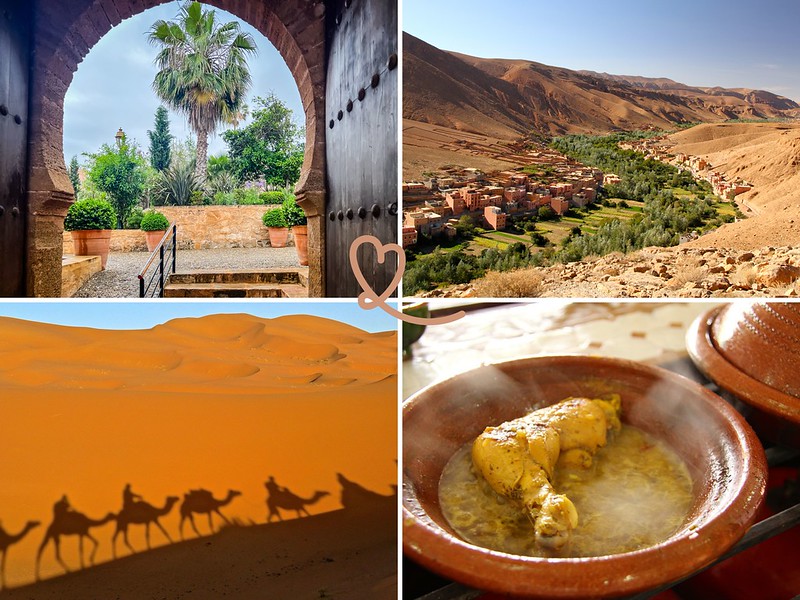
Morocco is a multi-faceted country offering a unique travel experience. From bustling medinas to the Atlas mountains, the Sahara desert and the Atlantic coast, Morocco has seduced us and will seduce you with its diversity.
Here we share our top reasons for recommending this destination, as well as a few things you should know before you go.
This opinion is completely independent, based on our experiences. We visited the region anonymously, making our own choices and paying our bills in full.
Is Morocco worth a visit?
Yes, absolutely.
Morocco is a fascinating destination that combines rich culture, diverse landscapes and authenticity. You’ll discover imperial cities steeped in history, spectacular natural landscapes, delicious cuisine and remarkable hospitality. The country also offers excellent value for money compared to other Mediterranean destinations.
Reason 1 – For architectural and historical diversity
Morocco boasts an exceptional architectural heritage that bears witness to several dynasties and cultural influences. We were impressed by the wealth of styles to be found throughout the country.

Almoravid, Almohad and Merinid architecture
The Berber dynasties that reigned from the 11th to the 15th century left a legacy of remarkable buildings. The Koutoubia mosque in Marrakech, built under the Almohad dynasty in the 12th century, dominates the city with its 77-m-high minaret. In Fez, the Bou Inania medersa illustrates the refinement of 14th-century Merinid architecture, adorned with sculpted stucco, zellige mosaics and finely worked cedar wood.
Ksar, palaces and kasbahs
Morocco is home to many palaces that reflect the art of living of the former royal courts. We particularly enjoyed the Palais de la Bahia in Marrakech, built at the end of the 19th century and featuring interior gardens, patios adorned with fountains and painted wooden ceilings. The kasbahs or ksars in the south of the country, such as the UNESCO World Heritage site at Aït-ben-Haddou, bear witness to the defensive adobe architecture typical of the pre-Saharan regions.

Medinas and souks
Morocco’s medinas are well-preserved urban ensembles where you can stroll through narrow streets lined with traditional houses. The medina of Fez, founded in the 9th century, is one of the oldest in the Arab world. Marrakech’s medina immerses you in a lively atmosphere where craftsmen and merchants perpetuate ancestral know-how. We enjoyed the bustle of the souks, organized by trade: coppersmiths, tanners, grocers and weavers.
See our article on Morocco’s most beautiful medinas (coming soon).
WHERE TO STAY IN Morocco
Our independent picks for the accommodation of your dreams:
- Where to stay in Morocco (coming soon)
- The most beautiful riads in Morocco
Select by city:

Reason 2 – For the variety of natural landscapes
Morocco offers a surprisingly diverse mosaic of landscapes. A few hours’ drive takes you from the sea to the mountains, then on to the desert valleys.

The Sahara desert
Southern Morocco opens onto the Sahara desert, where the Chebbi and Chegaga ergs stretch out. These sand dunes, which can exceed 150m in height, offer a spectacle that changes with the light of day. We recommend spending a night in the desert to observe the starry sky, far from any light pollution. The oases of the Drâa Valley, lined with palm groves, form a verdant transition between the mountains and the desert.
The Atlantic and Mediterranean coasts
Morocco has some 3,500km of coastline. On the Atlantic coast, you’ll find long sandy beaches ideal for surfing, notably at Essaouira and Taghazout. The Mediterranean coast to the north has a different character, dotted with rocky coves and small fishing ports. The cliffs of Cape Spartel near Tangier will surprise you. They offer a view of the Strait of Gibraltar, where the Atlantic Ocean meets the Mediterranean Sea.

Mountains, canyons and valleys
The Atlas mountain range crosses the country from east to west, culminating in Jebel Toubkal at an altitude of 4167m. In this mountainous region, you can hike through alpine landscapes, cross verdant valleys dotted with Berber villages and observe a wide variety of wildlife. In winter, the peaks are covered in snow, and some resorts even offer skiing. We were seduced by the Todra and Dadès gorges, whose rock faces reach 300m in height in places.
Reason 3 – For the authenticity of imperial cities
Morocco’s four imperial cities – Fez, Marrakech, Meknes and Rabat – were each capitals at different periods in history. Their monuments bear witness to their political and cultural importance.
See our selection of Morocco’s most beautiful cities.

Fez, intellectual capital
Fès is home to the Al Quaraouiyine University, founded in 859 and considered one of the oldest universities still in operation in the world. The medina of Fès el-Bali is a labyrinth of more than 9,000 alleyways, where traditional trades are perpetuated. We were particularly impressed by the Chouara tanneries, where leather is still processed using ancestral methods in colorful basins. The city’s studious, spiritual atmosphere contrasts with the hustle and bustle of Marrakech.
See more photos of Fez.
Marrakech, the red city
Marrakech owes its nickname to the ochre color of its adobe buildings. Jemaa el-Fna square is the beating heart of the city, where storytellers, musicians, snake charmers and hawkers gather at dusk. Marrakech’s gardens offer havens of freshness: the Majorelle garden created by French painter Jacques Majorelle in the 1920s, or the Menara gardens, which stretch over 100 hectares facing the Atlas Mountains.
See more photos of Marrakech.

Meknes and Rabat
Meknes was the capital under the reign of the Alawite sultan Moulay Ismaïl in the 17th century. The city boasts monumental ramparts punctuated by imposing gates such as Bab Mansour, considered one of the most beautiful in the Maghreb. Nearby are the Roman ruins of Volubilis, testimony to the Roman presence in North Africa between the 1st and 3rd centuries. Rabat, the kingdom’s current capital, combines modernity and historical heritage. The Hassan Tower, an unfinished 12th-century minaret, and the Mausoleum of Mohammed V illustrate Hispano-Moorish architecture.
See photos of Meknes.
See more photos of Rabat.
OUR TIPS FOR RENTING A CAR IN MOROCCO
- Compare prices on our preferred platform: DiscoverCars – one of the best rated sites.
- Not too wide
- A good engine
- For more choice, book early.

Reason 4 – Moroccan hospitality
Hospitality is a fundamental value of Moroccan culture. The concept of hospitality, called “diyafa” in Arabic, implies treating the guest with generosity and respect.
Traditional Riads
Riads are traditional houses built around an interior patio. Many have been transformed into guest houses that combine the charm of ancient architecture with modern comforts. The patio, often adorned with a fountain and plants, offers a welcome cool-down space after a day’s sightseeing. The owners are happy to offer personalized advice on discovering their city.
See our selection of the most beautiful riads in Morocco.

Homestay
Many Moroccan families offer bed and breakfast accommodation in medinas and villages. This formula allows you to discover daily Moroccan life from the inside and share meals prepared according to family recipes. You’ll be touched by the warmth of these exchanges, which offer an authentic perspective on the local way of life.
Reason 5 – For the richness of its gastronomy
Moroccan cuisine draws on a culinary heritage that blends Berber, Arab, Andalucia and even French influences. It is characterized by the use of varied spices and specific cooking techniques.

Signature dishes
Tajine, a dish simmered in a conical earthenware vessel, comes in many variations: chicken with olives and lemon confit, lamb with prunes and almonds, seasonal vegetables. Couscous, traditionally served on Fridays, consists of steamed semolina accompanied by vegetables and meat or fish.
Pastries and tea
Moroccan patisserie is all about almonds, honey and orange blossom. Gazelle horns, crescent-shaped cakes filled with almond paste, are among the best known. Mint tea accompanies every moment of the day. Its preparation follows a precise ritual.
At Region Lovers, we’re all big fans of gazelle horns!

Markets and local produce
The souks are full of fresh produce and spices. You’ll find saffron from Taliouine, argan oil from the southwest, olives prepared in a variety of ways and dried fruit. Weekly markets in each region allow you to discover local specialties and observe traditional trade.
A LITTLE MORE PATIENCE
All the photos, maps, information and addresses you need to make your stay at Maroc a success will soon be available in a single ebook!
Coming soon!
Reason 6 – For outdoor activities
The diversity of the Moroccan landscape makes it ideal for a wide range of outdoor activities all year round.

Hiking and trekking
The Atlas Mountains offer hiking opportunities for all levels. Climbing Jebel Toubkal, the highest peak in North Africa, takes two days and presents no major technical difficulties. The valleys of the central Atlas allow multi-day treks through Berber villages, where you can stay with local people.
Water sports
The Atlantic coast boasts ideal conditions for surfing and kitesurfing. Essaouira and Dakhla are renowned for their steady winds, which blow for much of the year. Beginners can take lessons at several certified schools. For those who prefer calmer activities, paddleboarding and kayaking are also available in the protected bays.

Desert excursions
The Merzouga dunes are ideal for camel rides, especially at sunrise or sunset when the sand colors change. 4WD tours allow you to explore more remote areas and visit isolated villages. We enjoyed sleeping in a traditional Berber camp, an experience that combines basic comfort with immersion in the desert.
Reason 7 – For traditional craftsmanship
Morocco’s craftsmanship has been handed down from generation to generation. Each region has its own specialties that reflect the local cultural identity.

Leather working
The tanneries of Fez produce leather using ancestral methods. Hides are treated in lime baths, then dyed with natural dyes such as saffron for yellow, poppy for red or indigo for blue. Craftsmen then make bags, babouches, poufs and bindings.
Ceramics and pottery
Safi and Fès are the two main centers of ceramic production. Potters create tajines, dishes, vases and zellige tiles that adorn fountains and the walls of riads. Geometric and floral motifs follow precise rules inherited from Hispano-Moorish art. In Safi, you can observe the various stages of production in the workshops lining Potters’ Hill.

Carpets and weaving
Each Berber tribe has its own style of carpet, recognizable by its patterns and colors. Carpets from the Middle Atlas use bright colors and abstract motifs, while those from the High Atlas feature more sober tones. Berber women weave these carpets on horizontal looms, a process that can take several months for the most elaborate pieces. Weaving is also a form of cultural expression in which every symbol has a meaning.
Reason 8 – For rich and varied museums
Morocco is home to a number of museums that provide a deeper understanding of its history and culture. From large art museums to small ethnographic studies, there’s something for everyone.
See our selection of the best museums in Morocco (coming soon).

Historical museums
Morocco has several museums that trace the country’s history through the various dynasties. In Rabat, the Musée d’Histoire et des Civilisations presents archaeological objections ranging from prehistory to the Islamic era, including remarkable Roman bronzes from Volubilis. The Dar Batha Museum in Fez occupies a former Hispano-Moorish palace built in the late 19th century, and boasts an exceptional collection of ceramics, wood carvings and illuminated manuscripts.
Art museums
The Mohammed VI Museum of Modern and Contemporary Art in Rabat offers a panorama of Moroccan and African art from the 20th century to the present day. Temporary exhibitions also feature international artists.
But you’ll also find the Yves Saint Laurent Museum, which traces the career of the French couturier, the Musical Instruments Museum and the Marrakech Museum, housed in a palace.

Ethnographic museums
Ethnographic museums dot the various regions, shedding light on local lifestyles. The Berber Museum at the Jardin Majorelle in Marrakech exhibits jewelry, textiles and everyday objects from Morocco’s various Berber tribes. In smaller towns, private museums and associations present collections of traditional objects, farming tools and musical instruments that bear witness to regional know-how.
Reason 9 – For the color
Morocco offers a color palette that enchants photographers and aesthetic enthusiasts alike.
This richness of color is an integral part of Morocco’s visual identity, and a powerful sensory experience.
Colors in cities
Chefchaouen, nestled in the Rif mountains, is distinguished by its narrow streets and facades painted entirely in blue. This tradition dates back to 15th-century Jewish refugees, who used the color to symbolize heaven and the divine. We were fascinated by the different shades of blue, from turquoise to indigo, depending on the district.
But it’s not the only colorful city. Tétouan is known for its green, others for its ochre…

Colors in landscapes
Beyond the cities, Moroccan landscapes are deeply marked by color. The verdant valleys of the Atlas Mountains emerge like oases from the arid ochre landscapes. The contrast between the intense green of the palm groves, the blue of the sky and the reddish-brown tones of the mountains creates striking pictures.

Colors in clothes, meals, decorations…
The souks are also bursting with color: spice pyramids in warm hues, brightly patterned carpets, yellow, red or green babouches, glazed pottery. We recommend a visit to the tanneries of Fez, where the dyeing basins form a mosaic of bright colors visible from the surrounding terraces.
Reason 10 – Accessibility and value for money
Morocco offers a number of practical advantages that make it easy to organize a trip.
From Europe, Morocco is only 2h30 to 3h30 by air. Several airlines serve the main Moroccan cities from many European capitals.
Morocco offers excellent value for money compared with other tourist destinations. Accommodation offers a wide range of rates: you’ll find hostels for 15 euros a night, as well as charming riads for 150 euros.
The country has invested in its tourism infrastructure over the last few decades. A network of freeways links the main cities, making it easy to get around. Comfortable trains serve the Casablanca-Marrakech, Casablanca-Fez and Casablanca-Tangier routes.
Some disadvantages of a trip to Morocco
Like any destination, Morocco has a number of features you should be aware of before you leave, to help you prepare for your stay.

Commercial demands in tourist areas
In the medinas and other busy areas, you’ll regularly be approached by salespeople, pseudo-guides and service providers. This is part of the local business culture, where negotiation and exchange are common practice. A polite but firm refusal is generally sufficient. We advise you to move away from the main tourist routes to discover quieter neighborhoods where interactions are less commercially oriented.
Infrastructure varies by region and driving style
The level of comfort and equipment differs significantly between major cities and rural areas.
Mountain roads are narrow and winding, which means longer journey times.
And driving is quite an experience. It’s up to you if you think you can handle it.
These constraints are part of the experience and help us to better understand local living conditions.
Summer heat
From June to August, temperatures regularly exceed 40°C in the south of the country and in inland cities such as Marrakech and Fez. This heat can make mid-day visits a real challenge.
Of course, the mountains and the Atlantic and Mediterranean coasts benefit from milder temperatures thanks to the sea breeze.

Closures during Ramadan
Morocco is a Muslim country where the call to prayer rings out five times a day from the mosques. During the month-long Ramadan, whose date varies according to the lunar calendar, many restaurants close during the day and don’t reopen until sunset. Opening times may also change during this period.
PLAN YOUR TRIP TO Morocco
- Best of
Must-See Places in Morocco
Most Beautiful Riads
Most Beautiful Cities
Most Beautiful Medinas
Morocco’s Most Beautiful Landscapes
Most Beautiful Gardens
Best Museums
Morocco’s Most Beautiful Beaches
- Practical advice
When to go?
How to rent a car in Morocco
Driving tips
Where to Stay in Morocco

- The must-dos
Marrakech
Casablanca
Fez
Meknes
Chefchaouen
Essaouira
Rabat
Tangier
Tetouan
Agadir
The Sahara Desert
