
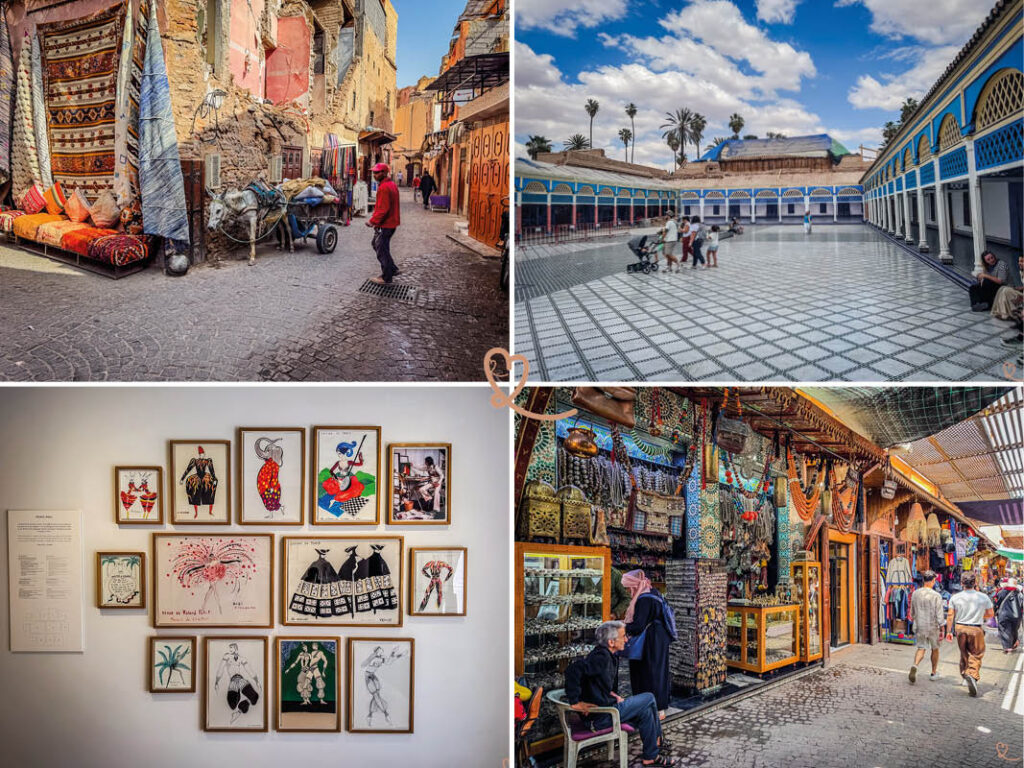
Planning a 2-day visit to Marrakech? What a great idea! This time will allow you to discover the treasures of the ochre city: historic medina, sumptuous palaces, lush gardens, lively souks and emblematic squares.
Our weekend itinerary guides you through Marrakech. Optimize your stay and make up your own mind about this destination with our practical tips and plenty of photos!
This opinion is completely independent, based on our experiences. We visited the region anonymously, making our own choices and paying our bills in full.
Practical tips for a 2-day visit to Marrakech
What can you see in Marrakech in 2 days? Is it long enough?
In 2 days in Marrakech, you can discover the medina’s iconic sites, explore the Majorelle gardens, lose yourself in the souks and admire the architecture of the palaces. This time frame allows you to appreciate the unique atmosphere of the city while taking advantage of Marrakech’s best activities.

Getting around Marrakech
Marrakech’s medina is best explored on foot. The main tourist attractions are concentrated in a relatively small area. We recommend walking to explore the narrow streets of the old town. To reach more distant sites, such as the Majorelle Gardens, you can opt for a cab or private transport. Small red cabs are plentiful in the city and offer affordable fares. Remember to negotiate the price before you get in.

Where to sleep in Marrakech
WHERE TO STAY IN Marrakech
Our favorites: neighborhoods and hotels
In the Medina
Riad Kbour & Chou – See prices, photos and availability
In the Kasbah, an ancient fortified quarter
Riad Jonan & Spa – See prices, photos and availability
Luxury Hotel
Royal Mansour Hotel – See prices, photos and availability


Our ideal itinerary: 2 days in Marrakech
Day 1 – 9h-11h: Exploring Jemaa el-Fna Square
Start your discovery of Marrakech at the emblematic Place Jemaa el-Fna, the beating heart of the medina. Listed as a UNESCO World Heritage Site, this mythical square comes alive in the morning with fresh orange juice vendors, snake charmers and street performers. We were fascinated by the energy that emanates from this unique place. Take time to soak up the authentic atmosphere here. Traditional storytellers and Gnaoua musicians create an incomparable atmosphere. You can also admire the Koutoubia mosque, which dominates the square with its 77m-high minaret, a true symbol of the city.

Day 1 – 11am-1pm: Getting lost in the souks of the medina
Immerse yourself in the labyrinth of traditional souks that stretch north from Jemaa el-Fna square. These covered markets, organized by trade, offer an extraordinary sensory experience. We loved strolling between the colorful stalls of spices, carpets, lanterns and handicrafts. The smell of leather in the tanners’ souk, the shimmering colors of babouches and fabrics, the sound of craftsmen shaping metal: all your senses will be awakened. Don’t hesitate to venture into the side streets, where you’ll discover craftsmen’s workshops perpetuating age-old skills. It’s also the perfect opportunity to unearth authentic souvenirs by practicing the art of haggling, a local tradition.

Day 1 – 1pm-3pm: Lunch in a traditional restaurant
Take a lunch break at one of the many restaurants in the medina to discover the richness of Moroccan gastronomy. We recommend you try a traditional tajine, an emblematic dish cooked slowly in its conical earthenware vessel. Friday couscous is also an institution not to be missed if you visit Marrakech on that day. Pastillas, sweet and savory pigeon or chicken puff pastries sprinkled with cinnamon and powdered sugar, will delight your taste buds. For an authentic experience, opt for a restaurant in a traditional riad, where you can enjoy lunch in a refined setting away from the hustle and bustle of the streets.

OUR TIPS FOR RENTING A CAR IN MOROCCO
- Compare prices on our preferred platform: DiscoverCars – one of the best rated sites.
- Not too wide
- A good engine
- For more choice, book early.

Day 1 – 3pm-5pm: Visit the Bahia Palace
Head for the sumptuous Palais de la Bahia, a masterpiece of 19th-century Moroccan architecture. The palace covers almost 8,000m2 and boasts over 150 richly decorated rooms. We marveled at the finesse of the zeliges (ceramic mosaics), sculpted stucco and painted cedar ceilings. Interior patios adorned with fountains and orange trees create an atmosphere of absolute serenity. The palace was built for one of the wives of Grand Vizier Ba Ahmed in the late 19th century. Each room reveals a different décor, testifying to the refinement and wealth of the period. The shady interior gardens provide welcome cool spots on hot summer days.

Day 1 – 5pm-7pm: Discover the Saadian Tombs
Continue your exploration with a visit to the Saadian Tombs, a royal necropolis dating from the 16th century. This exceptional site is home to the tombs of Sultan Ahmad al-Mansur and his family. The tombs remained hidden for centuries before being rediscovered in 1917. We were impressed by the ornamental richness of the burial chambers, particularly the Hall of the Twelve Columns, with its finely carved stucco-covered walls and gilded cedarwood ceiling. The three main pavilions are surrounded by a peaceful garden planted with roses and hibiscus. The entrance is via a narrow passageway overlooking the Kasbah mosque. A place steeped in history, it bears precious witness to the funerary art of the Saadian dynasty.

Day 1 – 7-9pm: Dinner and show on Jemaa el-Fna square
Return to Place Jemaa el-Fna to experience the magical evening atmosphere. As soon as the sun goes down, the square is transformed into a huge open-air theater and popular restaurant. Dozens of street stalls offer grilled meats, tajines and local specialties in a festive, convivial atmosphere. We recommend choosing a lively stall for lamb kebabs, grilled liver or steaming harira soup. Acrobats, dancers and musicians perform under the stars in a permanent show. To enjoy the show from the air, sit down on one of the terraces in the surrounding cafés. The panoramic view of this living stage is absolutely unforgettable.

A LITTLE MORE PATIENCE
All the photos, maps, information and addresses you need to make your stay at Maroc a success will soon be available in a single ebook!
Coming soon!

Day 2 – 9h-11h30: Exploring the Majorelle gardens
Start your second day with a visit to the famous Majorelle Gardens, an oasis of greenery created by French painter Jacques Majorelle in the 1920s. This nearly one-hectare botanical garden is home to over 300 species of plants from all over the world, including giant cacti, bamboo, palms, bougainvillea and water lilies. We were captivated by the intense Majorelle blue that adorns the buildings and ponds, creating a striking contrast with the lush vegetation. The garden was bought and restored by Yves Saint Laurent and Pierre Bergé in 1980. You can also visit the Berber Museum, housed in Jacques Majorelle’s studio and featuring a remarkable collection of traditional art objects and jewelry.

Day 2 – 11:30am-1:30pm: Discover the Yves Saint Laurent Museum
Just a stone’s throw from the Majorelle Gardens is the Yves Saint Laurent Museum, inaugurated in 2017. This contemporary building designed by architects Studio KO pays tribute to the famous French couturier who had a passion for Marrakech. The permanent exhibition features a selection of Yves Saint Laurent’s iconic creations, as well as sketches and documents tracing his exceptional career. We appreciated the modern scenography, which highlights the pieces on display in a light-filled setting. The museum’s facade evokes a pleated fabric of glazed terracotta bricks that sparkle in the sunlight. The museum also boasts a specialized fashion research library and an auditorium offering a varied cultural program.

Day 2 – 1:30-3:30 pm: Lunch in a contemporary restaurant
For lunch, opt for one of the contemporary restaurants in the Guéliz district, Marrakech’s new city center. This modern district, created during the French protectorate, offers another facet of the city, with its tree-lined avenues, designer boutiques and trendy cafés. We discovered an innovative gastronomic scene that revisits Moroccan classics with a modern twist. Many chefs offer a fusion of local traditions and international influences. Restaurants with shaded terraces are particularly pleasant for escaping the midday heat. You’ll also appreciate the more relaxed, European atmosphere of this district, which contrasts with the hustle and bustle of the medina.

Day 2 – 3:30 pm – 5:30 pm: Visit the Ben Youssef medersa
Return to the medina to discover the Ben Youssef medersa, a former Koranic school founded in the 14th century and rebuilt in the 16th century under the Saadian dynasty. This historic monument is one of the finest examples of Islamic architecture in Morocco. We were amazed by the richness of the decor: Carrara marble columns, carved cedar woodwork, chiselled stucco and kufic calligraphy covering the walls. The central courtyard, paved with white marble, is organized around a pool for ritual ablutions. The 130 student cells are arranged on two levels around the courtyard. Every architectural detail bears witness to the artistic refinement of the period. The main prayer hall, with its carved cedar dome, is the jewel in the crown.

Day 2 – 5:30pm-7pm: Enjoy a traditional hammam
End your stay in style with a session in a traditional hammam, an ancestral ritual of purification and relaxation. Public hammams in the medina offer an authentic and accessible experience. We recommend a hammam offering a black soap scrub followed by a relaxing massage. The ritual begins in a warm room where steam opens the skin’s pores. This is followed by a vigorous scrub with a kessa glove to remove dead cells. An argan oil massage brings the session to a gentle close. This age-old tradition is an integral part of Moroccan culture, and a privileged moment of well-being. Many riads also offer private hammams in a more intimate setting if you prefer more tranquility.
Don’t wait to book a special time at one of Marrakech’s many traditional spas and hammams!


Alternative 1: With excursions in the Atlas mountains
Ourika Valley and Setti Fatma waterfalls
60km south of Marrakech, the Ourika Valley offers a complete change of scenery at the foot of the High Atlas mountains. This day trip takes in spectacular mountain scenery, authentic Berber villages and refreshing waterfalls. We enjoyed the freshness of this verdant valley in contrast to the heat of Marrakech. The village of Setti Fatma is the starting point for hikes to seven successive waterfalls. The first can be reached in a 30-minute walk, while the others require a good level of fitness. Along the way, you’ll come across Berber women offering mint tea and fresh fruit. Terrace restaurants by the river serve excellent tajines in a bucolic setting.
Book your excursion to the Ourika Valley and Atlas Mountains now!

Atlas villages and Asni valley
Discover the Berber villages perched in the foothills of the High Atlas. The Asni Valley, 45km from Marrakech, offers breathtaking panoramic views of the snow-capped mountains in winter. This rural region offers an opportunity to observe a preserved traditional way of life. We were touched by the hospitality of the inhabitants, who perpetuate ancestral traditions. The village of Imlil, the starting point for climbs to Mount Toubkal (4167m), is well worth a visit for its unique mountain atmosphere. Mule-tracks wind between terraces of barley and corn. You can have lunch with the locals and enjoy a tajine prepared according to local recipes. Asni’s weekly Saturday market brings together villagers to sell their produce.
Book your day trip to Ouarzazate and Aït Benhaddou now!

Alternative 2: With more palaces and historic monuments
El Badi Palace
The Palais El Badi, whose name means “the Incomparable”, was built at the end of the 16th century by the Saadian sultan Ahmad al-Mansur to celebrate his victory over the Portuguese. This grandiose palace bears witness to Marrakech’s past splendor. Now in ruins, the site nevertheless retains a majestic atmosphere with its imposing walls and immense central courtyard. We were impressed by the colossal dimensions of this complex, which comprised over 360 rooms decorated with marble, gold and onyx. The basins and gardens below evoke the original layout. Storks have taken up residence in the remains, adding a poetic note to the place. The panoramic view of Marrakech and the Atlas Mountains from the top of the walls is superb. The palace houses the minbar of the Koutoubia mosque, a 12th-century masterpiece of marquetry.

Marrakech Museum
Housed in the Palais Mnebhi, a magnificent 19th-century residence, the Musée de Marrakech presents collections of traditional and contemporary Moroccan art. We admired the refined architecture of the palace itself, with its central courtyard covered by a monumental chandelier suspended over a zellige fountain. The exhibition rooms organized around the patio house ceramics, jewelry, weapons, ancient manuscripts and traditional costumes. A section dedicated to contemporary Moroccan art highlights current artists. The palace’s old hammams have been restored, allowing visitors to observe the organization of a traditional Moorish bath. High-quality temporary exhibitions are organized on a regular basis. The rooftop café offers a pleasant break with a view over the roofs of the medina.

Subscribe to our Newsletter
- Get away from it all with Region Lovers’ beautiful destinations!
- Once a month
- Advertising-free

What you need to know for your weekend in Marrakech
The weather in Marrakech
Marrakech enjoys a semi-arid climate, with very hot summers and mild winters. The best times to visit are spring (March to May) and autumn (September to November), when temperatures remain pleasant between 20°C and 30°C. Summer can be stifling, with temperatures regularly exceeding 40°C. We recommend avoiding July and August if you can’t stand the heat. Winter offers mild, sunny days at around 18°C, but nights can be chilly. Bring a light jacket for the evenings. Rain is rare, but can occur between November and March. The skies are generally clear and the sun shines all year round. Remember to protect yourself from the sun with a hat, sunglasses and sunscreen, even in winter.

Crowds in Marrakech
Marrakech is very busy all year round, with peaks in April-May and September-October. Jemaa el-Fna Square and the souks are particularly busy in the middle of the day. We advise you to visit the monuments early in the morning or late in the afternoon to avoid groups. The most popular sites, such as the Majorelle Gardens and the Palais de la Bahia, attract many visitors. Remember to book your tickets online whenever possible to save time. The European school vacation periods (Easter, summer, All Saints’ Day) see an influx of families. Accommodation prices increase significantly during the high season. For a quieter atmosphere and lower prices, opt for January-February or June-July, despite the heat.

Adapt your itinerary when it rains
Although rare, rain can be a surprise in Marrakech, mainly between November and March. Showers are generally short, but can be intense. If it does rain, we suggest you take advantage of the many covered museums, such as the Musée de Marrakech, the Yves Saint Laurent Museum or the Dar Si Said Museum dedicated to Moroccan art. Historic palaces such as the Palais de la Bahia also offer covered areas to explore. Take refuge in a traditional hammam for a relaxing session. Riads with covered patios are havens of peace in which to wait in comfort. Enjoy a mint tea in a traditional café while watching the ballet of umbrellas in the souks. The contemporary art galleries of the Guéliz district also offer an interesting cultural alternative.

PLAN YOUR TRIP TO Morocco
- Best of
Must-See Places in Morocco
Most Beautiful Riads
Most Beautiful Cities
Most Beautiful Medinas
Morocco’s Most Beautiful Landscapes
Most Beautiful Gardens
Best Museums
Morocco’s Most Beautiful Beaches

- Practical advice
When to go?
How to rent a car in Morocco
Driving tips
Where to Stay in Morocco

- The must-dos
Marrakech
Casablanca
Fez
Meknes
Chefchaouen
Essaouira
Rabat
Tangier
Tetouan
Agadir
The Sahara Desert

